By Issah Olegor
The National Democratic Congress Government has expressed sympathy to thousands of residents affected by the recent devastating floods that swept through Accra and several parts of the country, while renewing its commitment to tackling the perennial flooding challenge that continues to disrupt lives, destroy property and threaten national development.
In a statement issued on June 6, 2026, Minister for Works, Housing and Water Resources, Kenneth Gilbert Adjei, conveyed government’s condolences on behalf of President John Dramani Mahama and assured affected communities that measures were being implemented to support recovery efforts and prevent future disasters.
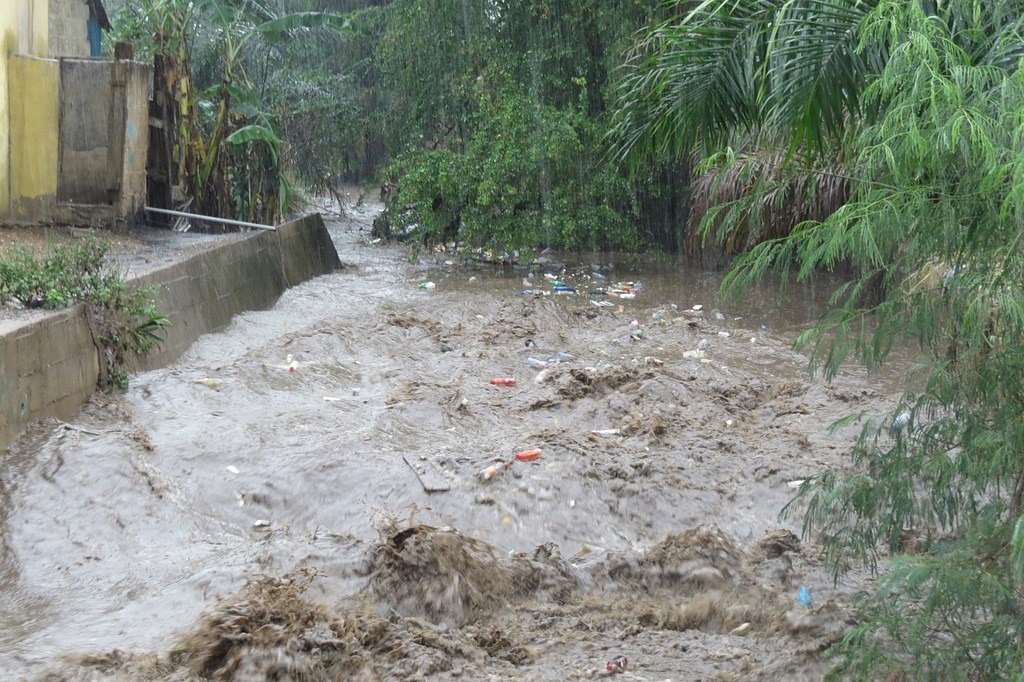
The statement follows days of heavy rainfall that triggered widespread flooding across several communities, particularly in Accra and other low-lying areas. Some areas not known to flooding in the capital were inundated with massive floods destroying properties and displacing residents.

The floods caused significant destruction to homes, businesses and public infrastructure, while disrupting economic activities and transportation in many parts of the country.
The government acknowledged the enormous emotional, social, and economic hardships endured by victims who lost personal belongings, homes, livelihoods and other valuable property during the flooding incidents.
The ministry noted that authorities remain closely monitoring the situation and are deeply concerned about the impact on affected families and communities.
According to the minister, the latest disaster serves as another reminder of the urgent need for comprehensive action to address Ghana’s long-standing flooding problem, which has persisted despite successive interventions by various governments over the years.
Flooding has remained one of the most challenging urban management issues, particularly in Accra where seasonal rains often result in overflowing drains, submerged roads, displacement of residents and, in some cases, loss of lives.
Over the years, experts have repeatedly linked the crisis to rapid urbanization, inadequate drainage infrastructure, poor spatial planning and weak enforcement of environmental regulations.
While acknowledging the growing impact of climate change and increasingly intense rainfall patterns, the government maintained that human activities continue to play a major role in worsening the situation.
The ministry referenced recent comments by President John Dramani Mahama during a town hall meeting in London, where he attributed much of Ghana’s flooding challenge to indiscipline in human settlement planning and environmental management practices.
According to the President, indiscriminate disposal of refuse into drains and waterways, unauthorized construction on wetlands and watercourses, and widespread disregard for planning regulations have significantly obstructed the natural flow of water and increased the vulnerability of communities to flooding.
The government stressed that these practices have become common in many parts of the country and continue to undermine efforts to manage flood risks effectively. It noted that encroachment on water retention areas, poor maintenance of drainage systems, unregulated developments and weak enforcement of sanitation and planning laws have collectively intensified the impact of seasonal rains.
The ministry argued that Ghana’s challenge is not necessarily the absence of laws, technical expertise or engineering capacity, but rather the lack of collective discipline and commitment among stakeholders to enforce existing regulations.
Officials emphasized that solving the flooding crisis requires a coordinated effort involving government agencies, local authorities, traditional leaders, community groups and ordinary citizens.
The statement stressed that sustainable solutions can only be achieved when communities actively participate in protecting waterways, maintaining environmental sanitation and complying with land-use regulations.
In response to the current emergency, the government disclosed that the Ghana Hydrological Authority, working alongside the National Disaster Management Organisation (NADMO), Metropolitan, Municipal and District Assemblies, security agencies and other stakeholders, has activated a series of emergency interventions in affected communities.
The immediate measures include the deployment of emergency response teams to flood-hit areas, distribution of relief items to displaced families, assessment of damaged infrastructure, and intensified desilting and maintenance of drainage systems in critical flood-prone locations.
Beyond the emergency response, the ministry outlined several ongoing initiatives aimed at reducing future flood risks.
These include accelerated drainage improvement projects, extensive desilting and clearing of drains, rehabilitation and expansion of stormwater infrastructure, stricter enforcement of development controls, and the removal of structures obstructing waterways.
Government also announced plans to strengthen coordination among relevant agencies while improving early warning mechanisms and emergency preparedness systems to enhance national resilience against future flooding events.
Looking ahead, the ministry pledged to implement a comprehensive long-term flood management strategy designed to address the root causes of flooding across the country. The strategy is expected to focus on major investments in drainage infrastructure, integrated urban planning, restoration and protection of wetlands, development of flood early warning systems, and stricter enforcement of environmental and planning regulations.
The government further indicated that building climate-resilient communities would form a key component of the strategy as Ghana seeks to adapt to the growing threats posed by climate change and extreme weather events.
The statement concluded with an assurance that the government remains committed to working with all stakeholders to tackle the underlying causes of flooding and build safer communities for future generations.