By Daniel Bampoe
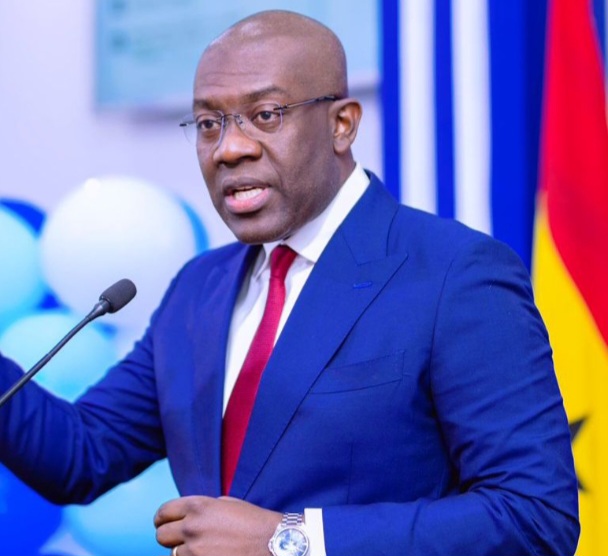
A fresh political storm is brewing over the Bank of Ghana’s reported GH¢15 billion loss, with the Member of Parliament for Ofoase-Ayirebi and Ranking Member on Parliament’s Economy and Development Committee, Kojo Oppong Nkrumah, accusing the governing NDC of attempting to “spin” the narrative before the official accounts are even released.
Speaking on Joy News, Kojo Oppong Nkrumah questioned why the Majority Caucus would rush to hold a press conference on the Bank of Ghana’s financial position when the central bank itself had not yet published its audited accounts.
“What has happened is that the Bank of Ghana accounts have not been published, but the majority have been invited to do a press conference to try and shape people’s minds before the accounts themselves are published,” he said.
“That should tell you that they are engaged in propaganda and public relations to hide the real facts from Ghanaians.”
From Protest To Defence
The controversy has revived memories of 2023, when the Bank of Ghana recorded a loss of about GH¢10 billion. At the time, members of the then-minority, now in government, mounted a strong opposition, demanding accountability and even calling for the resignation of the central bank governor.
Mr. Oppong Nkrumah noted that the same political actors who once described such losses as economic mismanagement are now defending a significantly larger loss.
“In 2023, they said GH¢10 billion loss was unacceptable and even called it criminal mismanagement,” he recalled. “Today, they have made about GH¢15 billion loss and are trying to explain it away.”
Sterilisation Policy
At the heart of the dispute is the monetary policy approach adopted by the Bank of Ghana, particularly the aggressive use of liquidity sterilisation to reduce inflation.
The Ranking Member of Parliament’s Economy and Development Committee, Kojo Oppong Nkrumah argued that the Minority had repeatedly warned since 2025 that heavy sterilisation, where the central bank mops up money from the economy,omy would impose high costs on the Bank’s balance sheet.
“We said that if you continue this level of sterilisation, you can even get inflation to zero, but the cost on the Bank of Ghana will be unbearable,” he explained.
According to him, the current loss being attributed to the central bank is largely a consequence of these policies, which reduced money supply but did not necessarily address the cost of living.
Gold Policy And Hidden Costs
The MP also raised concerns about the gold purchase programme, alleging that policy changes involving the Gold Board had resulted in substantial financial losses that were transferred onto the books of the Bank of Ghana.
He explained that while the Gold Board recently announced profits of about GH¢900 million, it still owes approximately GH¢3.7 billion to the central bank, and that gold-related transactions may account for as much as GH¢9 billion of the Bank’s losses.
“Take out the GH¢9 billion gold transaction cost and net it against what they are claiming as profit, and you will see the real impact,” he said.
Kojo Oppong Nkrumah further argued that the government has resisted calls for a parliamentary inquiry into the gold transactions, despite earlier demands by the Minority for full disclosure and accountability.
The majority defends ‘Cost of Stabilisation’
However, the Majority Caucus has rejected claims of mismanagement, insisting that the reported losses represent the cost of stabilising the economy.
According to a member of the Finance Committee, Atta Issah, the Bank of Ghana’s interventions have delivered measurable macroeconomic gains, including a 41 percent appreciation of the cedi, record foreign reserves of about $14.5 billion, and a sharp decline in inflation.
“The institution carries the cost on its books, but the country benefits,” he said, adding that the measures have helped restore confidence and reduce borrowing costs for businesses and households.
The Majority also pointed to falling Treasury bill rates, lower lending rates, and improved economic growth as evidence that the central bank’s actions are yielding positive results.
Policy Gains or Economic Trade-Off?
Despite these gains, Mr. Oppong Nkrumah insists that the government cannot justify recurring losses as mere policy costs, especially when similar arguments were rejected in the past.
“A loss is a loss,” he said, referencing earlier comments by government-aligned economists who had dismissed the idea of policy-driven losses when the opposition was in power.
He warned that if such losses continue annually, they can no longer be described as one-off adjustments but rather as signs of deeper structural problems.
“If every year you are making policy losses, then it is not a one-off item,” he argued. “Any state institution can then justify losses by claiming it is doing economic good. Does that make sense?”
Rising Concerns Over Sustainability
The Minority has also expressed concern that the current policy trajectory could lead to even larger losses in the future.
Mr. Oppong Nkrumah warned that continued heavy sterilisation could push the BoG losses beyond GH¢20 billion by the end of 2026 if corrective measures are not taken.
He further questioned whether the central bank’s negative equity position has improved or worsened under the current administration, calling for full transparency once the official accounts are released.
Call for Transparency And Accountability
The Ofoase-Ayirebi MP, Kojo Oppong Nkrumah concluded by urging the government to abandon what he described as “propaganda” and instead adopt a more transparent and collaborative approach to economic management.
“If they have nothing to hide, they should bring the documents to Parliament and let us go through them line by line,” he said.
He also called for humility from policymakers, emphasizing that economic decisions come with trade-offs that must be openly acknowledged.
“It would do the government a lot of good to come to the table with humility, admit where things have gone wrong, and allow us to contribute ideas,” he stated.
However, the debate over the BoG losses has now become a major political flashpoint, highlighting deeper divisions over economic management, policy consistency, and accountability.
While the government maintains that the costs are justified by improved macroeconomic outcomes, the opposition insists that the approach lacks transparency and could have long-term consequences for financial stability.