BY Daniel Bampoe
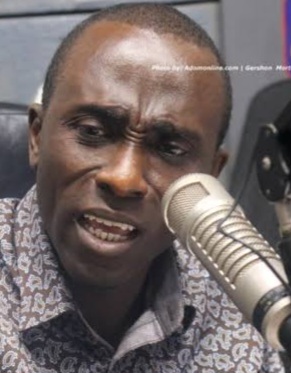
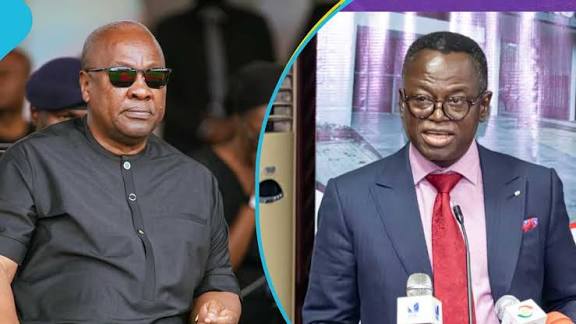
The judiciary has once again been thrust into the spotlight as a private citizen, Daniel Marfo Ofori-Atta, petitions President John Dramani Mahama for the removal of Supreme Court Justice Emmanuel Yonny Kulendi over misconduct.
The move follows allegations of interference in the high-profile case involving Finance Minister, Dr. Cassiel Ato Forson.
Allegations of Judicial Misconduct
According to Daniel Ofori-Atta, Justice Kulendi allegedly engaged in conduct that amounted to obstruction of justice in relation to Republic v. Cassiel Ato Forson & 2 others.
The case, which gripped national attention, involved charges of financial loss to the state in the controversial ambulance procurement deal.
In that trial, Richard Jakpa—Justice Kulendi’s cousin and Director of Operations at the National Security Council—was the third accused.
Daniel Ofori-Atta claims that Justice Kulendi’s involvement went beyond the boundaries of acceptable judicial conduct, thereby violating the code of ethics governing justices of the Supreme Court.
“This is not just a matter of perception; it is a matter of constitutional integrity,” Ofori-Atta said adding that, “His actions constitute stated misbehavior, and by the provisions of the Constitution, he is unfit to continue as a Justice of the Supreme Court of Ghana.”
Dual Petitions: CID and Presidency
Daniel Ofori-Atta has taken a two-pronged approach.
In addition to filing a petition with President John Mahama, he has also lodged a complaint with the Criminal Investigation Department (CID) of the Ghana Police Service.
The CID petition seeks an inquiry into both Justice Kulendi and Jakpa for their alleged roles in attempting to influence the Ato Forson trial.
The petition to the President, however, is grounded in Article 146 of the 1992 Constitution, which provides the procedure for the removal of judges of the Superior Courts.
The Constitutional Procedure
By law, once such a petition is received, the President is obligated to forward it to the Chief Justice.
If the Chief Justice establishes a prima facie case, a five-member committee must be set up to investigate and submit its findings.
The committee’s report is then forwarded to the Chief Justice and, ultimately, to the President, who is constitutionally required to act on its recommendations.
Judiciary Under Fire
This latest petition comes at a time when relations between the Executive and the Judiciary appear increasingly strained.
Only last month, President Mahama removed Chief Justice Gertrude Torkornoo from office, a decision that drew sharp criticism from sections of the legal fraternity and opposition political parties.
Critics argue that the removal undermined judicial independence, while government loyalists insisted it was a constitutional necessity.
Against that backdrop, the petition against Justice Kulendi could further deepen perceptions of a judiciary under siege.
The Larger Political Context
The controversy also intersects with political sensitivities. Dr. Ato Forson, and a senior figure in the NDC, has maintained that the case against him is politically motivated.
Allegations of interference by a sitting Supreme Court judge, if substantiated, could have far-reaching implications for public trust in both the courts and the political process.
Meanwhile, the involvement of Richard Jakpa—who holds a senior role at the National Security Council—adds another layer of complexity, blurring the lines between judicial integrity and executive security operations.
What Next?
For now, the ball is in President Mahama’s court. His forwarding of the petition to the current Chief Justice will set in motion a constitutional process that could determine Justice Kulendi’s future on the bench.