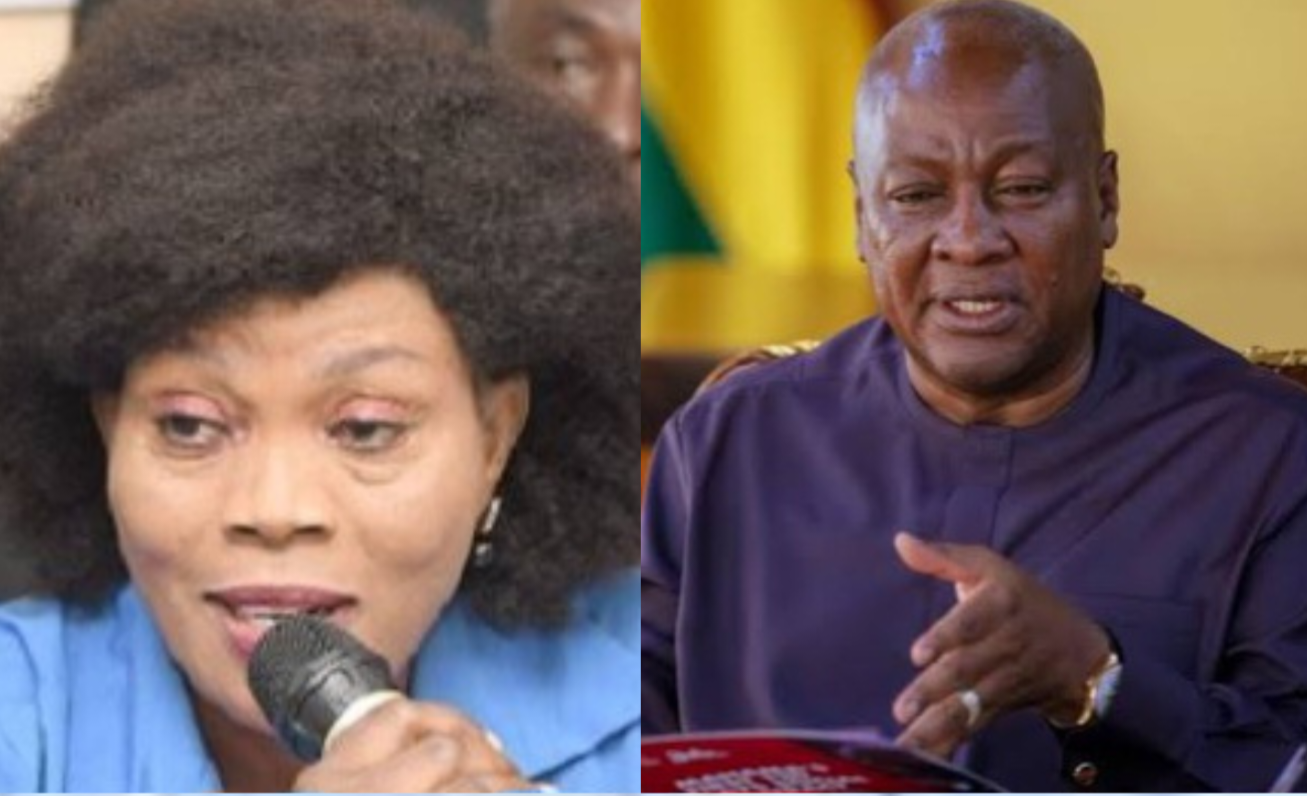
By Issah Olegor
The People’s National Party (PNP) has sounded an alarm over what it terms a “systematic erosion of democracy” under the leadership of President John Dramani Mahama and the governing National Democratic Congress (NDC).
The party claims that Ghana’s hard-earned democratic gains are being threatened by executive overreach, political intimidation, and institutional manipulation.
In a strongly worded statement issued on Wednesday, November 12, 2025, and signed by the party’s Chairperson and Leader, Janet Asana Nabla, the PNP accused the Mahama administration of weakening independent state institutions, particularly Parliament and the judiciary, while fostering a climate that stifles free expression.
The party warned that if unchecked, such developments could push the country toward what it called “the creeping shadows of dictatorship.”
Political Tensions
The democratic governance, often hailed as a model on the African continent, has faced increasing scrutiny in recent months.
Political tensions have intensified following the controversial suspension and eventual removal of former Chief Justice Gertrude Araba Esaba Torkornoo by President Mahama earlier this year—an act that many, including civil society groups and opposition parties, have described as unconstitutional and politically motivated.
The nomination of Justice Paul Baffoe-Bonnie as her replacement has deepened divisions, with ongoing court challenges yet to be resolved.
Claims of Parliamentary Interference
The PNP alleges that the NDC Majority in Parliament has unilaterally breached long-standing parliamentary procedures by excluding the Minority caucus from participating in the selection of the representatives to the ECOWAS Parliament.
According to the party, the Majority side disregarded standard consultation practices and handpicked its preferred members, sidelining the Minority Leader in what it described as an “affront to parliamentary fairness and inclusivity.”
The statement further noted that when ECOWAS initially rejected the list due to these irregularities, the NDC Majority allegedly threatened to withdraw Ghana entirely from the regional body unless its chosen members were approved. The PNP condemned this as “a dangerous act of political bullying that undermines ECOWAS’ credibility and independence.”
Judicial Independence Under Threat
On the judiciary, the PNP raised serious concerns about what it termed “executive interference.” The party said the decision to proceed with the vetting of Justice Baffoe-Bonnie as Chief Justice while a legal challenge regarding Justice Torkornoo’s removal is still pending, constitutes a blatant disregard for the rule of law and judicial due process.
Madam Nabla further alleged that the move represents “gender bias and political favoritism,” arguing that the government is systematically replacing competent female leaders with “men whose primary qualification is political loyalty to the ruling party.”
Freedom of Expression and Cybersecurity Bill Controversy
The PNP also took aim at the government’s proposed Cybersecurity Bill, which it said would grant the state sweeping powers to monitor citizens’ digital communications under the guise of national security.
The party warned that such powers could be weaponized against journalists, activists, and critics of the regime.
“While cybersecurity is crucial in the digital age, any law that allows the government to monitor private communications without judicial oversight poses an existential threat to civil liberties,” the statement read. The party added that recent reports of young women being detained for online criticism of government officials are “early signs of a dangerous trend toward intolerance and repression.”
PNP’s Call to Action and International Appeal
The PNP urged the NPP Minority in Parliament to “rise to the defense of the Constitution” and resist what it called “blatantly undemocratic practices” by the ruling party.
The statement encouraged opposition MPs to consider a parliamentary boycott if the Minority Leader is unjustly summoned before the Privileges Committee, describing such a move as “a legitimate act of democratic resistance.”