BY Issah Olegor
West African leaders have approved emergency security financing for five frontline countries, including Ghana, as the sub-region steps up collective efforts to confront the growing threat of terrorism, violent extremism and cross-border crime.
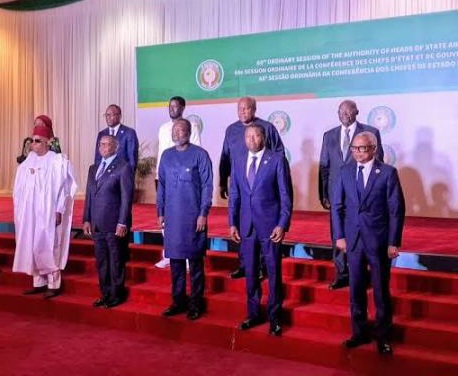
The decision was taken at the 68th Ordinary Session of the Authority of Heads of State and Government of the Economic Community of West African States (ECOWAS), held in Abuja, Nigeria, against the backdrop of escalating insecurity across several parts of the region.
Under the directive, the ECOWAS Commission has been mandated to disburse US$2.85 million each to Ghana, Benin, Côte d’Ivoire, Nigeria and Togo.
The funds will be drawn from the ECOWAS Regional Security Fund and are intended to support urgent national and regional security interventions.
However, the release of the money is tied to a review and implementation of an approved Plan of Action, ensuring accountability and alignment with ECOWAS’ broader counterterrorism strategy.
The emergency allocation comes at a time when West Africa is grappling with a surge in terrorist attacks, banditry and kidnappings, particularly in the Sahel and parts of coastal West African states.
ECOWAS leaders, in their final communiqué, strongly condemned recent incidents, including the abduction of schoolchildren in northern Nigeria, describing them as a grave threat to regional peace and human security.
The Authority expressed solidarity with the Nigerian people and commended President Bola Ahmed Tinubu for swift actions taken by his government to secure the release of victims and intensify security operations.
The latest intervention builds on years of regional efforts to curb terrorism, which has increasingly spilled over from the Sahel into southern West Africa. Ghana, Benin, Togo and Côte d’Ivoire have in recent years strengthened border patrols and intelligence-sharing mechanisms amid concerns about extremist infiltration from neighbouring conflict zones.
Nigeria, meanwhile, continues to battle insurgency in its northern regions, alongside criminal networks involved in kidnappings and armed robbery.
Beyond the immediate funding, ECOWAS leaders reaffirmed their collective commitment to eradicating terrorism within the sub-region and appealed to the international community, including the African Union and the United Nations Security Council, to respond urgently and in a coordinated manner to the security needs of affected countries
They stressed that terrorism in West Africa poses not only a regional threat but also a global security concern that requires sustained international support.
The Authority also called for continued engagement with Burkina Faso, Mali and Niger, three Sahelian states that formally exited ECOWAS earlier this year following political and security disagreements with the bloc.
Despite their withdrawal and the formation of the Alliance of Sahel States (AES), ECOWAS leaders urged dialogue and cooperation to address the deteriorating security situation in the Sahel, recognising that instability in those countries has direct consequences for the wider region.
As part of longer-term security reforms, ECOWAS directed the Commission to fast-track the operationalisation of the Regional Counterterrorism Brigade.
This includes convening urgent meetings of the Committee of Chiefs of Intelligence Services and the Committee of Chiefs of Defence Staff to finalise modalities for activating the force, which is expected to enhance joint military responses and intelligence coordination across member states.