By Grace Zigah
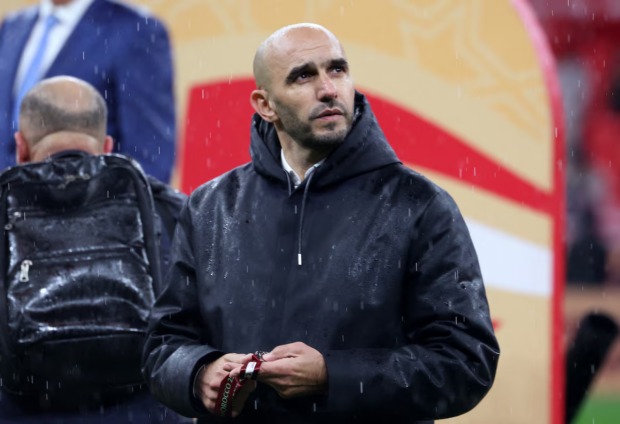
The Moroccan Football Federation (FRMF) has rejected the resignation of head coach Walid Regragui, opting for continuity and stability after the Atlas Lions’ narrow defeat in the 2026 Africa Cup of Nations final, in a decision that underscores long-term planning ahead of the upcoming FIFA World Cup.
Regragui reportedly offered to step down following Morocco’s 1–0 loss to Senegal after extra time in the AFCON final, a match that ended goalless after regulation time and was decided deep into extra time.
According to international football reports, the coach felt his future was tied to Morocco’s performance at the tournament and formally submitted his resignation to the federation shortly after the final whistle.
However, the Moroccan FA is understood to have declined the resignation, choosing instead to preserve technical stability with less than six months remaining before the World Cup.
Federation sources indicate that the decision was driven by concerns about disrupting the team’s structure so close to a major global tournament, as well as the belief that Regragui remains the right figure to lead Morocco’s long-term project.
Regragui’s position is strengthened by his recent record with the national team.
Appointed in 2022, he led Morocco to a historic semi-final finish at the 2022 FIFA World Cup in Qatar, making the Atlas Lions the first African nation in history to reach that stage of the competition.
That achievement transformed Morocco’s global football standing and established Regragui as one of the most successful coaches in African football history.
Beyond the World Cup success, he has also rebuilt Morocco into a consistent continental force, guiding the team to the AFCON final—Morocco’s first appearance at that stage in several years—signalling a return to elite status in African football.
The federation views these achievements as evidence of long-term progress rather than short-term failure.
The decision to retain Regragui reflects a broader shift in African football governance toward continuity and project-based team building, rather than reactionary dismissals after major tournaments.