By Daniel Bampoe
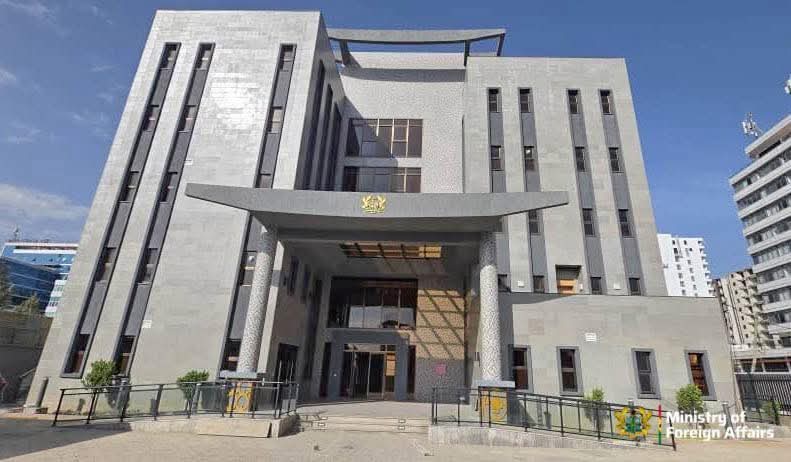
A fresh political and diplomatic debate has emerged over the commissioning of Ghana’s new Chancery in Addis Ababa, following conflicting claims by senior government officials about the origins, funding, and execution of the landmark diplomatic project.
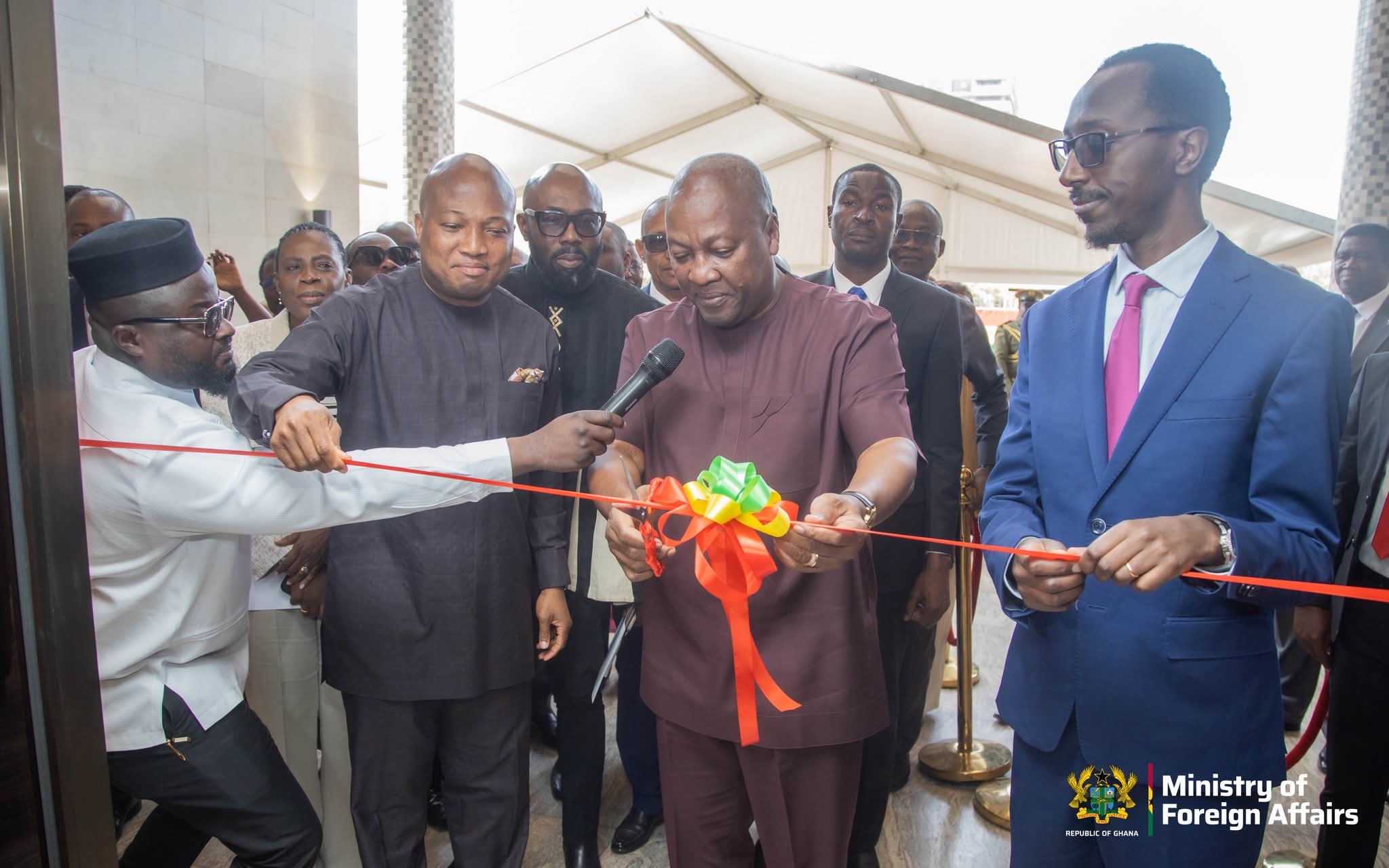
The dispute was triggered after the official commissioning ceremony of the facility, which has been presented by the current administration as a major diplomatic milestone symbolising the commitment to African unity and multilateralism.
Former Minister for Lands and Natural Resources and current Ranking Member on Parliament’s Foreign Affairs Committee, Samuel Abu Jinapor, has publicly challenged the narrative being promoted by the Minister for Foreign Affairs, Samuel Okudzeto Ablakwa, describing it as a distortion of historical facts surrounding the project.
According to Abu Jinapor, while the commissioning of the chancery is a national achievement deserving recognition, the attempt to rebrand the project as the exclusive accomplishment of the current administration amounts to what he calls an “egregious misrepresentation of facts.”
Providing a detailed historical account, Abu Jinapor recalled that construction of the Ghana Chancery in Addis Ababa formally began on 10 February 2020, during a sod-cutting ceremony led by then President Nana Akufo-Addo.
The ceremony took place on the sidelines of the African Union Summit and was witnessed by the then Ethiopian President, Sahle-Work Zewde, alongside senior officials from both Ghana and Ethiopia.
Abu Jinapor, who was present at the ceremony, insists this marked the true commencement of the project.
He further explained that at the event, President Akufo-Addo openly lamented Ghana’s lack of a permanent chancery building in Addis Ababa, despite the historically close diplomatic ties between Ghana and Ethiopia.
Those relations, he noted, date back to the era of Kwame Nkrumah and Haile Selassie, whose leadership forged enduring Pan-African bonds and cooperation between the two nations.
Abu Jinapor rejected claims that the project has a “ten-year history” dating back to 2016, describing such assertions as misleading.
He maintained that actual construction only began in February 2020 and that by October 2024 the project had reached about 90 percent completion under the previous administration.
According to him, the only outstanding component at the time was the final phase of payment and finishing works.
He attributed delays in final payments to the 2024 general elections, arguing that any slowdown in completion should not be retroactively attributed to earlier administrations.
In his account, the project was substantially completed before the change of government, and the remaining 10 percent of works were finalized by the current administration.
Framing the issue as one of governance ethics and democratic maturity, Abu Jinapor emphasized that the Addis Ababa Chancery is a national project, initiated by one government and completed by another.
He argued that acknowledging continuity in governance should not be controversial, warning that it is “disingenuous” to erase the foundational role played by the Akufo-Addo administration in the project’s development.
The controversy follows a Facebook post by Samuel Okudzeto Ablakwa, made after President John Mahama commissioned the facility.
In his statement, Ablakwa described the new chancery as a symbol of the belief in multilateralism, its commitment to the African Union vision, and its resolve to strengthen bilateral relations with Ethiopia.
He also linked the commissioning to President Mahama’s readiness to assume the Chairmanship of the African Union.
Okudzeto Ablakwa further stated that the project had a decade-long history, beginning with funding arrangements under a 2016 SG-SSB facility, followed by construction delays due to economic challenges, and eventual resumption by the current government through the payment of outstanding Interim Payment Certificates (IPCs) in 2025.
He expressed appreciation to Ethiopian officials, including Foreign Minister Dr. Gedion Timothewos, as well as Ghanaian and Ethiopian professionals involved in the project.
The competing accounts have now transformed a diplomatic milestone into a political flashpoint, highlighting broader tensions over credit-taking, historical accountability, and continuity in governance.