By Kwesi Yankag
Mid 2009, Pretoria. South Africa. We headed towards the city centre with David Abdulai. The background music in his car was simply Lumba Lumba Lumba. Never met a professor as much in love with Daddy Lumba. Soon a blinking traffic light brought us to a halt.
Within seconds came a boy of ten who walked closer, and started wiping our windscreen. David waved a quick ‘No’ with his swinging wipers. But our new friend would not budge: ‘Sir, Sir,’ he sobbed, ’What I was trying to do is better than stealing! You stopped me from wiping your windscreen; but this is better than stealing.Mixed Memories Of Soweto
Dumb-founded, I sighed and saw David reach into his wallet and bring out 50 Rands. ‘This is for you,’ he told the boy as we took off on green, virtually humbled by that slice of black social life: ‘Odd jobs better than stealing.’
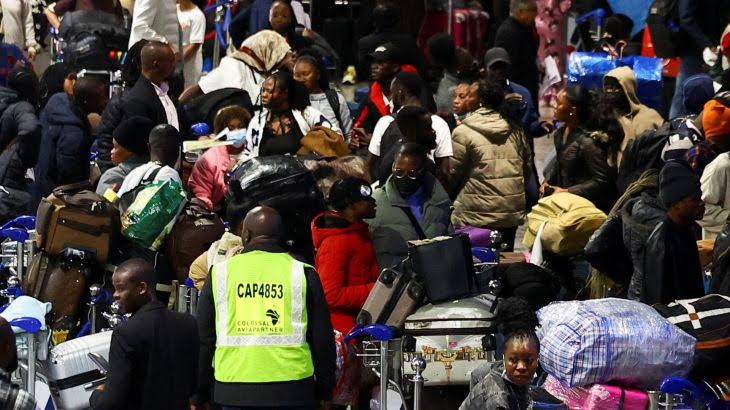
That boy must be 30years now, perhaps aware of the war his country has declared on African immigrants: to create jobs for themselves and save idle hands from ‘stealing.’ In the past few weeks, it has been nerve wracking watching television without prior warning about disturbing images. Blood thirsty South African Blacks on a mission to search and evict the enemy: African immigrants.
They are arrested, prosecuted, proven guilty and sentenced to kicks, slaps, torture, eviction, in minutes. Black South Africans now decide to unleash violence, so they can work rather than steal. If jobs are slipping away to foreigners, the answer is not formal education, not skills training nor apprenticeship; but street gangs, confrontation, instant justice: these would perhaps provide the diplomas and degrees needed to fill vacant positions. Victims of attacks include patients seeking medical care, kids at school; women, the weak and ailing who cannot flee.
The South African security is either on vacation or looks away, virtually admitting their Government’s tacit approval of the onslaught on immigrants. For the incumbent President, Ramaphosa, how else would votes accrue to his party with a diminishing popular base?
Thirty-five years after Mandela’s release; selective amnesia has set in; and memory has collapsed on sacrifices by black Africa in the fight for freedom. Our status has been changed from allies against racism to sworn enemies.
Did we toil in vain in the collective fight against apartheid? Kwame Nkrumah’s open door policy for oppressed South African refugees; celebrated South African singer Marian Makeba given a Ghanaian passport when dispossessed of travel documents; international student hostels for student refugees; admission of freedom fighters to Nkrumah’s Ideological Institute at Winneba; Nkrumah’s financial and logistical support to Mandela in the early 1960s.
At the turn of a new century, however, ally has turned villain.
But there were bigger martyrs we have not acknowledged enough. 1970, the Editor of state-owned ‘Daily Graphic’ lost his job after slamming Ghana Government’s unpopular policy of dialogue with South Africa. Asiakwa-born Cameron Duodu, author of the novel ‘The Gab Boys,’ after a year of editing Ghana’s premier daily, blasted the Busia Government for avoiding the more prudent option of joining the boycott of South Africa.
Days after the Graphic editorial (titled ‘Dialogue Cui Bono’) Cameron Duodu was dismissed as Editor. Now 88 the well-respected ‘Gab Boy’, is back in Ghana after years of free lancing and working with the BBC.
We fought apartheid South Africa even outside Ghana. Mid 1980s, as a doctoral student at Indiana University, I joined hands for a major anti-apartheid demonstration led by ASA President Folu Ogundimu, now a professor at Michigan State. I was his secretary. We took over the Don Meadows on campus in a peaceful protest. The agenda was to agitate for Indiana to withdraw the University’s multi-million investment in South Africa, to help bring down the racist Government.
1990: shortly before Mandela’s release. The African Theater Collective of Legon of which I was associate, went on a nation-wide ‘Free Mandela’ tour, performing in various secondary schools. The climax was our participation in an anti-Apartheid Festival in Wa, Upper West: we had travelled a distance of 565 kilometers to fight Apartheid through drama. Our poetry performance ‘Mandela: Symbol of Resistance’ won a prestigious award. But we achieved this only to be confronted during our return journey, with a stone throwing gang of kids near Bole.
The kids smashed the windscreen of our 70-seater bus and sped through the savanna grasslands. Were we angry? Yes, but we later came to terms with the bigger picture. Those children were not to blame; they were children of Soweto fighting apartheid. The stone throwing boys were protesting our criminal neglect of Northern Ghana in development; they were indeed celebrating the anti-apartheid festival their own way. There could be Mandelas among them; Steve Bikos, Bishop Tutus, protesting internal apartheid in Ghana; a conspiracy by the South against Northern Ghana.
Mandela’s eventual freedom enabled us to attend conferences in South Africa. One such was a language conference at University of Western Cape, which facilitated my visit to Robben Island where Mandela was incarcerated- a thirty minute ferry ride. There, I saw his famous tiny cell, and beddings; but I was also touched by the encircling vegetation: sweet scented eucalyptus plants which dried our tears, after hearing Mandela’s agony in prison.
Years after this, the University of Ghana in 2002 found it fit to confer on Nelson Mandela an honorary doctorate degree in Law at a special ceremony in Johannesburg.
But how can I complete my reminiscences with no word about our complete cultural immersion in 2006, when I led a group of Legon Faculty and students on APARC, a project by University of Boston, to interact with past African Presidents: Jerry Rawlings, Kenneth Kaunda, (Zambia), Arap Moi (Kenya), Ketumile Masire (Botswana), Karl Offman (Mauritius), Soglo (Benin), Mkapa (Tanzania) etc.
It was a rare opportunity also to meet students and faculty from other parts of US. Our rich experience included a trip to Soweto, where we dined, visited their museum, and got a rare opportunity to enter the red-brick home of Winnie Mandela, former wife of Nelson Mandela. Experience at the apartheid museum down town Joburg was profound and engaging. But our interaction the next morning with past heads of state topped it all; and Oh lest I forget: a lively speech by the youthful son of anti-apartheid activist Steve Biko, who autographed his latest book for participants. What a thrilling experience!
But what does it mean to work so hard reinforcing networking in Africa, only to lose it all through xenophobia? Did Nkrumah and Mandela toil in vain? And who steps in, to save brothers in each other’s throat?
Agoo, African Union! Is anybody home?
kyankah@ashesi.edu.gh