By Grace Zigah
At a time when Ghanaian football is still recovering from the disappointments of recent years, the leadership of the Ghana Football Association (GFA) has turned attention to the foundations of the game, investing directly in grassroots infrastructure as a strategy for long-term growth.
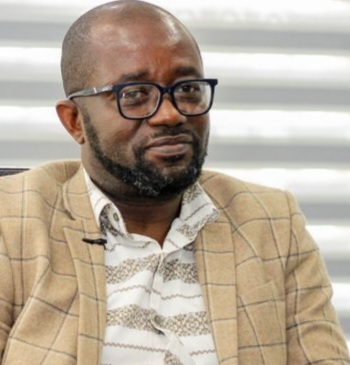
The GFA President Kurt Okraku has revealed that the association has been spending $100,000 annually on the acquisition of footballs for clubs in the lower tiers of the domestic game, specifically those competing in the Division Two and Division Three Leagues.
Speaking in an interview with GFA media, Okraku placed the investment within a broader narrative of recovery and rebuilding, contrasting the struggles of 2024 with the relative successes of 2025.
The failure to qualify for the 2025 Africa Cup of Nations (AFCON) marked a low point for national football, exposing structural and developmental weaknesses within the system.
However, the following year saw a turnaround, with Ghana securing qualification to the 2026 FIFA World Cup and the Black Queens winning bronze at the Women’s AFCON—results that signaled renewed competitiveness at the international level.
Against this backdrop, Kurt Okraku explained that the GFA’s focus has not only been on elite national teams but also on strengthening the base of the football pyramid.
Over the past two years, the association has consistently committed $100,000 each year to purchase footballs for Division Two and Three clubs across the country.
According to him, the initiative is implemented through the Regional Football Associations (RFAs), which receive consignments of footballs and redistribute them to clubs within their jurisdictions to support training and competitive activities.
“Each RFA now receives a good amount of footballs to redistribute to our clubs,” Okraku stated, describing the initiative as a strategic intervention aimed at reigniting passion for the game at community level. He framed the programme not as charity, but as structural investment—designed to improve basic working conditions for clubs that often struggle with limited resources and logistical constraints.
The move reflects a broader shift in policy direction within Ghana football governance, where development is increasingly being defined not only by national team success but by the health of the domestic system.
Division Two and Three clubs form the backbone of player development in the country, producing talent that eventually feeds into the Ghana Premier League and national teams.
For years, these lower leagues have suffered from poor infrastructure, lack of equipment, and limited institutional support—factors that have weakened talent pipelines.
By directly supporting these clubs with essential equipment, the GFA is positioning grassroots development as a cornerstone of national football policy. Okraku’s comments suggest a deliberate attempt to correct long-standing structural imbalances, where investment traditionally favored top-tier competitions and national teams, while lower divisions were left to survive largely on community goodwill and personal sacrifice.
The $100,000 annual investment, while modest in global football terms, represents a symbolic and practical commitment to decentralised development. It also aligns with the GFA’s post-2024 rebuilding agenda, which seeks to restore public confidence in Ghana football through visible, tangible reforms rather than rhetoric alone.
As Ghana prepares for the 2026 World Cup and continues to consolidate recent international gains, the focus on grassroots infrastructure highlights a strategic understanding: sustainable success at the top depends on stability and support at the bottom. In that sense, the footballs distributed to Division Two and Three clubs are more than equipment—they are a statement of policy direction, signalling that the future of Ghana football is being built from the ground up, not just from the national team camps.