BY Issah Olegor
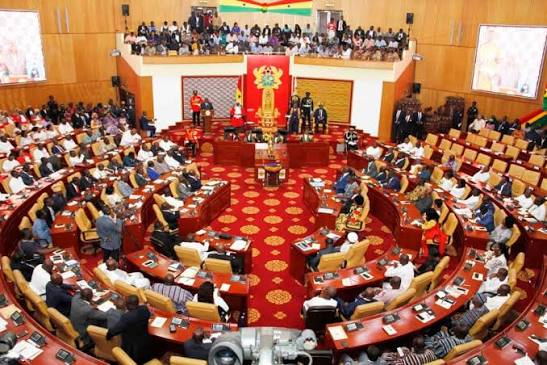
Parliament has advanced the National Democratic Congress government’s security sector reforms with the second reading of the Security and Intelligence Agencies Bill, 2025, a proposed law intended to restructure the national security framework and redefine how state security institutions are coordinated and governed.
The debate followed the presentation of the report of the Select Committee on Security and Intelligence, delivered by the Committee’s Chairperson, Zanetor Agyeman-Rawlings.
In her address to the House, she explained that the Bill seeks to formally establish Regional and District Security Councils under the authority of the National Security Council, creating a structured system of coordination from the national level down to local administrative units.
According to her, the proposed legislation will clearly define the roles of specific state agencies responsible for coordinating and implementing government security policies, covering both internal and external security operations.
The Bill, she said, is designed to strengthen institutional clarity, reduce overlaps in security operations, and ensure a more unified national security architecture.
The Minister for the Interior, Muntaka Mohammed Mubarak, further justified the Bill by linking it to a broader government policy direction aimed at modernising the security framework.
He told Parliament that the legislation would repeal the Security and Intelligence Agencies Act, 2020 (Act 1030), replacing it with a more comprehensive structure that aligns with current national security demands and emerging threats.
According to the Interior Minister, the repeal and replacement of Act 1030 is necessary to establish what he described as a “coherent national security architecture” that reflects contemporary security realities, including transnational crime, terrorism risks, cyber threats, and regional instability within the West African sub-region.
However, the Bill did not pass without resistance. Members of the Minority Caucus, led by their leader Alexander Kwamena Afenyo-Markin, strongly opposed both the principles and specific clauses of the proposed law.
The Minority raised concerns about governance, oversight, and the potential concentration of power within the national security structure, arguing that some provisions could undermine accountability and democratic controls.
Despite the objections, the House proceeded to a vote and approved the Bill to be read for a second time, allowing it to move forward in the legislative process.
The Security and Intelligence Agencies Bill, 2025, forms part of a long-running reform agenda within Ghana’s security sector. Over the years, successive governments have attempted to reorganise national security institutions to respond to evolving threats, including organised crime, terrorism, illegal mining (galamsey), arms trafficking, and cross-border insecurity.
The 2020 legislation (Act 1030) was itself introduced as part of these reforms, but the government now argues that further restructuring is required to meet current national and regional security challenges.