BY Issah Olegor
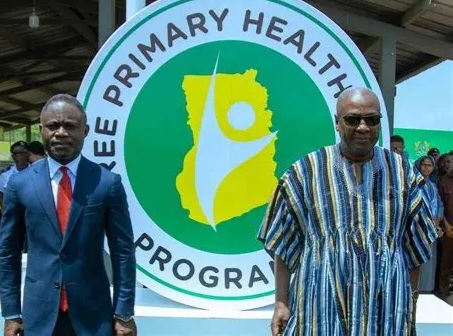
A fresh political clash has erupted between the governing National Democratic Congress (NDC) and the opposition New Patriotic Party (NPP) over the deployment of tricycles under the newly introduced Free Primary Healthcare Programme, with President John Dramani Mahama strongly rejecting claims that the bikes are being used as ambulances.
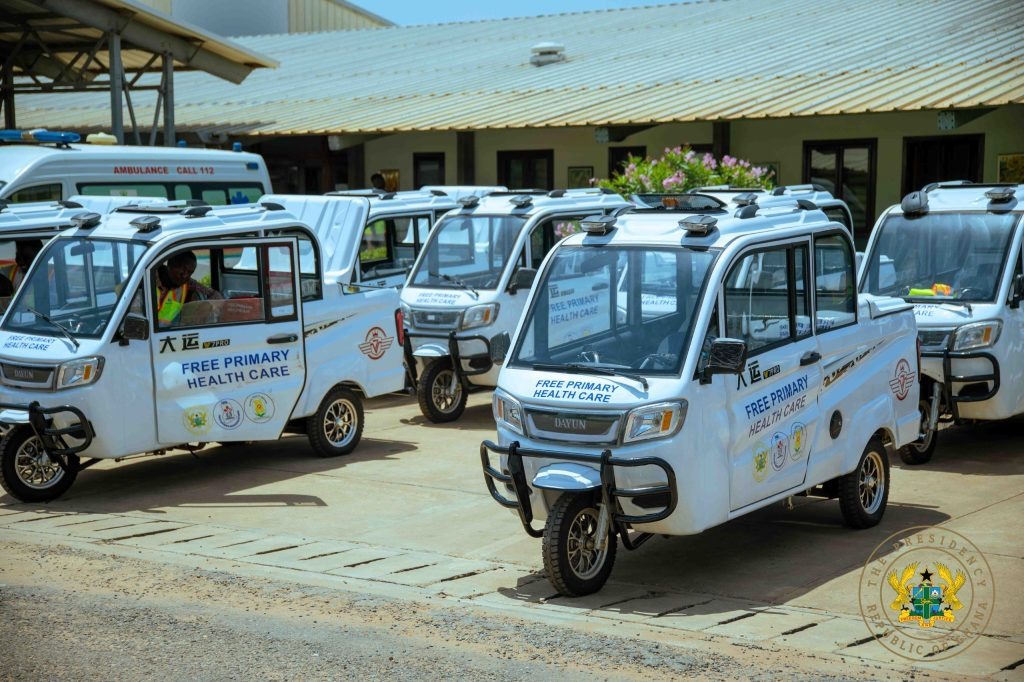
The controversy, which has gained traction across social media and political platforms, stems from criticism by NPP supporters who have mocked the initiative, branding the tricycles—popularly known as “aboboyaa”—as “abobolance” or “Mahalance,” suggesting they are a downgrade from standard emergency response vehicles.
Critics argue that the use of tricycles reflects a regression in healthcare delivery, particularly when compared to previous investments in ambulances and drone-based medical supply systems.
However, addressing supporters during his “Resetting Ghana” tour in the Northern Region, President Mahama took time out, dismissing the claims as misinformation, insisting that the tricycles were never intended to function as ambulances.
He clarified that the bikes are specifically designated for community health workers and volunteers to facilitate outreach services, including health screenings, vaccination campaigns, and the delivery of essential medical supplies in hard-to-reach communities.
According to the President, the misunderstanding largely stems from a lack of clarity about the objectives of the Free Primary Healthcare Programme, which prioritises preventive care and last-mile service delivery.
He explained that in many rural settings, healthcare workers already rely on motorcycles for mobility, and the introduction of tricycles is meant to provide an alternative for those who cannot ride motorcycles, while also enabling the transportation of equipment such as vaccines stored in cooler compartments.
“Those tricycles are not ambulances,” President Mahama emphasised, urging critics to seek proper understanding before drawing conclusions.
He reiterated that the initiative is aimed at bringing healthcare closer to communities, particularly in underserved areas where access to facilities remains limited.
The Ghana Health Service (GHS) has also stepped in to counter what it describes as misleading narratives. In an official statement, the Service clarified that the tricycles are part of a broader strategy to strengthen primary healthcare delivery and have been used successfully in outreach operations over the years. It stressed that the vehicles are equipped with cargo compartments designed to carry vaccines, diagnostic tools, and other medical supplies necessary for community-level interventions.
The GHS further explained that the deployment of tricycles complements the existing use of motorbikes, offering a more stable and inclusive transport option for frontline health workers, particularly Community Health Nurses operating within the Community-based Health Planning and Services (CHPS) system.
The Service noted that the bikes are especially useful in rural and peri-urban areas where terrain and accessibility pose challenges.
Despite these clarifications, the issue has deepened partisan tensions, with the NPP maintaining that the policy reflects poor planning and inadequate innovation.
Some critics have questioned the safety and efficiency of tricycles in delivering healthcare services, arguing that the country should instead focus on expanding modern emergency response systems.
On the other hand, supporters of the NDC have countered that the criticism is politically motivated, pointing out that some of the tricycles were reportedly procured or assembled during the previous administration but were not deployed.
They argue that the current government is utilising available resources to improve healthcare access while avoiding financial waste.
The dispute also highlights broader differences in healthcare policy approaches between the two major parties.
While the NPP often emphasises investments in ambulances and technology-driven solutions such as drone deliveries, the NDC’s Free Primary Healthcare Programme focuses on preventive care and community-based interventions aimed at reducing disease burden before it escalates.
At the centre of the debate is the role of primary healthcare in the long-term strategy to achieve universal health coverage.
The NDC Government officials insist that improving outreach and early detection through community-level services is critical to reducing pressure on hospitals and lowering healthcare costs.