BY Daniel Bampoe
For the first time in the Fourth Republic of Ghana, the governing National Democratic Congress appears heading for what political analysts are already describing as its most competitive and potentially divisive presidential primary ahead of the 2028 general elections.
With President John Dramani Mahama constitutionally barred from contesting again after the expiration of his current mandate, attention within the NDC is gradually shifting toward the fierce succession battle expected to dominate the party’s 2027 presidential primary.
Political observers believe the contest could become a defining moment for the future of the NDC, especially at a time when internal tensions are already surfacing among powerful figures within the governing party over influence, succession and control of the post-Mahama era.
Unlike previous leadership transitions within the NDC, many of which were either uncontested or heavily tilted toward predetermined candidates, the upcoming 2027 race is expected to produce multiple heavyweight contenders from different factions of the party.
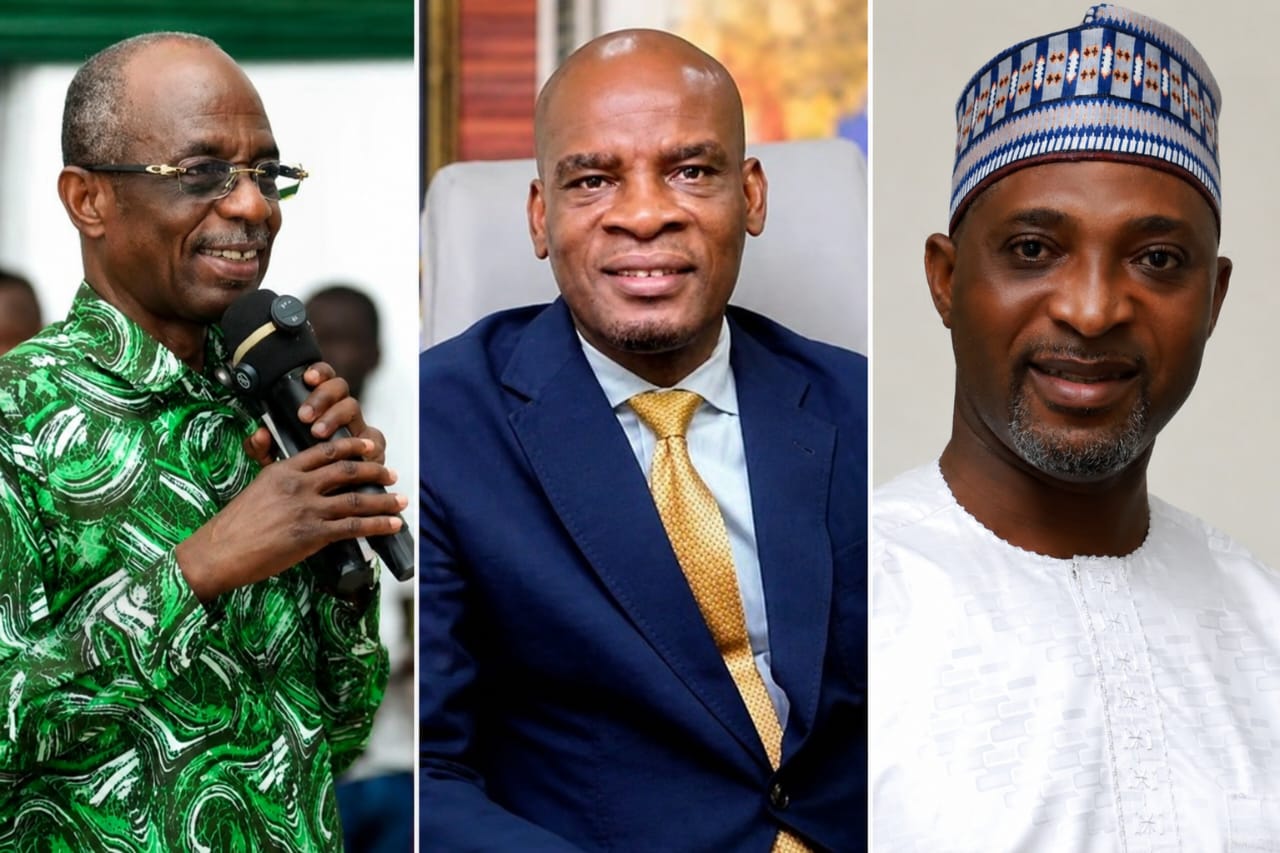
The emerging succession conversations come against the backdrop of recent internal tensions involving National Chairman Johnson Asiedu Nketiah, Education Minister Haruna Iddrisu, Interior Minister Muntaka Mohammed-Mubarak and several other senior party figures.
The tensions escalated after Asiedu Nketiah publicly claimed during his ongoing nationwide “Thank You Tour” that the NDC won the 2024 elections because the party boldly removed Haruna Iddrisu and Muntaka from the Minority leadership structure ahead of the polls, suggesting the group was compromised.
The comments triggered backlash from supporters of both ministers and intensified speculation that succession politics within the NDC may have already begun far earlier than expected.
Political analysts now believe the ongoing parallel nationwide tours by President Mahama and Asiedu Nketiah reflect deeper internal maneuvering within the party ahead of the coming leadership transition.
While the President is currently embarking on what government officials describe as a national “Reset Tour,” the NDC chairman has simultaneously been conducting his own separate “Thank You Tour” across various constituencies and regions.
The unusual situation has fueled speculation about growing rivalry between camps aligned to President Mahama and allies of Asiedu Nketiah, especially after Haruna Iddrisu publicly described Mahama’s engagement as the “proper thank you tour” while dismissing the chairman’s exercise as a mere “curtain raiser.”
Political watchers say the developments may only be the beginning of a larger succession struggle expected to intensify as the 2027 presidential primary approaches.
Among the names frequently mentioned are Chief of Staff Julius Debrah, National Chairman Johnson Asiedu Nketiah, Finance Minister Cassiel Ato Forson, Education Minister Haruna Iddrisu and Agriculture Minister Eric Opoku.
Political observers believe regional balance, ethnic alliances, grassroots influence, financial strength and control of party structures will all become major factors in determining who eventually emerges as the NDC’s next presidential candidate.
Historically, the NDC has rarely experienced truly open and competitive internal presidential contests under the Fourth Republic.
In 1992, former President Jerry John Rawlings transitioned directly from military rule under the Provisional National Defence Council into democratic politics as the NDC’s presidential candidate without facing any internal challenger.
He again went unopposed in 1996.
Attention later shifted dramatically in 1998 during the famous “Swedru Declaration,” when Rawlings publicly endorsed then Vice President John Evans Atta Mills as his preferred successor for the 2000 elections.
The move effectively shaped the direction of the party and established Professor Mills as the NDC’s dominant political figure for several years.
Following the NDC’s defeat in the 2000 elections, the party organized presidential primary in 2002 where Professor Mills overwhelmingly defeated Prof Kwesi Botchwey with nearly 79 percent of the votes.
Ahead of the 2008 elections, Professor Mills again secured a dominant victory in the party’s primary against contenders including Ekwow Spio-Garbrah, Eddie Annan and Mahama Iddrisu.
One of the most dramatic moments in the NDC’s internal political history came in 2011 during the bitter “FONKAR versus GAME” contest, where former First Lady Nana Konadu Agyeman-Rawlings challenged sitting President Mills for the party’s presidential slot.
The acrimonious campaign created deep divisions within the NDC before President Mills eventually secured an overwhelming victory with over 96 percent of the votes.
Following the death of President Mills in 2012, then Vice President John Mahama emerged as the party’s natural successor and became the NDC’s presidential candidate without serious resistance.
He again led the party into the 2016 elections after an internal challenge by businessman George Boateng reportedly failed to gain traction.
John Mahama later cemented his dominance within the NDC after defeating rivals such as Joshua Alabi, Alban Bagbin, Sylvester Mensah and Ekwow Spio-Garbrah during the party’s 2018 presidential primary.
He repeated that dominance again in 2023 when he secured an overwhelming victory to become the NDC’s flagbearer for the 2024 elections which eventually returned the party to power.
However, with President Mahama constitutionally unable to seek re-election in 2028, the NDC now faces what many believe could become its fiercest internal power contest in decades.
Several influential names are already being discussed quietly within party circles as possible contenders for the party’s future leadership.
Among the names frequently mentioned are Chief of Staff Julius Debrah, National Chairman Johnson Asiedu Nketiah, Finance Minister Cassiel Ato Forson, Education Minister Haruna Iddrisu and Agriculture Minister Eric Opoku.
Political observers believe regional balance, ethnic alliances, grassroots influence, financial strength and control of party structures will all become major factors in determining who eventually emerges as the NDC’s next presidential candidate.
At the same time, the opposition New Patriotic Party is also expected to regroup around former Vice President Mahamudu Bawumia, who many within the NPP continue to view as the party’s strongest option for the 2028 elections.
With succession tensions already beginning to surface publicly inside the NDC, political analysts warn that how the governing party manages its upcoming presidential race could ultimately determine whether it retains power beyond the Mahama era or opens the door for a dramatic opposition comeback in 2028.