By Issah Olegor
A new continental report has revealed that Africa’s digital economy is entering a stricter regulatory phase, with 45 countries now operating under formal data protection laws and a growing number advancing toward enforceable artificial intelligence (AI) governance frameworks.
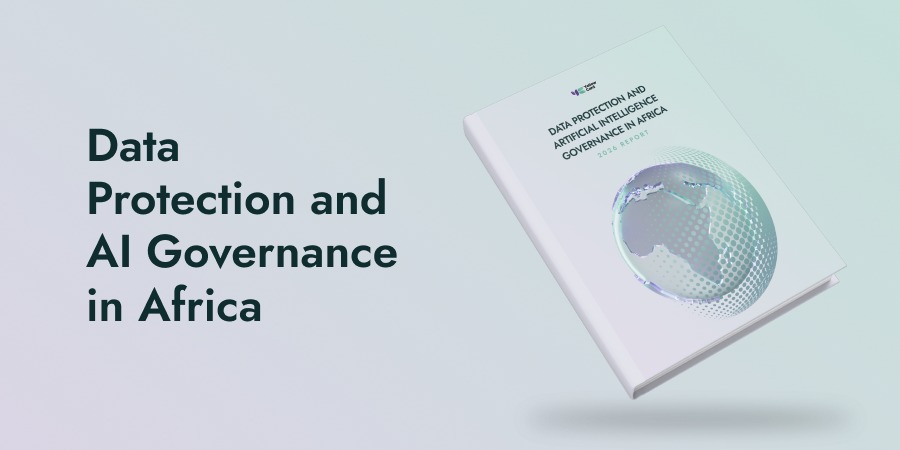
The findings, contained in the 2026 Data Protection and Artificial Intelligence Governance in Africa Report released by Yellow Card on April 22, highlight a decisive shift from policy formation to enforcement—particularly within the financial services sector where digital transactions and cross-border payments are expanding rapidly.
The report comes at a time when banks, telecommunications firms, and payment service providers across emerging markets are increasingly relying on stablecoins to manage treasury operations and facilitate faster international settlements.
This transformation, however, is placing regulatory compliance at the centre of financial innovation.
According to the report’s author, Thelma Okorie, institutions can no longer treat data protection and AI governance as future considerations. Instead, they must now integrate privacy safeguards and ethical AI systems directly into their operational frameworks.
She explained that businesses seeking to modernise payment infrastructure must navigate complex and often fragmented regulatory systems across multiple jurisdictions, making compliance capacity a critical determinant of success.
From Legal Frameworks To Enforcement
Historically, many African countries lagged behind in comprehensive data protection legislation, with regulatory gaps raising concerns about digital privacy and cross-border data flows.
Over the past decade, however, there has been a steady push—driven by increased internet penetration, mobile money adoption, and global regulatory influence—to establish national data protection regimes.
The 2026 report shows that this effort has matured significantly. Out of the 45 countries with enacted laws, 39 now have fully operational regulatory authorities, signalling that compliance requirements are no longer symbolic but actively enforced.
This transition marks a new phase where regulators are not only setting rules but also demanding accountability through tools such as Data Protection Impact Assessments (DPIAs) and Algorithmic Impact Assessments (AIAs).
These mechanisms are expected to raise the cost of non-compliance, particularly for financial institutions deploying AI in customer verification, fraud detection, and risk profiling.
AI Governance Gains Momentum
Beyond data protection, the report identifies a parallel rise in AI governance across the continent. At least 16 African countries have adopted national AI strategies, with leading economies including Nigeria, Angola, Morocco, and Namibia moving toward enforceable legislation.
This marks a departure from earlier “soft-law” approaches—such as policy guidelines and ethical frameworks—toward binding legal regimes that directly impact how AI technologies are developed and deployed.
For financial service providers, this shift is particularly significant. AI systems used in Know-Your-Customer (KYC) processes, transaction monitoring, and credit risk assessment will now be subject to stricter scrutiny, requiring transparency, accountability, and bias mitigation.
Implications For Financial Institutions
The report places strong emphasis on the financial sector, where cross-border data flows are expanding alongside the use of blockchain-based payment systems. Stablecoins, in particular, are being adopted to unlock liquidity and reduce settlement delays traditionally associated with T+2 banking systems.
However, the report warns that the benefits of such technologies can only be realised if the underlying infrastructure adheres to rigorous data protection and security standards. Institutions are therefore being urged to prioritise “privacy-by-design” principles and embed governance mechanisms into their digital architecture from the outset.
Bridging Fragmented Compliance Landscapes
Operating across multiple African jurisdictions remains a complex task due to differing regulatory requirements.
The report argues that businesses need resilient, scalable infrastructure capable of meeting diverse compliance standards without slowing down operations.
In response to this challenge, Yellow Card positions its infrastructure as a solution that allows institutions to operate across borders without navigating each country’s regulatory system independently.
Through its API suite and treasury management tools, the company says clients can access compliant payment rails, execute instant settlements across more than 30 blockchains, and manage global fiat accounts securely.
Okorie noted that while stablecoins present opportunities for managing foreign exchange volatility and improving efficiency, they must function within strict regulatory frameworks to maintain trust and long-term viability.
A Defining Moment For Africa’s Digital Economy
The report ultimately frames 2026 as a turning point for Africa’s digital transformation—where innovation is no longer judged solely by speed or scale, but by compliance, accountability, and trust.