
By Nadia Ntiamoah
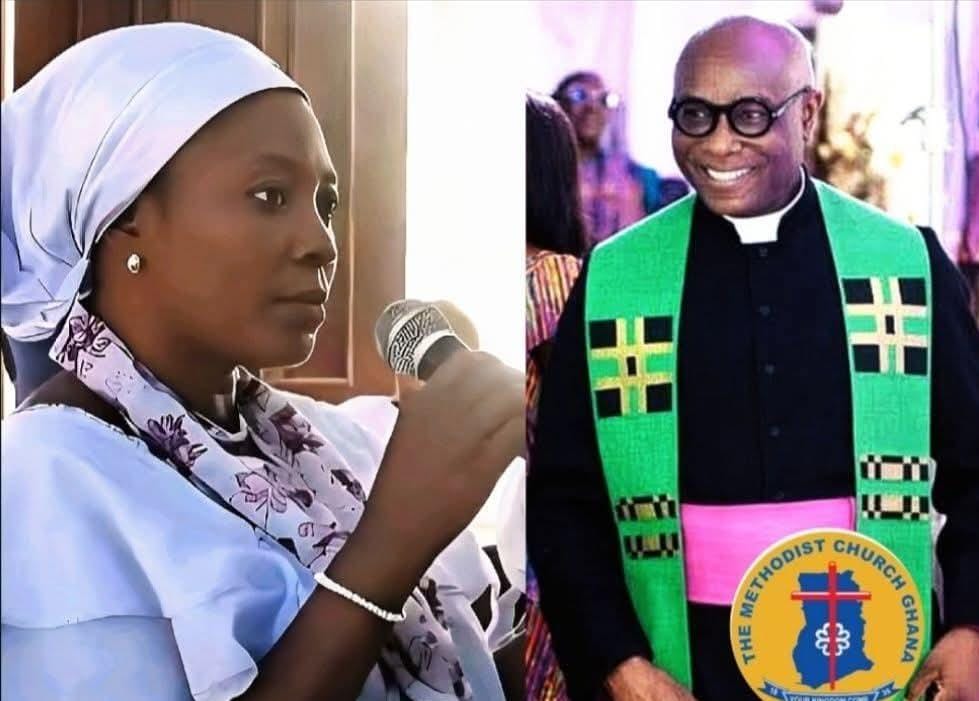
A dramatic confrontation between a pastor and a female congregant at the Methodist Church Ghana has ignited a nationwide debate on tithing, church accountability, and the relationship between faith and financial giving.
The incident, which reportedly occurred at the Wesley Cathedral, gained widespread attention after a video of the exchange went viral across social media platforms
At the heart of the confrontation was a sermon in which a pastor of the church allegedly described members who fail to pay tithes as “armed robbers.”
The remark triggered an immediate and emotional reaction from a female church member, who stood up during the service to challenge both the statement and the broader practices surrounding church finances.
In a bold response, she argued that if non-tithing members were to be labeled as such, then church leaders themselves should be questioned over how funds are managed.
The woman’s intervention quickly escalated into a heated exchange, with her accusing church leadership of failing to adequately support members in times of need despite collecting significant contributions.
She maintained that her refusal to pay tithes was not due to financial difficulty, but rather a matter of principle.
According to her, there exists a troubling imbalance between what members are expected to give and the level of assistance they receive during personal crises.
Citing a hypothetical scenario, she argued that a church member could contribute thousands of cedis in tithes yet receive only minimal support when facing serious family emergencies.
She contrasted this with earlier years when contributions were smaller but, in her view, the church demonstrated stronger communal support and engagement.
The incident has since sparked intense public discourse, with opinions sharply divided.
On social media, some users praised the woman for what they described as courage in addressing sensitive issues within the church, particularly around transparency and fairness.
Others, however, criticised her approach, arguing that confronting church leaders publicly during a service was disrespectful and undermined ecclesiastical authority.
In response to the uproar, the Methodist Church Ghana is reported to have called for calm and compassion, acknowledging the concerns raised while urging members to engage in respectful dialogue.
The situation has brought renewed focus to long-standing theological and practical debates surrounding tithing—whether it should be viewed as a mandatory obligation or a voluntary act rooted in personal conviction.
Historically, tithing has been a central doctrine in many Christian traditions, often linked to teachings from biblical texts such as the Book of Malachi, where believers are encouraged to give a tenth of their income.
In contemporary practice, however, interpretations vary widely, with some churches emphasising cheerful and voluntary giving rather than strict enforcement.
The viral confrontation has, therefore, gone beyond a single church dispute to raise broader questions about financial stewardship, leadership accountability, and the evolving expectations of congregants in modern religious institutions.


