BY Daniel Bampoe
Proceedings in the high-profile criminal trial of Republic v. Abdul Hanan-Wahab and Four Others took a dramatic twist as the Criminal High Court raised serious concerns over the conduct of the Economic and Organised Crime Office (EOCO) and the handling of key evidence by the prosecution.
The court directed EOCO to justify why it continues to hold electronic devices belonging to the accused persons and their families, while also ordering explanations over alleged unauthorized actions by its officers. The developments have added a new layer of controversy to a case already under intense public and legal scrutiny.
Court Demands Answers Over Seized Devices
The issue arose after defence lawyers mounted a strong objection to EOCO’s continued possession of several communication devices, including an iPhone 14 Pro Max, Tecno smartphones, and laptops reportedly belonging to the children of the second accused, Faiza Seidu Wuni.
Counsel for the second accused, Augustine Obuor, argued that the continued detention of the devices was unjustified, particularly as the prosecution had already completed case management without listing those items as evidence for trial.
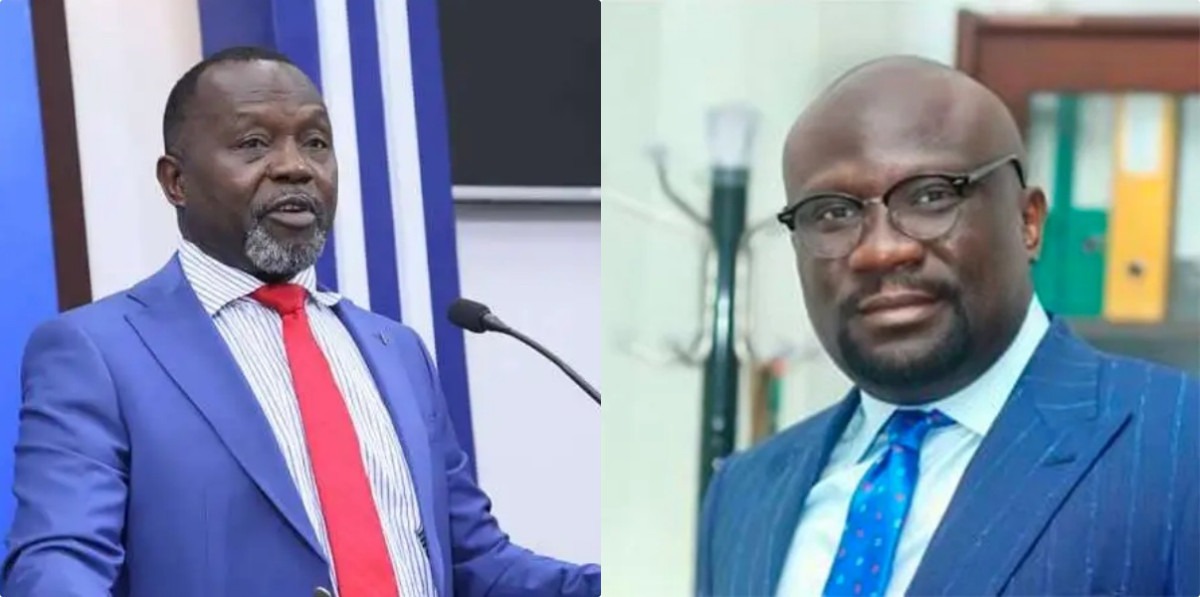
Supporting the application, former Attorney-General Godfred Yeboah Dame, counsel for the first accused Abdul Hanan-Wahab, told the court that phones belonging to his client and even his driver had also been seized.
He maintained that holding on to such devices without indicating their evidential relevance amounted to an abuse of investigative powers.
In response, representatives from the Attorney-General’s Department, led by Dr. Dominic Ayine, indicated they were not in a position to immediately address the concerns raised.
The court subsequently ordered EOCO officials to personally appear at the next hearing to explain the legal basis for retaining the devices.
Graffiti Controversy Deepens Tensions
In a related development, the defence raised fresh allegations against EOCO officers over graffiti markings reportedly made on the residence of Abdul Hanan-Wahab on April 8, 2026, without a court order.
Counsel Godfred Dame described the act as a violation of the accused persons’ constitutional rights, particularly their right to dignity and presumption of innocence.
Although EOCO officers present in court acknowledged that such an incident had occurred, they distanced themselves from direct involvement, stating they were unaware of the full circumstances.
The court has now summoned EOCO’s Assets and Surveillance Department to appear and respond to the allegations at the next sitting.
Prosecution Withdraws Key Evidence
Perhaps the most surprising development of the day came when the Attorney-General’s Office announced that it would no longer rely on a significant portion of its earlier evidence.
Specifically, the prosecution withdrew two boxes of documents referenced in the witness statement of an EOCO officer, Julius Nudawu, which allegedly contained records of supplies authenticated by the Ministry of Education and payments made in favour of NAFCO.
These documents had previously been presented as central to the prosecution’s case, forming part of the evidentiary basis for the 24 criminal charges, including stealing and money laundering, brought against the accused persons.
The withdrawal followed sustained objections from defence lawyers, who questioned the clarity, authenticity, and relevance of the documents, particularly their connection to the alleged financial irregularities.
Legal observers say the move could significantly impact the strength of the prosecution’s case, as the withdrawn materials were believed to underpin key aspects of the charges.
Dispute Over EOCO Officer’s Role In Prosecution
Another legal controversy emerged over the presence of an EOCO Assistant Staff Officer who appeared in court alongside the Attorney-General’s legal team.
Counsel for the first accused, Godfred Dame, objected to the arrangement, arguing that under the Law Officers Act, 1974, only officers properly designated within the Attorney-General’s Department are authorized to prosecute criminal cases on behalf of the State.
He contended that the EOCO officer lacked the legal mandate to appear as part of the prosecution team.
The court has directed the Attorney-General to produce evidence of the officer’s authorization and reserved its ruling on the matter until the next hearing.
A Case Under Pressure
The trial stems from allegations of financial misconduct at the National Food and Buffer Stock Company (NAFCO) during Abdul Hanan-Wahab’s tenure as CEO between 2017 and 2024.
The prosecution has accused the former CEO and his co-accused of orchestrating a scheme to misappropriate public funds intended for food supply programmes, including the Free Senior High School initiative.
However, the case has in recent months been plagued by procedural delays, evidentiary challenges, and legal disputes, including earlier controversies over frozen assets and delayed disclosures by the prosecution.