By Daniel Bampoe
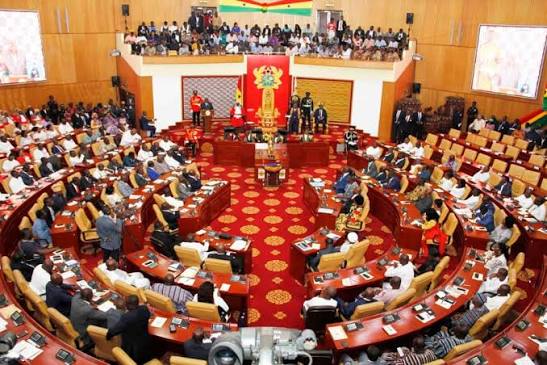
The Centre for Democratic Movement (CDM) has raised serious concerns about the legislative journey of Ghana’s Human Sexual Rights and Family Values Bill, questioning why a bill that was previously presented to the public as complete and awaiting only presidential assent has now undergone extensive amendments before its passage by Parliament.
In an official statement, the pressure group argued that recent developments surrounding the controversial legislation have exposed inconsistencies in the information previously communicated to Ghanaians.
According to the organization, for several years, public discourse on the Bill centered on demands for immediate presidential assent, with advocates insisting that Parliament had completed all legislative processes and that only the President’s signature was required for the Bill to become law.
However, the CDM noted that the amended version of the legislation currently before Parliament reveals substantial modifications to several critical provisions, including definitions, offences, exemptions, institutional safeguards, and interpretative clauses.
The group contends that these revisions suggest the Bill was far from finalized when it was being promoted as ready for assent.
A key area of concern highlighted by the organization relates to the removal of provisions dealing with the alleged subversion of family values.
Under Section 3 of the original Bill, individuals who directly or indirectly encouraged, facilitated, promoted, or supported acts deemed to undermine family values could face criminal sanctions, including fines and imprisonment.
The provision was widely regarded as one of the Bill’s strongest enforcement mechanisms.
According to the CDM, that particular section has now been completely deleted from the amended version passed by Parliament, with no alternative provision introduced to replace it.
The organization described the deletion as one of the most significant changes to the legislation, arguing that it fundamentally alters the character and scope of the Bill that was previously championed before the Ghanaian public.
The group further questioned why Ghanaians were encouraged to pressure the former administration to sign the Bill into law if lawmakers themselves later deemed it necessary to undertake extensive revisions. It argued that citizens deserved to have been informed from the beginning that substantial legislative work remained outstanding rather than being led to believe that the process had effectively concluded.
The controversy over the Human Sexual Rights and Family Values Bill has been one of the most contentious political and social debates in Ghana in recent years.
The Bill, popularly referred to as the Anti-LGBTQ+ Bill, was first introduced as a private members’ bill by a group of Members of Parliament and sought to criminalize LGBTQ+ activities, advocacy, promotion, and related conduct. It received widespread support from religious groups and traditional leaders, while attracting criticism from human rights organizations, foreign governments, and international development partners.
The Bill became a major political issue ahead of the 2024 general elections, with intense public pressure mounted on then-President Nana Addo Dankwa Akufo-Addo to grant assent after Parliament approved it.
However, legal challenges were filed at the Supreme Court, raising constitutional questions that delayed the process and prevented the legislation from receiving presidential approval before the end of the administration’s tenure.
Against this backdrop, the CDM insists that the latest amendments have reopened important questions about transparency and honesty in the legislative process.
The organization argues that the issue now extends beyond the substance of the Bill itself and touches on the credibility of democratic governance and public communication.
Consequently, the group is calling on the Government of Ghana, Parliament, and all key actors who actively campaigned for the Bill to provide a detailed explanation regarding the shift from demands for immediate assent to what it describes as a process of extensive legislative revision. It wants authorities to clarify whether the amendments were anticipated during earlier advocacy efforts and whether the Ghanaian public was given a complete and accurate account of the Bill’s status at the time.
The CDM further called for an official clarification and, where necessary, an unqualified apology to Ghanaians and the international community for any confusion, misrepresentation, or misinformation that may have arisen during discussions surrounding the legislation.
According to the organization, public trust in democratic institutions depends on transparency, accuracy, and accountability, adding that political considerations should never outweigh the obligation to provide citizens with truthful information about matters of national importance.