By Daniel Bampoe
Former Lands and Natural Resources Minister and Member of Parliament for Damongo, Samuel Abu Jinapor, has mounted a strong critique of the Mahama administration’s handling of the economy, arguing that after nearly eighteen months in office, the government can no longer rely on blaming its predecessors for the country’s economic difficulties.
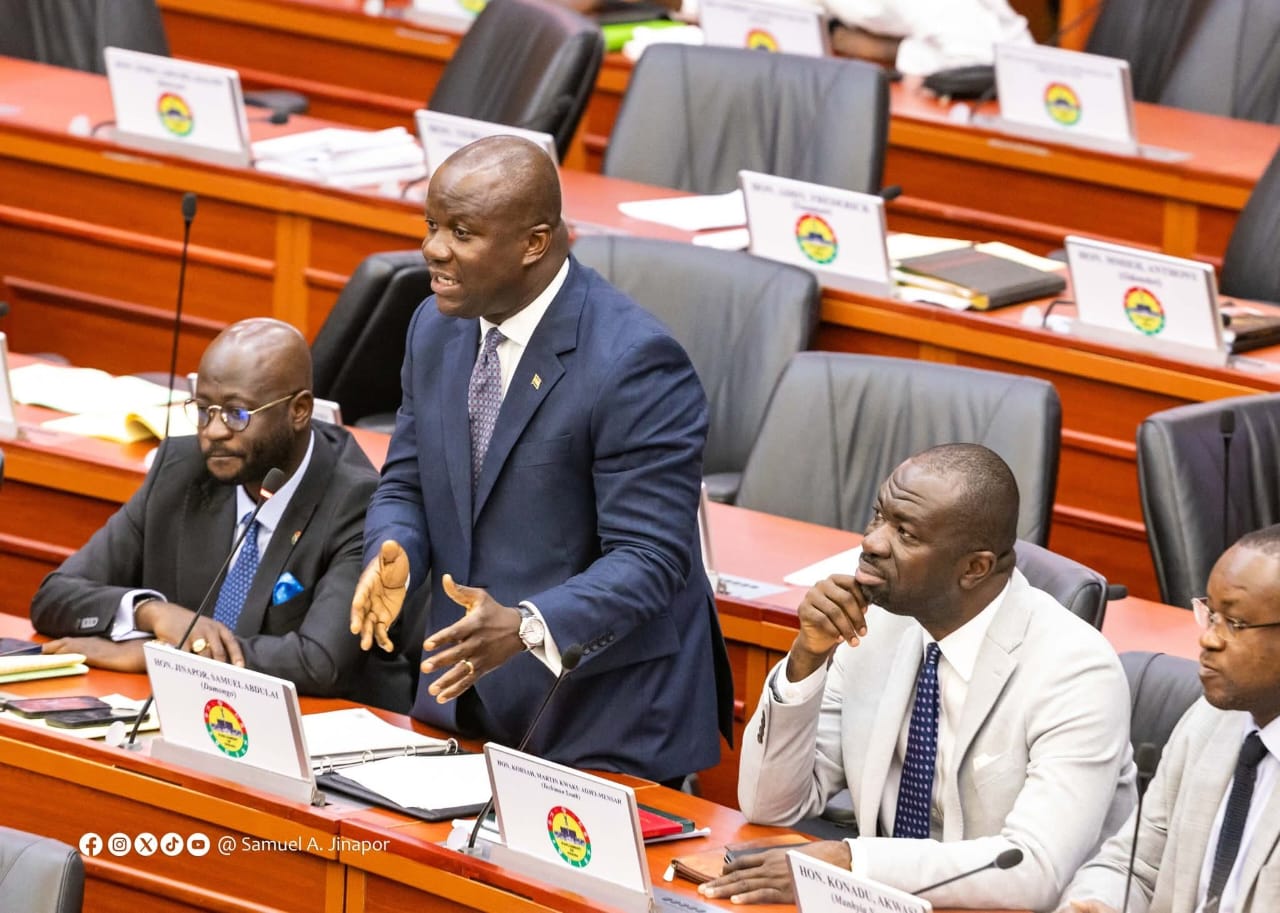
Addressing Parliament on Tuesday, June 2, 2026, during deliberations on the policy statement presented by Finance Minister Dr. Cassiel Ato Forson pursuant to Order 91(2) of the Standing Orders of Parliament, Abu Jinapor said the time had come for the government to move beyond rhetoric and demonstrate its ability to address the challenges facing ordinary Ghanaians.
According to the Damongo legislator, the governing National Democratic Congress (NDC) repeatedly campaigned on the claim that it inherited a broken economy from the previous New Patriotic Party (NPP) administration.
However, he maintained that having secured power on that basis, the government now bears full responsibility for fixing the problems it identified and delivering the relief and prosperity it promised voters.
He stressed that Ghanaians did not elect the NDC to continue explaining the country’s problems but rather to provide practical solutions and improve living conditions.
Abu Jinapor’s comments come amid growing political debate over the state of the economy following the presentation of the Finance Minister’s latest policy statement to Parliament.
The government has consistently argued that it inherited significant fiscal and economic challenges, including debt distress, inflationary pressures, and constraints arising from the economic recovery programme under the International Monetary Fund (IMF).
The Damongo MP, however, challenged that narrative, pointing to economic indicators at the end of the Akufo-Addo administration, which he said showed signs of recovery after the shocks caused by the COVID-19 pandemic and global economic disruptions.
According to him, inflation had begun trending downward, economic growth had rebounded strongly, and the economy was gradually stabilizing through the implementation of the Post-COVID-19 Economic Recovery Programme introduced by the previous administration.
He argued that despite these gains, many Ghanaians are currently struggling with rising living costs and worsening economic pressures. He noted that families across the country continue to face financial difficulties, while traders, workers, and households increasingly complain about the high cost of goods and services.
The former minister also drew attention to concerns within the agricultural sector, stating that many farmers are unable to secure markets for their produce despite expectations that the sector would receive stronger support under the current administration.
He warned that recent economic data suggests a slowdown in both the agriculture and industrial sectors, describing the development as particularly worrying given the importance of the two sectors to employment creation, food security, industrialization, and economic growth.
Abu Jinapor further accused the Ministry of Finance of failing to release critical budgetary allocations to various ministries, departments, agencies, and public institutions.
According to him, the delays are negatively affecting the implementation of government programmes, slowing development projects, and undermining the delivery of essential public services.
He expressed concern that several public institutions have struggled to execute their mandates due to funding constraints, despite budgetary provisions approved by Parliament.
Beyond the challenges facing government agencies, the Damongo MP also raised alarm about what he described as an emerging pattern of delayed payments by the Finance Ministry to contractors, suppliers, and private-sector businesses that have provided services to the state.
According to him, the failure to settle outstanding obligations is creating cash flow difficulties for businesses, affecting operations, threatening jobs, and weakening confidence in government contracts and public procurement arrangements.
He suggested that the government’s financial management practices are beginning to create uncertainty within the private sector, which remains a key driver of economic activity and investment.
In concluding his remarks, Abu Jinapor argued that economic statistics alone cannot accurately reflect the realities confronting ordinary citizens.
While acknowledging the importance of macroeconomic indicators, he maintained that the true measure of economic performance lies in the everyday experiences of Ghanaians.
He therefore challenged Finance Minister Dr. Cassiel Ato Forson and government officials to engage directly with citizens across the country to better understand the hardships many households are enduring.
“No set of figures can replace the reality on the ground,” he stressed, insisting that policymakers must look beyond economic reports and focus on the practical impact of government policies on the lives of ordinary people.