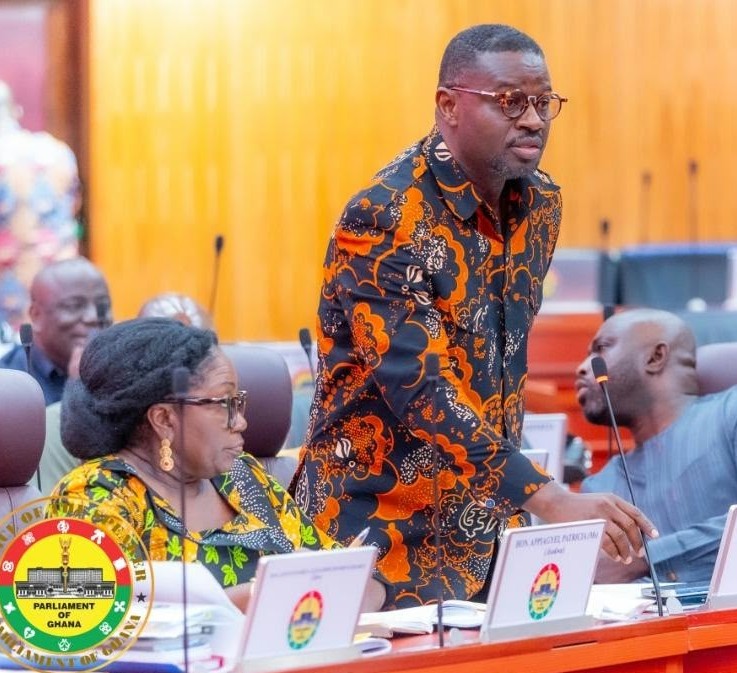
Minority Chief Whip and Member of Parliament for Nsawam-Adoagyiri, Frank Annoh-Dompreh, has called on the government to strengthen its negotiations on Ghana’s proposed carbon credit agreement, warning that the country risks receiving less than the value of its environmental resources if the proposed rates are not improved.
Contributing to the debate on the floor of Parliament on Wednesday, Annoh-Dompreh questioned the financial terms of the agreement, particularly the proposed payment range of between US$5 and US$25 per tonne of carbon credit, which he said appeared significantly lower than the global average of about US$40 per tonne.
He urged the sector minister and the relevant negotiating authorities to take another look at the pricing arrangements before Ghana commits itself to the deal, insisting that the country must not be shortchanged in the international carbon market.
The MP began his contribution by commending the committee chairperson, the sector minister and the ranking member for their presentations on the report. He acknowledged the progress Ghana had made in establishing bilateral arrangements and pointed to previous agreements with Switzerland, Sweden and Singapore as examples of the country’s growing involvement in international carbon market cooperation.
According to Annoh-Dompreh, Parliament approved the Ghana-Switzerland agreement in 2020, followed by agreements with Sweden and Singapore in 2024. He also identified the proposed Ghana-South Korea arrangement as another important benchmark, while drawing attention to negotiations with British Petroleum (BP), whose terms, he said, had been agreed upon and reviewed by the Attorney-General.
He explained that Ghana’s participation in carbon market arrangements must be guided by established international climate commitments, including the country’s Nationally Determined Contributions (NDCs) and its obligations under the United Nations Framework Convention on Climate Change (UNFCCC).
He noted that the relevant international frameworks provide direction for Ghana’s climate-related commitments and cooperation, adding that the country had made considerable progress and earned recognition in the global climate policy space.
Annoh-Dompreh said one of the encouraging aspects of the agreement under consideration was its reliance on provisions of the Paris Agreement, particularly those relating to capacity enhancement and cooperation on climate-related matters. He described these provisions as important opportunities for Ghana to strengthen its environmental management systems while benefiting from international collaboration.
However, he said the financial component of the agreement required closer scrutiny. Referring the minister to page eight, bullet point 5.6 of the committee’s report, the MP questioned why Ghana was considering a carbon credit pricing arrangement of between US$5 and US$25 per tonne when, according to information he had checked, the global average stood at approximately US$40.
He stressed that the difference raised legitimate concerns about the value Ghana stood to receive from the transaction and called for more robust negotiations to secure better terms.
Annoh-Dompreh maintained that Ghana’s contribution to international climate commitments and its standing in the global climate community should place the country in a stronger position when negotiating the commercial value of its carbon credits.
He therefore encouraged the minister not to rush through the financial arrangements at the expense of the country’s long-term interests, arguing that Ghana must seek a price that properly reflects the value of the carbon credits it generates.
Beyond the pricing concerns, the Nsawam-Adoagyiri MP also highlighted the potential of landfill sites to contribute to Ghana’s carbon credit programme through the capture and utilisation of methane gas.
He commended the agreement’s provision to explore methane gas produced from landfill sites, describing it as an important opportunity to turn environmental waste into an economic resource while addressing the harmful effects of poorly managed waste disposal facilities.
He, however, appealed to the minister to broaden the scope beyond the Poon landfill site identified in the report, arguing that other landfill facilities across the country could also provide opportunities for methane gas recovery and carbon credit generation.
As an example, he drew attention to the landfill site at Sumia in his constituency, where he said harmful leachate from the facility was destroying plant and animal life.
He warned that the environmental consequences of such facilities should not be overlooked and argued that their inclusion in the carbon credit programme could provide a dual benefit: reducing environmental pollution and generating additional value for Ghana through the sale or exchange of carbon credits.
According to him, expanding the programme to cover more landfill sites would enable the country to maximise the opportunities available within the carbon market while addressing environmental challenges affecting local communities.
The MP’s intervention also reflected his concern about environmental problems in communities within his constituency, where the effects of waste management and pollution remain issues requiring attention. He argued that carbon credit arrangements should not be treated merely as international commercial transactions but should also provide practical benefits for communities and the environment.
Turning again to the government’s negotiations with British Petroleum, Annoh-Dompreh reminded the minister that the BP agreement had already gone through significant preparatory stages, including the conclusion of negotiations and a review by the Attorney-General.
He therefore called for the agreement to be brought before Parliament as soon as possible following the consideration of the current report. He urged the minister to make every effort to ensure that the BP arrangement was presented to the House before Parliament rose, if the necessary processes could be completed within the available time.
The Minority Chief Whip said Ghana had an opportunity to strengthen its position in the international carbon market through carefully negotiated agreements, but cautioned that the country must remain firm on the financial terms attached to such arrangements.
He maintained that while the proposed agreement offered opportunities for climate cooperation, capacity development and methane recovery, the pricing concerns needed to be addressed to ensure that Ghana obtained a fair return from its carbon resources.
Annoh-Dompreh concluded by encouraging his colleagues in Parliament to support the adoption of the committee’s report and the eventual passage of the agreement, while urging the minister to take his concerns about carbon credit pricing and the outstanding BP agreement seriously.