BY Daniel Bampoe
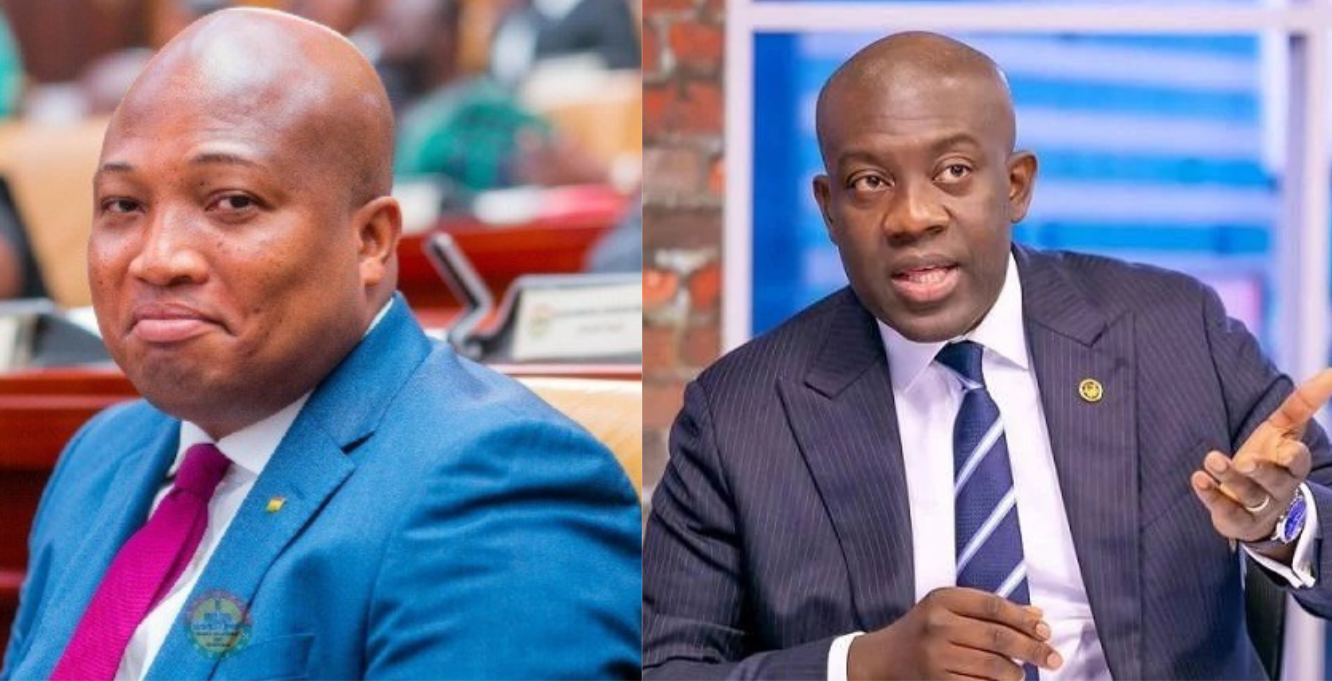
Foreign Affairs Minister, Samuel Okudzeto Ablakwa, is facing increasing scrutiny after the Ministry repeatedly failed to respond to a Right to Information (RTI) request filed by Member of Parliament for Ofoase-Ayirebi, Kojo Oppong Nkrumah, seeking detailed information on the salaries, allowances, and benefits enjoyed by the diplomats serving abroad.
The controversy is emerging at a time of mounting pressure over the conditions of service, benefits, and remuneration packages of some categories of Ghanaian diplomatic appointees stationed across foreign missions, with growing public interest in how much the state spends on ambassadors, high commissioners, and senior diplomatic officials.
Critics say the Ministry’s refusal or delay in releasing the requested information raises serious concerns about transparency and accountability under the current administration, particularly because Samuel Okudzeto Ablakwa built much of his political career in opposition by aggressively demanding disclosure of government expenditure, probing state officials, and publicly calling for openness in governance.
The North Tongu MP, Okudzeto Ablakwa while in opposition frequently used public platforms to demand accountability from the Akufo-Addo administration on issues relating to public spending, appointee benefits, and state expenditure.

However, now serving as Foreign Affairs Minister, he is being accused by opponents of abandoning the very transparency principles he once championed.
Documents available show that on January 2, 2026, Kojo Oppong Nkrumah formally invoked the Right to Information Act, 2019 (Act 989), requesting for comprehensive details on the emoluments and benefits paid to Ambassadors, High Commissioners, Deputy High Commissioners, and Deputy Ambassadors posted to Ghana’s missions abroad.
The request specifically sought information on basic salaries, housing allowances, entertainment packages, travel benefits, educational support, medical allowances, and other perks available to diplomatic officials.
The Ofoase-Ayirebi MP also requested details on the criteria used by the Ministry in determining those benefits, including posting location, diplomatic rank, and years of service.

On January 6, 2026, the Ministry of Foreign Affairs acknowledged receipt of the request and subsequently asked the applicant to provide a copy of his national identification card in line with Section 18(6) of the RTI Act.
Correspondence attached to the documents further shows that Kojo Oppong Nkrumah complied with the directive and submitted his national identification card through email communication to the RTI office as requested.
Despite complying with all procedural requirements, the requested information was still not released by the Ministry.
After waiting for more than 56 working days without receiving any substantive response, the MP filed an internal review application on March 10, 2026, arguing that the Ministry had breached the timelines stipulated under the RTI law.
Under the Right to Information Act, public institutions are required to respond to information requests within a specified statutory period unless exemptions under the law apply.
With the Ministry still failing to respond even after the internal review request, Kojo Oppong Nkrumah escalated the matter to the Right to Information Commission on March 26, 2026.
In his petition to the Commission, the MP requested a formal review of the case and asked the Commission to direct the Ministry of Foreign Affairs to release the information requested under Act 989.
The matter subsequently attracted the intervention of the RTI Commission, which on April 14, 2026, formally wrote to the Ministry of Foreign Affairs regarding the case.
The Commission reproduced the details of the information being requested and reminded the Ministry of its obligations under the RTI Act, while demanding explanations for the Ministry’s failure or refusal to provide the requested information.