By Daniel Bampoe
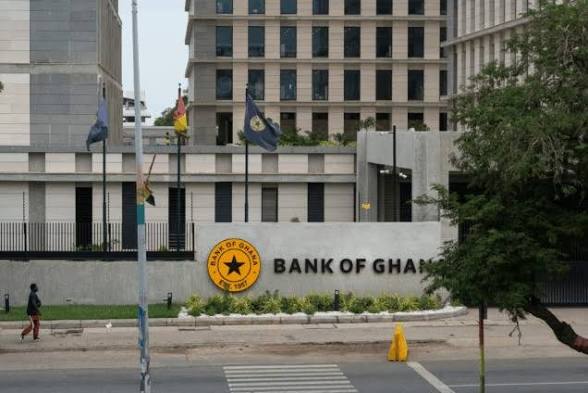
The Bank of Ghana has posted a significant financial loss for 2025, but insists the figures reflect the cost of restoring macroeconomic stability rather than institutional weakness.
In its audited financial statements for the year ending December 31, 2025, released on May 1, the central bank reported an operating loss of GH¢15.63 billion and an additional GH¢19.32 billion loss under Other Comprehensive Income (OCI), bringing total equity further into negative territory.
Governor Dr. Johnson Pandit Asiama and the Bank’s management, however, maintain that the losses must be understood within the broader context of the economic recovery, describing them as the financial cost of policy actions that delivered lower inflation, a stronger currency, and improved economic conditions.
The Bank attributed the operating loss primarily to two major interventions: aggressive open market operations (OMO) used to absorb excess liquidity and the Domestic Gold Purchase Programme, which helped build the foreign reserves.
These policy measures, though expensive, contributed to a sharp turnaround in key macroeconomic indicators. Inflation fell dramatically from 23.8% in December 2024 to 5.4% by the end of 2025, and further to 3.2% by March 2026.
At the same time, the cedi appreciated by 40.7% against the US dollar, while Gross International Reserves increased from US$9.11 billion to US$13.83 billion. Public debt also declined significantly, dropping from 61.8% to 45.3% of GDP.
The Bank noted that real private sector credit growth rebounded strongly—from negative levels in 2024 to over 13% by December 2025 and nearly 20% by March 2026—signalling a recovery in lending and economic activity.
According to the central bank, the losses reflect the mechanics of monetary policy, not operational inefficiency.
Open market operations required the Bank to issue short-term instruments at high interest rates to absorb liquidity, creating substantial interest expenses. At the same time, the gold purchase programme involved exchange rate differentials that added to costs.
The OCI loss, on the other hand, was largely due to the cedi’s appreciation. As the local currency strengthened, the cedi value of foreign reserves declined, resulting in accounting losses—even though reserves increased in dollar terms.
“This is a translation effect, not a depletion of reserves,” the Bank clarified.
The Bank’s negative equity position widened from GH¢61.32 billion at the start of 2025 to GH¢96.28 billion by year-end.
However, the central bank stressed that negative equity does not impair its ability to function, noting that central banks operate differently from commercial institutions.
Their primary mandate is not profit-making but ensuring price stability and financial system resilience.
The Bank cited global precedents, where institutions such as the Federal Reserve and European Central Bank have recorded losses while successfully implementing monetary policy.
Despite the headline losses, the Bank reported a positive policy solvency margin, meaning it can still fund its monetary operations from core income sources without relying on excessive monetary financing.
Officials argue that the true measure of performance lies in macroeconomic outcomes rather than accounting results. “Lower inflation, a stable currency, stronger reserves, and recovering credit are the real indicators of success,” the report emphasised.
As part of its reserve management strategy, the Bank undertook a significant rebalancing of its gold holdings in 2025.
With gold accounting for over 40% of reserves—well above global norms—the Bank divested about 22.24 tonnes, generating approximately US$3.02 billion. The proceeds were reinvested into diversified, high-quality foreign assets to improve liquidity and reduce exposure to gold price volatility.
This move formed part of a broader effort to align Ghana’s reserve portfolio with international best practices.
The Bank also outlined reforms to the Domestic Gold Purchase Programme, which has now been integrated into a broader national framework known as the Ghana Accelerated National Reserve Accumulation Policy (GANRAP).
Under this system, the Ghana Gold Board assumes a central role in gold acquisition, while the Bank focuses on reserve management—an adjustment expected to reduce future costs.
Looking ahead, the Bank expects its financial position to improve as inflation stabilises and interest rates decline, reducing the cost of liquidity management.
It also anticipates fewer large exchange rate revaluation effects, given improved currency stability, alongside ongoing discussions with government on recapitalisation under the amended Bank of Ghana Act.
The 2025 financial statements, the Bank concludes, represent the price paid for stabilisation during one of Ghana’s most challenging economic periods in recent history.
While the costs are recorded on the central bank’s balance sheet, the benefits—lower inflation, improved purchasing power, and stronger economic confidence—are being felt across households and businesses.
In essence, the Bank argues, the losses are not a failure, but the financial imprint of a successful policy intervention.