BY Nadia Ntiamoah
A new nationwide report by the Blueprint DNA Organisation has revealed a significant shift in how Ghanaians are addressing questions of biological parentage, with a growing number turning to scientific testing for clarity—often with unexpected outcomes.
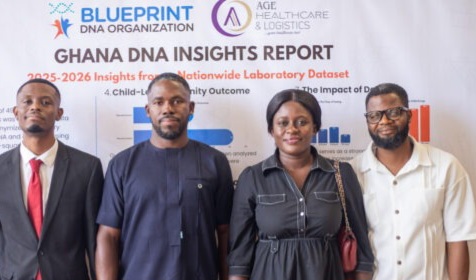
The report, titled “Understanding Paternity Testing in Ghana: Findings from a Nationwide Laboratory Dataset,” was presented at a stakeholder and media briefing held at the Ghana College of Physicians and Surgeons on March 25, 2026. It provides one of the most comprehensive insights into paternity testing trends in the country.
Speaking at the event, the Medical Director of Blueprint DNA, Dr. Abeiku Ghansah, disclosed that approximately 42.3 percent of paternity tests conducted in 2025 excluded the alleged father as the biological parent.
The findings, based on anonymised laboratory data, reflect cases where individuals voluntarily sought testing due to doubts about biological relationships, pointing to a growing reliance on DNA technology for personal reassurance.
Dr. Ghansah noted that the majority of cases—about 87 percent—were driven by private concerns rather than legal or immigration requirements, underscoring the deeply personal nature of paternity issues in Ghanaian society.
The report further highlights that nearly 59 percent of children involved in these tests are under the age of six, suggesting that many families are seeking confirmation early in a child’s life.
However, it also revealed that delayed testing is more likely to produce exclusions, with cases conducted more than 10 years after birth recording exclusion rates between 53 and 59 percent.
Beyond the national averages, the study identified regional disparities in both access and outcomes. Over 80 percent of paternity tests were concentrated in Greater Accra and Ashanti regions, reflecting higher access to testing facilities.
Meanwhile, regions such as Western, Upper East, and Volta recorded relatively higher exclusion rates.
The growing demand for DNA testing comes amid broader national conversations around parentage, identity, and potential legal frameworks governing such matters.
According to Dr. Emmanuel Gyimah-Amankwah, the report arrives at a critical time when discussions on biological identification and child welfare are gaining prominence.
In addition to paternity testing, the briefing also introduced advancements in genetic screening, including Non-Invasive Prenatal Testing (NIPT)—a diagnostic method capable of detecting conditions such as Down syndrome and Edwards syndrome as early as eight weeks into pregnancy.
While the findings shed light on evolving social and medical trends, Dr. Ghansah emphasised the need for responsible use of DNA testing. He called for stronger regulatory frameworks and increased public education to address the ethical and societal implications that accompany the growing accessibility of such technologies.