
BY Grace Zigah
Vice-President Professor Jane Naana Opoku-Agyemang has urged the international community to adopt a fair and holistic approach to addressing climate change, stressing that developing nations, especially in Africa, continue to suffer disproportionately despite contributing the least to the crisis.
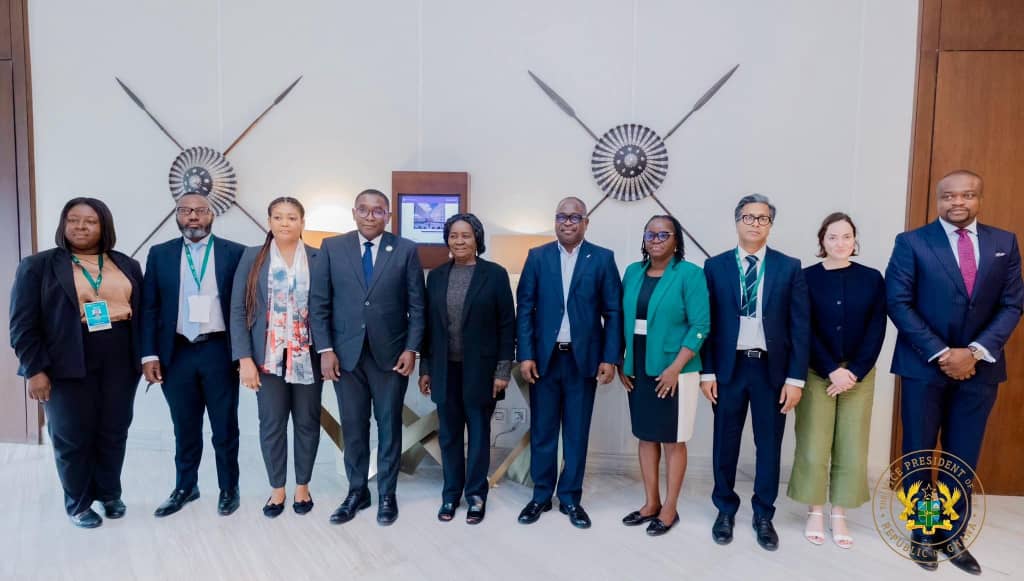
Speaking after a high-level bilateral meeting in Addis Ababa with Selwin Hart, Special Advisor to the United Nations Secretary-General on Climate Action and Just Transition, Prof. Opoku-Agyemang underscored the urgency of 2025 as a pivotal year for advancing global climate commitments.
She said climate change “recognizes no national borders” and requires collective and sustainable solutions.
The Vice-President began the meeting by receiving condolences from Hart over the recent tragic helicopter crash in Ghana before shifting focus to the pressing matter of climate action.
She highlighted the “injustice of climate impacts,” where poorer countries—despite being minor emitters of greenhouse gases—face the harshest consequences, from rising sea levels to food insecurity and forced migration.
Prof. Opoku-Agyemang called on the United Nations to give stronger amplification to the voices of vulnerable countries, stressing the need for a “multidimensional and Pan-African approach” that integrates adaptation measures, shares strategies across the continent, and scales up homegrown solutions.
She cited Ghana’s ongoing initiatives, including the deployment of floating solar panels on the Bui Dam to diversify energy production and reduce reliance on fossil fuels.
She also referenced the role of academic institutions such as the University of Energy and Natural Resources in training the next generation to sustain climate-responsive policies.
However, the Vice-President made it clear that technical solutions alone would not be enough.
She linked the climate crisis to broader economic challenges, pointing out that the international financial system continues to disadvantage developing nations.
“Unsustainable debt servicing,” she warned, “is draining resources that should be channeled into education, healthcare, and climate adaptation strategies.”
Calling for urgent reforms to the international financial architecture, Prof. Opoku-Agyemang insisted that fairness, equity, and accountability must guide global climate action if the world is to achieve just and lasting solutions.


