BY Issah Olegor
A major diplomatic breakthrough has unfolded between Accra and Washington, with the United States officially reversing the visa restrictions it imposed on Ghana few months ago.
However, the policy shift has reignited fierce debate at home, as critics argue that the lifting of the sanctions came at the cost of the agreement to temporarily receive U.S. deportees.
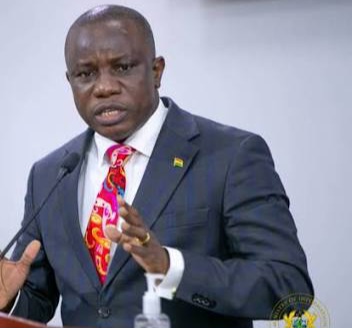
President John Dramani Mahama, addressing the commissioning of 11 new envoys at the Jubilee House in Accra on Wednesday, described the development as a victory for the diplomacy, insisting that the outcome was secured in the nation’s best interest.
He emphasised that Ghana had become the only country to win a full reversal of such sanctions under the Trump administration.
“Let me state clearly that this outcome was negotiated in Ghana’s best interest. There was no financial consideration involved,” the President said.
He acknowledged that the U.S. had raised concerns about Ghanaian nationals who overstayed student and official visas, stressing that government had assured Washington of measures to curb such practices.
Background
In July 2025, the Trump administration imposed strict visa restrictions on Ghana and other African states, citing widespread immigration violations.
Ghanaian applicants were downgraded from five-year multiple-entry visas to short-term single-entry permits.
Students and businesspeople bore the brunt of the policy, with many projects and educational plans disrupted.
At the time, the Ministry of Foreign Affairs protested strongly, calling the measures punitive and discriminatory.
But as tensions escalated, behind-the-scenes diplomatic efforts intensified, eventually leading to a deal announced at the sidelines of the UN General Assembly in New York.
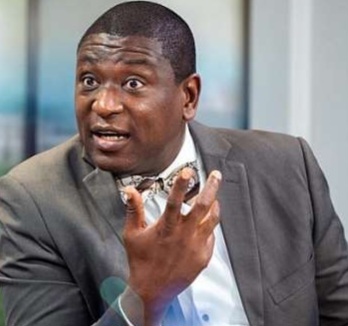
Foreign Affairs Minister Samuel Okudzeto Ablakwa confirmed that Washington restored full visa privileges after months of high-level dialogue.
He called it a “big win for Ghana,” adding that the U.S. decision was communicated directly by Allison Hooker, Under Secretary of State for Political Affairs.
The Deportee Agreement
The reversal, however, came with controversy. President Mahama has admitted that part of the understanding included Ghana serving as a temporary transit point for deportees—many of whom are not Ghanaian citizens but West Africans.
Fourteen such individuals, including Nigerians and a Gambian, have already passed through Ghana under ECOWAS free movement protocols.
John Mahama insisted that the deal was limited, carefully vetted, and aligned with both ECOWAS and Pan-African commitments.
He rejected suggestions that Ghana was being turned into a “dumping ground for deportees,” stressing that no person with a criminal background would be accepted.
“This understanding does not undermine our sovereignty, security, or stability,” he said. “Ghana will not, and I repeat, will not become a dumping ground.”
Opposition Resistance
The opposition New Patriotic Party, however, has raised constitutional and sovereignty concerns.
Samuel Abu Jinapor, Ranking Member on the Foreign Affairs Committee, argued that the agreement bypassed Parliament, flouting Article 75 of the 1992 Constitution which requires all international agreements to be ratified by lawmakers.
The Minority compared the deal to the controversial resettlement of two Guantanamo Bay detainees in 2016, a move that the Supreme Court later declared unconstitutional.
“It is astonishing that this government, despite the Gitmo Two precedent, has repeated the same error,” Jinapor said.
Missed Opportunity or Diplomatic Win?
Beyond legality, analysts remain divided over whether Ghana secured the best deal. Security expert Prof. Vladimir Antwi-Danso and policy analyst Franklin Cudjoe believe Ghana could have leveraged Washington’s sanctions for broader concessions, such as tariff reductions or stronger commitments under the Africa Growth and Opportunity Act (AGOA), which is also up for renewal.
“Knowing Trump’s transactional style, Ghana could have bargained for more significant gains. This feels like a missed opportunity,” Cudjoe observed.
Looking Ahead
For ordinary Ghanaians, the restoration of long-term visas brings relief. Students, families, and businesspeople who had been affected by the July restrictions now have renewed access to the U.S.