BY Nadia Ntiamoah
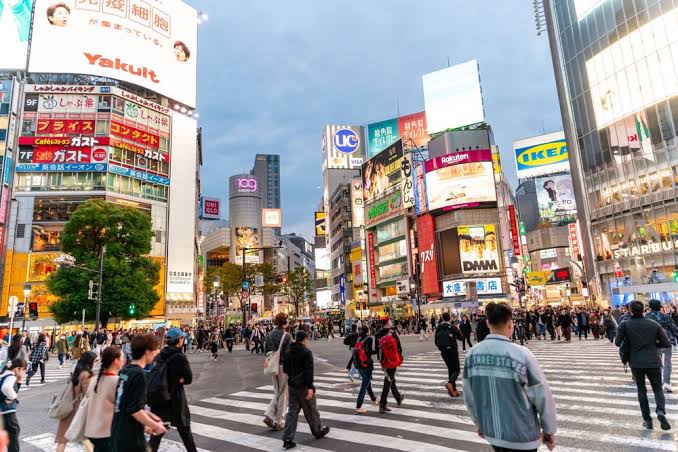
Tokyo has emerged as the richest city in the world for 2025, overtaking major American urban centres and reaffirming its long-standing global economic influence.
With a staggering Gross Domestic Product (GDP) of $2.55 trillion, the Japanese capital leads CEOWORLD Magazine’s latest ranking of the world’s wealthiest cities—a list historically dominated by the United States.
Tokyo’s Rise Built
Tokyo’s economic might did not materialise overnight. For decades, the city has been the cornerstone of Japan’s technological and industrial capabilities. Its strengths span automotive engineering, robotics, electronics, finance, and precision manufacturing.
CEOWORLD Magazine, which surveyed 300 cities worldwide, attributes Tokyo’s dominance to what it calls “innovation density”—the city’s unparalleled ecosystem for invention, research, and industrial excellence.
The publication highlights Tokyo’s highly efficient transport systems, disciplined governance, and world-class infrastructure as pillars supporting its economic supremacy.
Japan’s capital, long famed for corporations like Toyota, Sony, Mitsubishi, and SoftBank, continues to blend tradition with technological futurism, allowing it to maintain global competitiveness even as other megacities race to diversify.
United States Cities Follow Close, But Not Close Enough
Despite Tokyo’s lead, the United States still maintains the highest number of wealthy cities in the top 25.
New York City ranks second, cementing its role as the world’s financial nerve centre. With Wall Street, a booming startup ecosystem, and unmatched capital markets, the New York metropolitan area remains a magnet for investment and high-value industries.
Los Angeles takes third place, powered by its dual engines of entertainment and an expanding tech and aerospace sector. From Hollywood studios to Silicon Beach innovators, LA’s hybrid economy continues to grow in both scale and sophistication.
Other major US regions also ranked prominently:
Greater Chicago – 7th, San Francisco Bay Area – 9th, Greater Washington – 12th, Dallas–Fort Worth – 13th, Greater Houston – 14th, Greater Boston – 15th, Greater Seattle – 18th, Greater Philadelphia – 19th, Metro Atlanta – 20th, Silicon Valley – 24th
CEOWORLD notes that these powerhouse cities collectively account for nearly one-third of global GDP, illustrating how economic activity is increasingly concentrated in urban centres where innovation and capital intersect.
Asia’s Expanding Influence in Urban Wealth Creation
Beyond Tokyo, Asia continues to consolidate its position as a global economic force.
South Korea’s capital, Seoul, ranked fifth—reflecting its meteoric rise as a hub for electronics, semiconductor technology, fashion, and global digital brands. Seoul’s accelerating influence is largely driven by companies like Samsung, Hyundai, LG, and an ever-expanding startup ecosystem.
China, for its part, continues its aggressive urban development trajectory:
Shanghai – 10th, now a global leader in finance, shipping, and logistics
Beijing – 11th, strengthened by its policy-driven economic model and rising innovation centres.
These rankings, analysts say, point to a broader shift in global economic equilibrium where Asian mega-cities are increasingly challenging longstanding Western dominance.
What Determines a City’s Wealth Today?
CEOWORLD Magazine explains that modern urban wealth extends far beyond population size or infrastructure. The most prosperous cities succeed because they excel in:
Innovation capacity, Institutional strength, Capital mobility, Talent attraction, Business-friendly ecosystems and Global connectivity.
Cities that offer high quality of life, efficient services, and strong economic governance tend to attract the world’s best talent—and with talent comes investment and growth.
A World Economy Driven by Cities, Not Countries
The 2025 rankings underscore a growing truth: the world economy is increasingly shaped by cities rather than national borders. Urban centres have become hubs where ideas are formed, capital is exchanged, and global influence is wielded.