By Akaneweo Kabiru Abdul
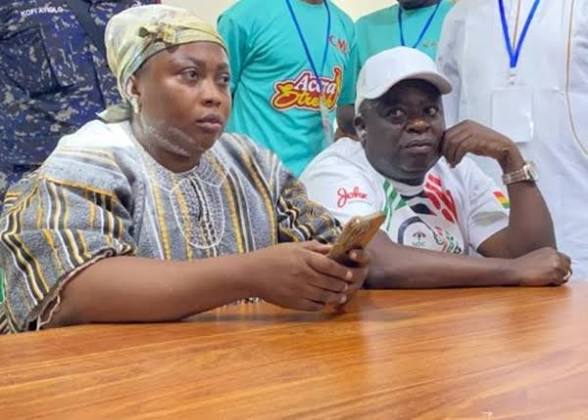
For some time now, I have been carefully and consistently monitoring the campaign trail of Irene Naa Toshie, who is being floated as a possible running mate to Kennedy Agyapong, and that is only in the highly unlikely event that he emerges victorious in the NPP presidential primaries.
Kennedy Agyapong’s campaign, from its very inception, has been steeped in intolerance, divisiveness, and a politics of anger rather than ideas. Yet, despite this unfortunate reality, I initially gave Irene Naa Toshie the benefit of the doubt. As one of the most prominent beneficiaries of the erstwhile NPP government, I expected her to at least distinguish herself by running a clean, disciplined, and unifying campaign for her preferred candidate. I thought she would resist the temptation to join the growing chorus of individuals who have chosen to tear down the party from within, and instead focus on selling a message anchored in policy, competence, and internal cohesion.
Regrettably, those expectations have been completely betrayed. Rather than rising above the fray, Naa Toshie has sunk even deeper into the gutters of ethnoreligious bigotry. Far from moderating the excesses of the KEN campaign, she has instead amplified them, proving herself not merely a passive participant, but an active promoter of the same divisive rhetoric that is steadily corroding the moral and intellectual foundations of the New Patriotic Party.
What is most insulting about her posture is the sheer contempt it shows for the intelligence of the average NPP delegate. NPP delegates are not politically illiterate. They are not impulsive mobs to be manipulated with tribal dog whistles or religious prejudice. They are discerning party people who understand electoral dynamics, governance failures, and the complex realities that shape national outcomes. To assume that they can be swayed by crude appeals to ethnicity and religion is to fundamentally misunderstand both the character and the history of the party.
At the core of Naa Toshie’s message, repeated openly and without shame, is a deeply flawed and intellectually bankrupt claim that Dr. Bawumia lost the 2024 election simply because he is a Muslim, a Mamprusi, and a native of Walewale, and that these immutable personal attributes automatically disqualify him from ever leading the party again. According to her, the logical conclusion is that delegates must never again vote for him as a standard-bearer.
One must pause here and ask, soberly and honestly, is this not irrational by every known standard of logic, reason, and political analysis? If religion and ethnicity were the sole determinants of electoral success or failure, then Ghana’s democratic history would look radically different from what it does today. Elections are won and lost on governance records, economic conditions, leadership perception, campaign strategy, party unity, and voter turnout, not on simplistic, reductionist identities.
What makes Naa Toshie’s attack even more disturbing is the staggering hypocrisy that underpins it. This is a woman whom President Nana Addo Dankwa Akufo-Addo entrusted with a highly lucrative and influential public position for a continuous period of eight years, serving as a District Assemblies Common Fund Administrator. It was a position that required integrity, discipline, and a deep sense of public responsibility. Yet, her tenure was reportedly marred by repeated administrative and ethical concerns.
There are well-documented accounts that whenever funds were released for the benefit of the district assemblies, she would deliberately delay disbursement, sit on the money, and channel it into private investments. These were not isolated incidents. On several occasions, the then Minister for Local Government, Dan Botwe, reportedly had to formally write to the President, describing her conduct as a chronic attitude that was undermining the effective functioning of local government and embarrassing the administration.
It is therefore astonishing that a profiteer of dubious means, whose actions actively weakened local governance and damaged the credibility of the party in local communities, now seeks to position herself as a moral authority capable of diagnosing the reasons for the NPP’s electoral defeat. Instead of engaging in honest self-reflection and accepting responsibility for her own missteps, she has chosen the convenient path of scapegoating Dr. Bawumia, someone whose loyalty and service to the party are beyond dispute.
In truth, Irene Naa Toshie should have been the very last person to apportion blame for the party’s defeat. She should equally have been the last person to imagine that she possesses the moral standing or political credibility required to persuade delegates to rally behind Kennedy Agyapong. For nearly eight years that the NPP was in government, one must ask plainly, what enduring contribution did Naa Toshie make to the party’s growth, ideological development, or electoral strength? Did her name resonate positively among party foot soldiers? Did her work strengthen the party’s grassroots structures? Did she help expand the party’s national appeal?
For almost the entire duration of the party’s stay in power, the average party member barely heard of anyone called Irene Naa Toshie, except in connection with administrative controversies. Today, however, after power has been lost and accountability is required, she suddenly emerges as a loud political actor, seeking relevance not through ideas or reform, but through division, resentment, and historical distortion.
If the NPP is to recover, reorganize, and return to power, it cannot afford to indulge voices that thrive on bitterness and bigotry. The path forward must be grounded in truth, accountability, inclusion, and sober analysis, not in the reckless exploitation of religion and ethnicity.
The delegates know this. The party faithful know this. And history will judge harshly those who, after benefiting immensely from the party, now seek to destroy it from within for personal relevance.