
BY ISSAH OLEGOR
The President said the disturbing health statistics demonstrate the urgent need for African governments to move away from dependence on traditional global health arrangements and build stronger, more resilient healthcare systems capable of responding to the continent’s peculiar challenges.
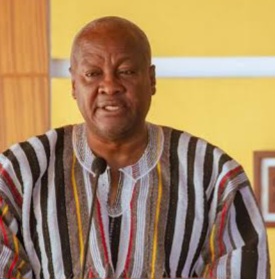
President Mahama raised the concerns while delivering the opening address at the African Union Extraordinary Health Summit in Accra, which brought together African Heads of State and Government and other health stakeholders to consider a continental response to some of Africa’s most pressing public health challenges.
A major objective of the summit was the adoption of a fully costed continental roadmap towards ending AIDS and tuberculosis as public health threats by 2030.
Addressing African leaders, President Mahama said the continent continues to carry a disproportionate share of the world’s disease burden despite decades of interventions and assistance from the international community.
He disclosed that more than 90 million Africans living with hepatitis B or C remain undiagnosed, leaving a huge population potentially without the treatment and medical interventions necessary to manage the diseases.
Beyond hepatitis, the President said malaria continues to constitute a major public health challenge across Africa, placing enormous pressure on families, healthcare facilities and national economies.
Non-communicable diseases have also emerged as another major threat to Africa’s population.
According to President Mahama, such diseases account for more than two million deaths annually among Africans below 70 years, highlighting the increasing burden of chronic illnesses alongside infectious diseases that have historically dominated the continent’s health agenda.
He further drew attention to neglected tropical diseases, which continue to cause disability, stigma and suffering in affected communities.
“Neglected tropical diseases still blind, disfigure and stigmatise our people, and if you are observant you will notice that most accounts of the global infectious diseases burden present a uniquely depressing African perspective,” President Mahama told the summit.
The President argued that the scale of the challenge requires a fundamental transformation in how African countries approach healthcare rather than continued reliance on established systems that have failed to sufficiently reduce the continent’s disproportionate disease burden.
According to him, Africa has reached a critical moment at which governments must determine whether the continent will continue depending heavily on external health systems or take greater responsibility for developing sustainable domestic and continental solutions.
“Africa now stands at a crossroad defined by its appetites for total health transformation. It can no longer allow itself to be purged on the periphery and cast as the destitute beneficiary of the largesse of some distant global health systems,” he stated.


