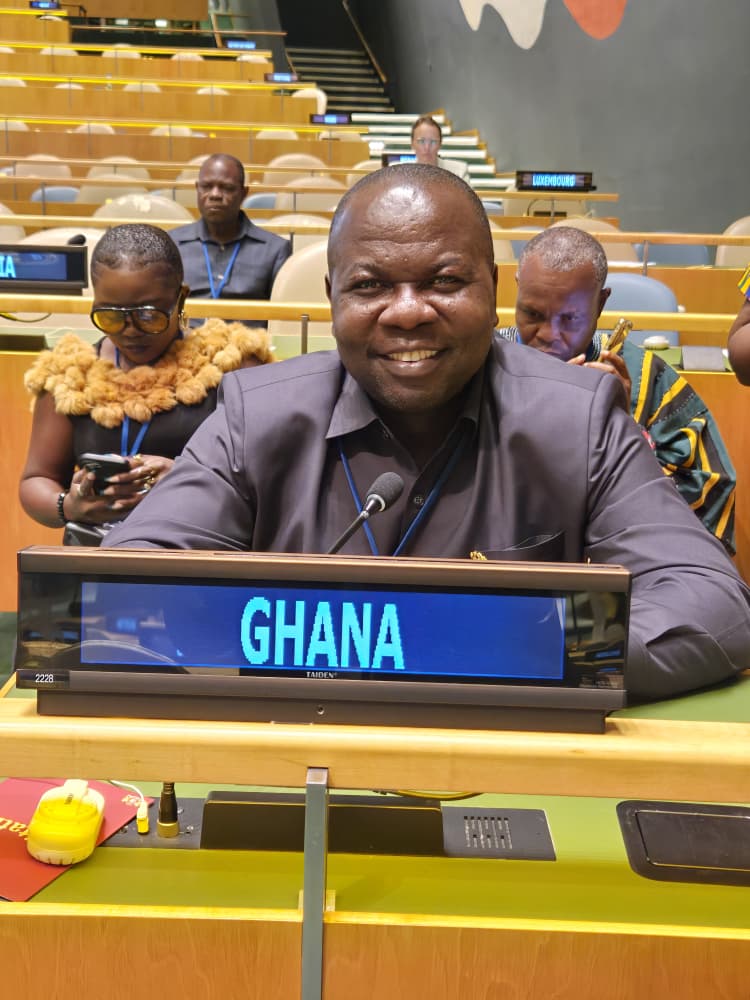
By Daniel Bampoe
A fresh wave of political controversy has erupted within the New Patriotic Party (NPP) following remarks by the Chairman of the Constitutional Review Committee (CRC), Professor H. Kwasi Prempeh, which many supporters of former Vice President Dr. Mahamudu Bawumia have interpreted as a thinly veiled attack on their candidate in favour of outspoken former Assin Central MP, Kennedy Ohene Agyapong.
Prof. Prempeh, in a widely circulated commentary, suggested that while Dr. Bawumia may be perceived as more competent and technically sound, his supporters often “turn people off,” in contrast to those backing Kennedy Agyapong, whom he implied project a more relatable and appealing image.

The comment immediately ignited backlash, particularly from Bawumia’s base, who saw it not as a neutral political observation but as a calculated attempt to delegitimise their candidate through character profiling rather than substantive critique.
The Context Behind the Backlash
To many within the Bawumia camp, Prof. Prempeh’s remarks did not occur in isolation.
They are seen as part of a broader pattern stemming from long-standing tensions between the constitutional law professor and sections of the governing party’s grassroots, particularly following his role as Chair of the Constitutional Review Committee.
That friction intensified when the Committee controversially limited its nationwide public consultations to only 10 regions, excluding six others.
The decision sparked widespread criticism, especially from NPP supporters who argued that the move violated the spirit of Article 35(6)(d) of the 1992 Constitution, which mandates broad citizen participation in governance.
Prof. Prempeh’s explanation—that financial constraints necessitated the exclusion and that the omitted regions were carved out of older administrative areas—was received poorly.
Many interpreted the justification as dismissive and dismissive of citizens’ rights to equal participation, especially in regions that already feel politically marginalised.
A History Of Tension And Distrust
Supporters of Dr. Bawumia argue that Prof. Prempeh’s latest remarks are informed less by objective analysis and more by lingering resentment over the intense criticism he faced during the constitutional review process.
They recall that when the CRC faced public scrutiny for sidelining entire regions, it was Dr Bawumia’s supporters who were most vocal in challenging what they viewed as intellectual elitism and procedural arrogance.
That backlash, they argue, has not been forgotten. Instead, it has resurfaced in the form of dismissive commentary aimed at discrediting the political movement coalescing around the former Vice President—a movement that prides itself on policy literacy, data-driven governance, and ideological clarity.
Kennedy Agyapong Factor
The controversy is further sharpened by Prof. Prempeh’s apparent favorable reference to Kennedy Agyapong, one of Bawumia’s main rivals within the NPP.
While not explicitly endorsing Kennedy Agyapong, Prempeh’s framing of his supporters as more relatable has been widely interpreted as an indirect political endorsement.
To many Bawumia loyalists, this positioning is deeply ironic. They argue that Agyapong’s populist appeal, though potent, often relies on emotional rhetoric rather than structured policy vision—an approach they say contrasts sharply with the reformist and technocratic image Dr Mahamudu Bawumia represents.
A Deeper Political Undercurrent
At its core, the controversy exposes a widening ideological divide within the NPP: one between an emerging technocratic faction centered on policy, digitisation, and institutional reform, and another rooted in populist mobilization and raw political energy.
Prof. Prempeh’s comments, critics argue, inadvertently reveal where he stands in that divide.
Dr Bawumia supporters maintain that their critique of the CRC and its chairman is not personal but principled.
They insist their opposition is rooted in accountability and constitutional fidelity, not blind loyalty.
As one supporter put it, “We are not here to please elites. We are here to defend ideas, standards, and the future of the country.”
A Debate Far From Over
However, as the NPP inches toward its next internal contest this month, these ideological fractures are becoming increasingly visible.
What began as a commentary on political style has evolved into a broader confrontation over legitimacy, intellectual authority, and the future direction of the party.
For now, Prof. Prempeh’s remarks have added fuel to an already heated political environment—one in which loyalty, ideology, and power are being fiercely contested, not just within the party’s structures, but in the court of public opinion.