By Daniel Bampoe
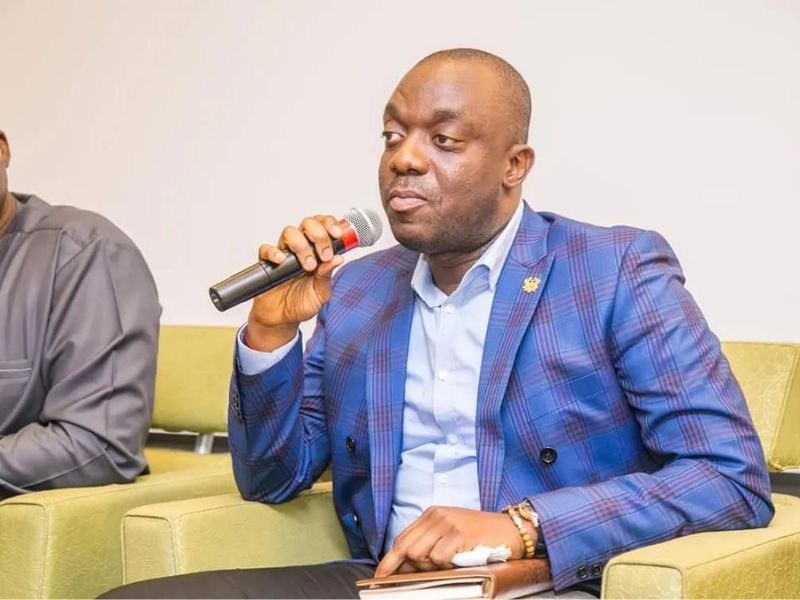
Minority Chief Whip and Member of Parliament for Nsawam-Adoagyiri, Hon. Frank Annoh-Dompreh, has called on Ghana to move beyond symbolic memorials and instead embed the principles and national ideals of the country’s founding figures into its institutions, educational systems and political culture.
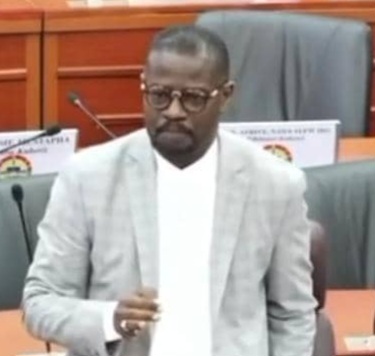
Speaking on the floor of Parliament during activities to commemorate Dr. Joseph Boakye Danquah, one of the leading nationalist thinkers and constitutional pioneers, the Minority Chief Whip expressed deep sorrow over the manner in which the renowned statesman was treated during his lifetime, particularly the circumstances surrounding his detention and eventual death.
“It is saddening in my heart that such a personality would be treated the way he was treated,” Annoh-Dompreh stated, referencing the painful historical chapter in which Dr. Danquah suffered under the Preventive Detention Act during the early years of the post-independence politics.
However, the Nsawam-Adoagyiri MP argued that Ghana’s remembrance of its forebears must not be reduced to monuments or isolated naming ceremonies.
According to him, advanced democracies such as the United States, Britain and Australia do not merely erect statues for their national heroes, but rather distill their ideas and principles into systems that shape governance and national identity.
“In other developed jurisdictions, they teach the principles these people stood for in schools and institutions, and it becomes part of the formation of their politics,” he said, stressing that Ghana must adopt a similar approach if it truly values its historical leaders.
Annoh-Dompreh also lamented the controversies and resistance that often arise whenever proposals are made to honour Danquah more prominently, citing public apprehension over calls for the University of Ghana to be renamed after him.
He suggested that such divisions are unnecessary and undermine national unity.
He maintained that figures like Dr. Danquah should serve as a binding force rather than a source of partisan wedge-drawing, urging Ghanaians to celebrate the contributions of founding personalities in their own right.
“Let’s celebrate these forebearers and what they achieved for our country,” he said, warning against attempts to politicise national history.
Beyond commemoration, the Minority Chief Whip proposed that Ghana could better preserve and promote Danquah’s legacy through heritage and tourism development.
He questioned why key historical sites linked to Danquah’s final days—including the prison cell where he died—have not been developed into national attractions.
“I’m surprised that up to this stage, even the cells where he gave up the ghost, the Ghana Tourism Authority hasn’t cashed in on that,” he remarked, suggesting that such sites could draw visitors from across the world, serve educational purposes, and strengthen the historical consciousness.
He further called for the development of Danquah’s burial site as a place of national reverence and tourism interest, noting that Ghana has not done enough to preserve these tangible reminders of its political and intellectual heritage.
Annoh-Dompreh also highlighted Danquah’s scholarly contributions, pointing to the wealth of writings and interventions available at the University of Ghana’s Balme Library, where generations of students continue to encounter his work on law, governance and constitutional development.
While acknowledging that Ghana has taken some steps, including attaching Danquah’s name to certain institutions, he insisted that this is still insufficient.
“There’s a second name after J.B. Danquah, but it is not enough. We can go beyond that,” he said.
The Minority Chief Whip concluded by calling for a deliberate national effort to distill and celebrate Dr. Danquah’s contributions to constitutional governance, democratic development and the rule of law, so that future generations can inherit a stronger political culture rooted in the sacrifices of the pioneers.
He ended by commending the author of the parliamentary statement marking the commemorative occasion and thanked the Speaker for the opportunity to contribute to the debate.
“If we continue to do that, we will be leaving a good legacy for this country and generations yet to be born,” Annoh-Dompreh added.