BY Issah Olegor
Questions continue to surround the implementation of the Mahama administration’s flagship 24-Hour Economy policy as government officials increasingly look to the Ghanaian diaspora and private investors to finance projects expected to drive the initiative, despite earlier promises that the programme would create thousands of jobs and transform the country’s productive sectors.
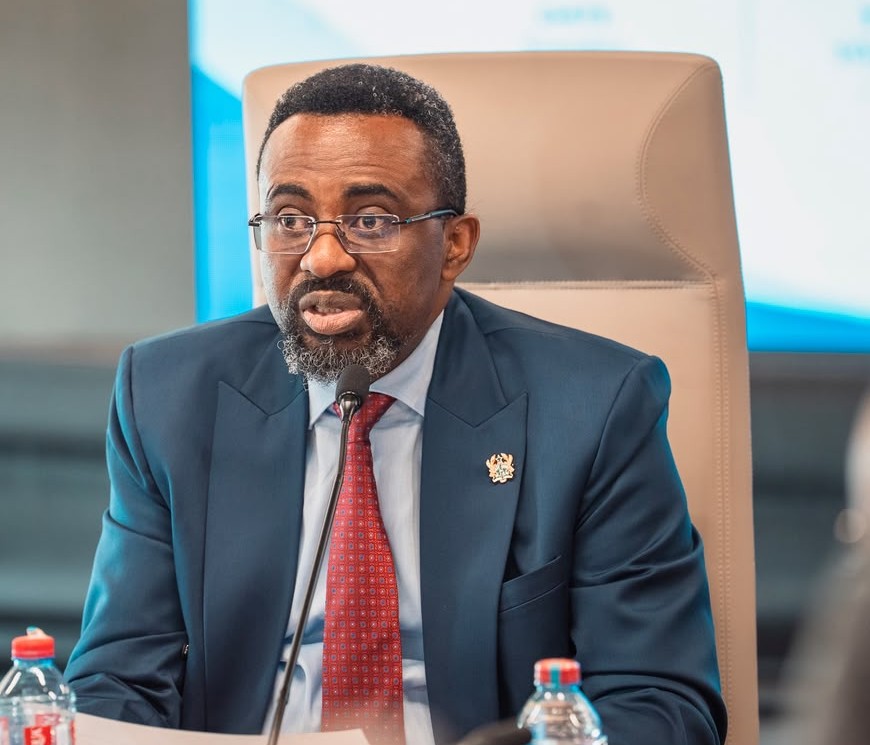
At a town hall meeting with Ghanaians living in the United Kingdom, Presidential Advisor on the 24-Hour Economy and Accelerated Export Development Programme, Augustus Goosie Tanoh, appealed to members of the diaspora to invest in Ghana and support the government’s ambitious economic transformation agenda.
The engagement, organised by the Ghana High Commission in London, formed part of President John Dramani Mahama’s five-day official visit to the United Kingdom.
The event was intended to update Ghanaians abroad on the country’s economic performance, strengthen ties with the diaspora and attract investment into strategic sectors of the economy.
Tanoh used the occasion to present what he described as progress made under the government’s Reset Agenda while outlining plans for the implementation of the 24-Hour Economy policy, a key campaign promise of the National Democratic Congress (NDC) ahead of the 2024 general elections.
According to him, the economic challenges are deeply rooted in structural weaknesses inherited from the colonial era, which have persisted despite numerous economic reforms undertaken by successive governments.
He argued that since 1966, Ghana has repeatedly relied on financial assistance from the International Monetary Fund (IMF), entering a total of 17 IMF programmes over nearly six decades.
“Each time we’ve gone to the IMF, for a brief period our national books are restored. Unfortunately, each time we have gone and come back, the basic structures of our economy and the underlying structural deformity of the inherited colonial economy remain,” Tanoh told the gathering.
He explained that President Mahama’s Reset Agenda is built around two major pillars, the first being disciplined macroeconomic management aimed at restoring economic stability and investor confidence.
He claimed that within 17 months of the new administration, key economic indicators had shown significant improvement.
According to Tanoh, inflation has experienced a sustained decline over the past fifteen months, reaching what he described as the lowest level in more than four years, although he acknowledged a slight recent increase caused by external economic pressures.
He also pointed to reductions in the Bank of Ghana’s policy rate, which he said had fallen from 28 percent to 14 percent, while the Ghana cedi had remained relatively stable under the management of the central bank.
In addition, he disclosed that Ghana currently possesses nearly six months of import cover and that the Banks gold reserves have grown to almost 38 tonnes, strengthening the country’s external financial position.
Mr. Tanoh further claimed that Ghana recorded a trade surplus of approximately $68 billion during the first few months of 2026 and that public debt had fallen significantly from a peak of 92.4 percent of Gross Domestic Product (GDP) to about 48 percent.
He added that economic growth had accelerated to 7.7 percent during the first quarter of 2026 after recording six percent growth in 2025.
The Presidential Advisor credited the country’s economic recovery to what he described as prudent fiscal management by Finance Minister Dr. Cassiel Ato Forson, the Governor of the Bank of Ghana and President Mahama’s economic management team.
Despite these improvements, Mr. Tanoh acknowledged that Ghana’s economic structure remains heavily dependent on the services sector, which currently accounts for about 60 percent of overall economic growth.
Agriculture contributes approximately 25 percent, while industry—including manufacturing, processing and construction—accounts for only about 12 percent of growth, highlighting the challenge facing government efforts to industrialise the economy.
To address this imbalance, he said the 24-Hour Economy strategy is designed around an export-led growth model that seeks to build productive capacity in sectors where Ghana possesses competitive advantages.
“Our strategy moves on two deliberate tracks. The first is export-led. We are building productive capacity where Ghana has latent advantage,” he explained.
Tanoh disclosed that government is pursuing major industrial development projects along the Volta Economic Corridor, an expansive development zone covering 75 districts surrounding the Volta Lake and its tributaries.
The corridor is expected to host investments in garment manufacturing, pharmaceuticals and light industrial production, supported by affordable energy infrastructure.
He further highlighted four major agreements signed within the last 90 days which government projects will create more than 160,000 jobs.
These projects include the Buipe Solar Farm, the Kambonwule Oil Palm Anchor Project, the Bioenergy and Biofuels Programme and the Tamale Air Cargo Hub.
According to him, the Kambonwule Oil Palm Anchor Project represents a $300 million investment aimed at significantly increasing domestic palm oil production and reducing Ghana’s dependence on imported vegetable oils.
The Tamale Air Cargo Hub, scheduled to begin operations in 2027 through two private operators, is expected to transform northern Ghana into a major logistics, export and agro-processing centre.
However, the appeal to diaspora investors has raised questions among some observers about the pace of implementation of the 24-Hour Economy initiative, particularly as many of the promised projects remain at planning or investment mobilisation stages.
While government officials insist that the programme is gradually taking shape through strategic investments and infrastructure development, critics argue that many of the projected jobs have yet to materialise and remain largely on paper.
For now, the Mahama administration appears to be betting heavily on diaspora capital, foreign investment and private-sector partnerships to turn the ambitious 24-Hour Economy vision into reality and deliver the industrial transformation promised to Ghanaians.