By Daniel Bampoe
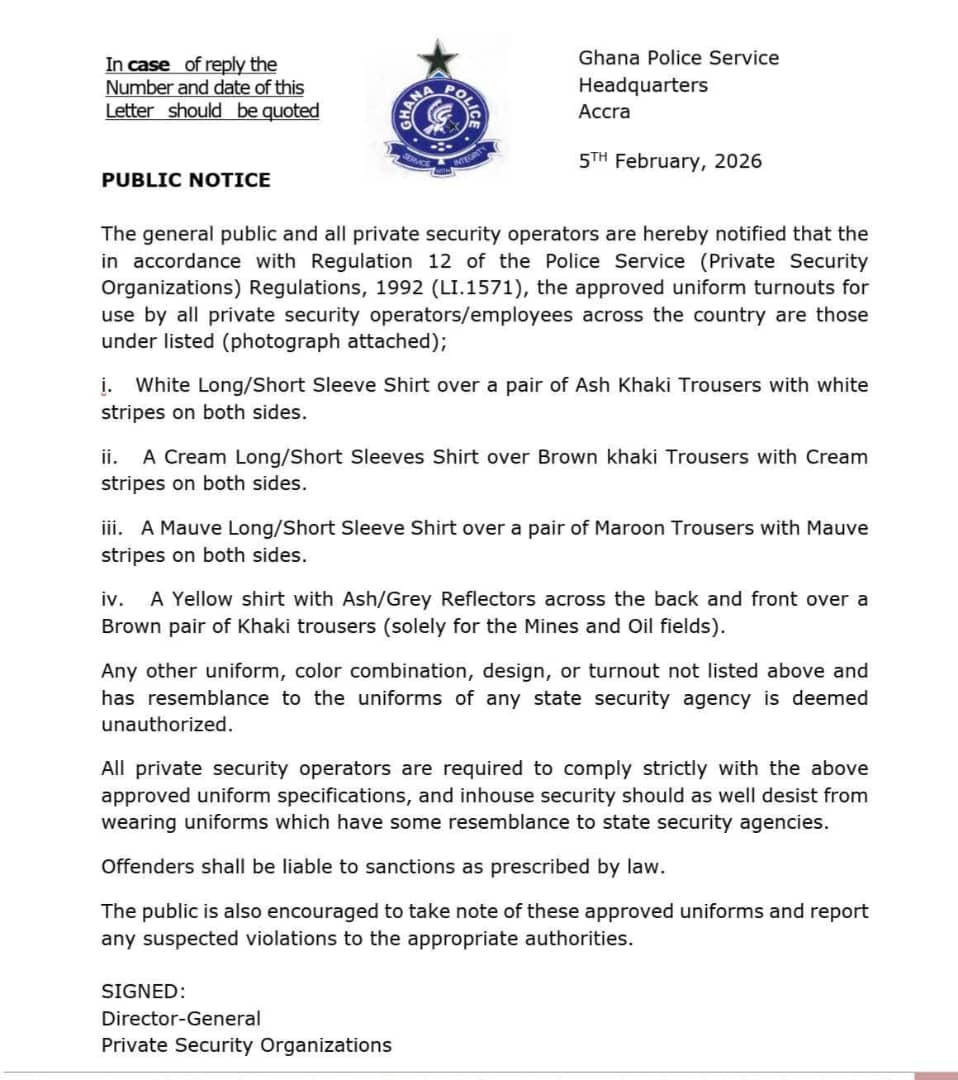
The Ghana Police Service has issued a nationwide public notice reaffirming strict regulations on the uniforms worn by private security operators, warning that any unauthorized attire resembling state security agency uniforms will attract legal sanctions.
In a directive dated February 5, 2026, and issued from the Police Headquarters in Accra, the Police Service, acting under Regulation 12 of the Police Service (Private Security Organizations) Regulations, 1992 (L.I. 1571), outlined the only officially approved uniform turnouts permitted for private security personnel across the country.
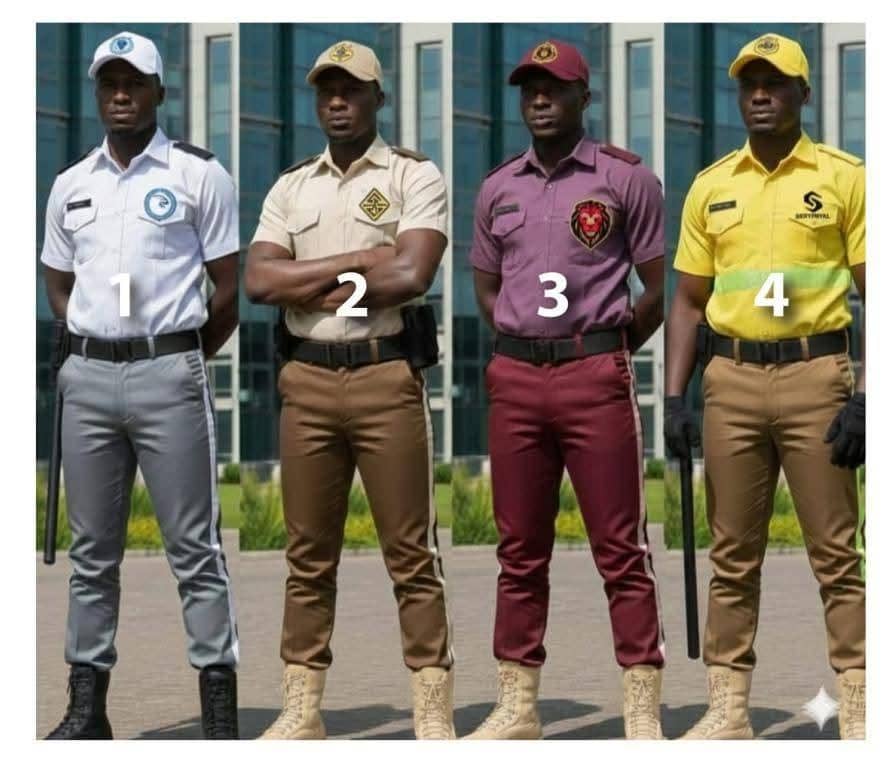
The approved uniforms include: a white long or short-sleeve shirt over ash khaki trousers with white stripes, a cream long or short-sleeve shirt over brown khaki trousers with cream stripes, a mauve long or short-sleeve shirt over maroon trousers with mauve stripes, and a yellow shirt with ash/grey reflectors across the front and back over brown khaki trousers, which is reserved strictly for personnel operating in the mines and oil fields.
According to the Police, any other uniform, colour combination, design, or turnout not listed — particularly those that resemble the attire of the Ghana Police Service or other state security agencies — is considered unauthorized and illegal.
The directive further stresses that both registered private security firms and in-house security units of institutions must comply strictly with the approved specifications and desist from using uniforms that could confuse the public or create false authority.
Offenders, the Police warned, will face sanctions as prescribed by law. The statement, signed by the Director-General of Private Security Organizations, also calls on the general public to familiarize themselves with the approved uniforms and report suspected violations to the appropriate authorities.
This move follows longstanding concerns about the increasing similarity between some private security uniforms and those of state agencies, a trend that has raised public safety, impersonation, and security risks in recent years.
The Police Service says the directive forms part of broader efforts to regulate the private security sector, protect the integrity of state institutions, and prevent abuse of authority, while ensuring clarity, professionalism, and public trust in the security architecture.