By Issah Olegor
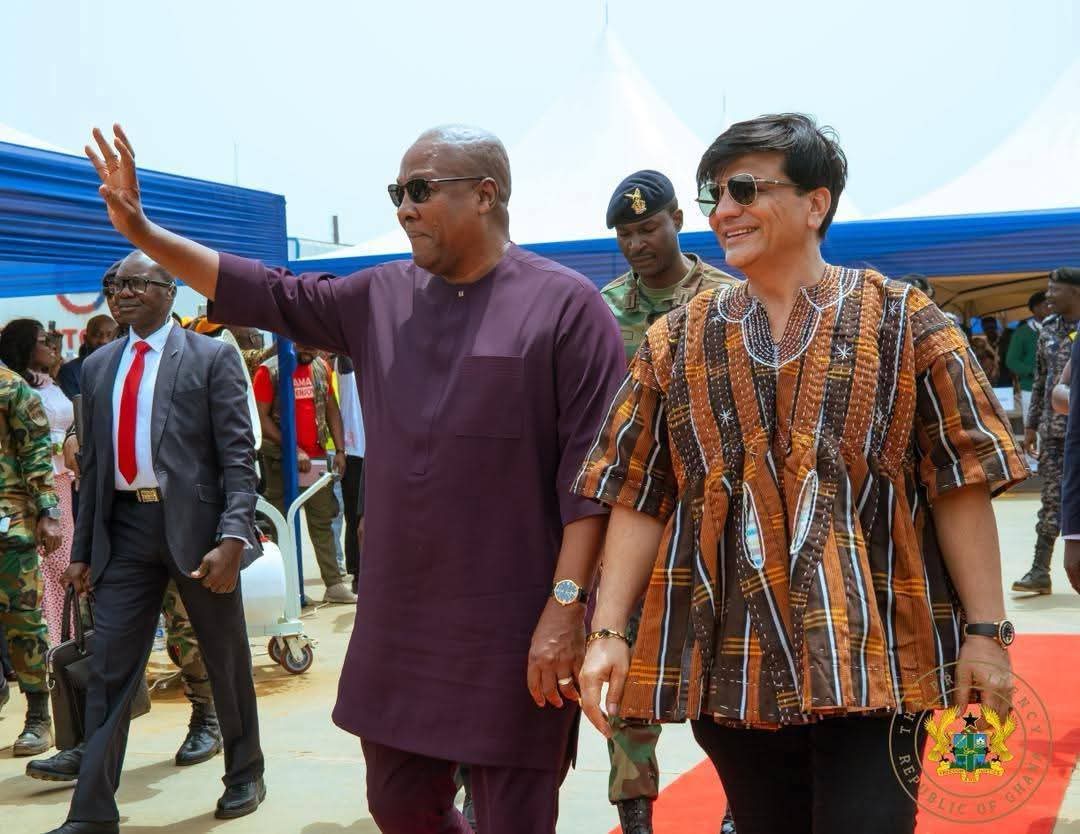
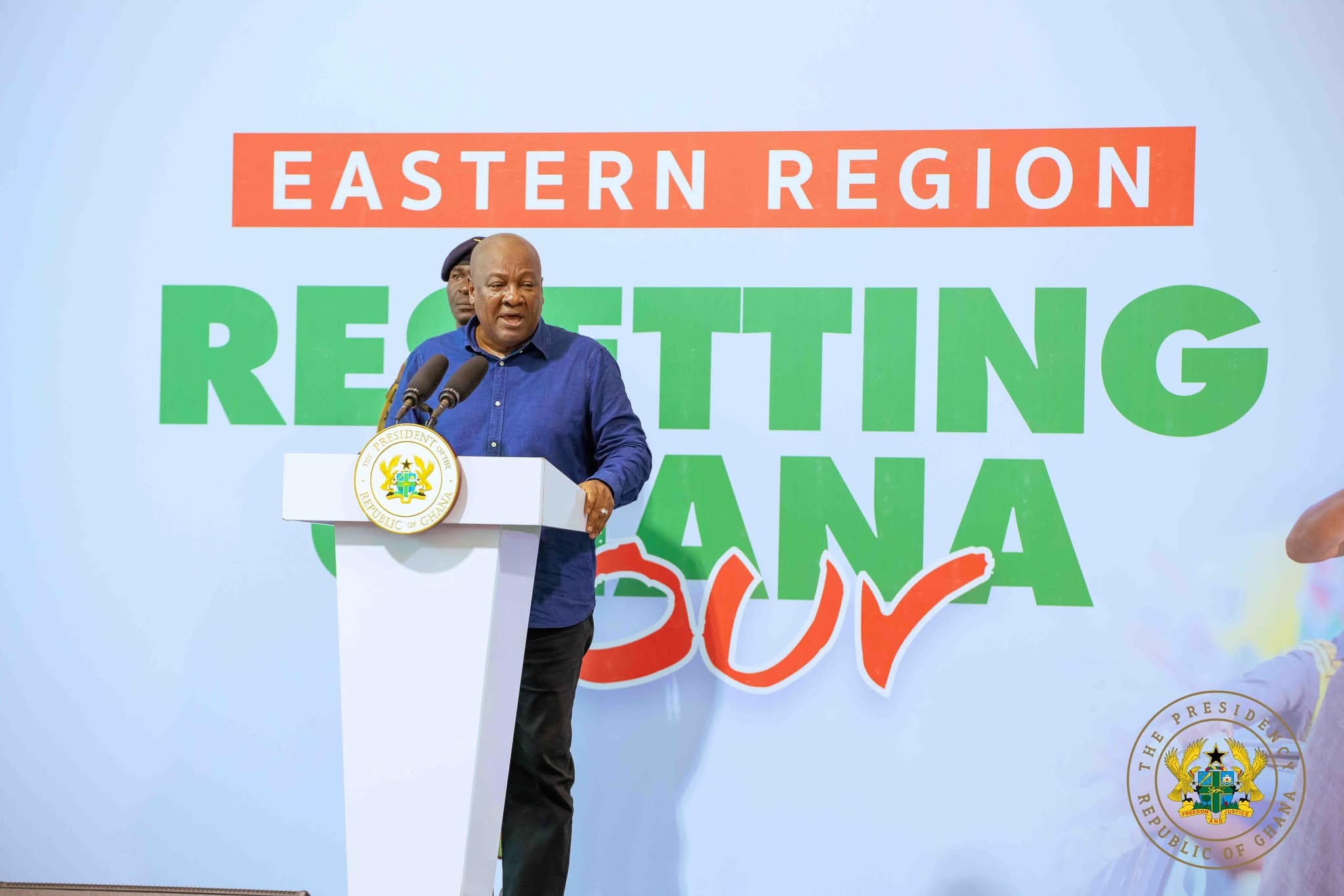
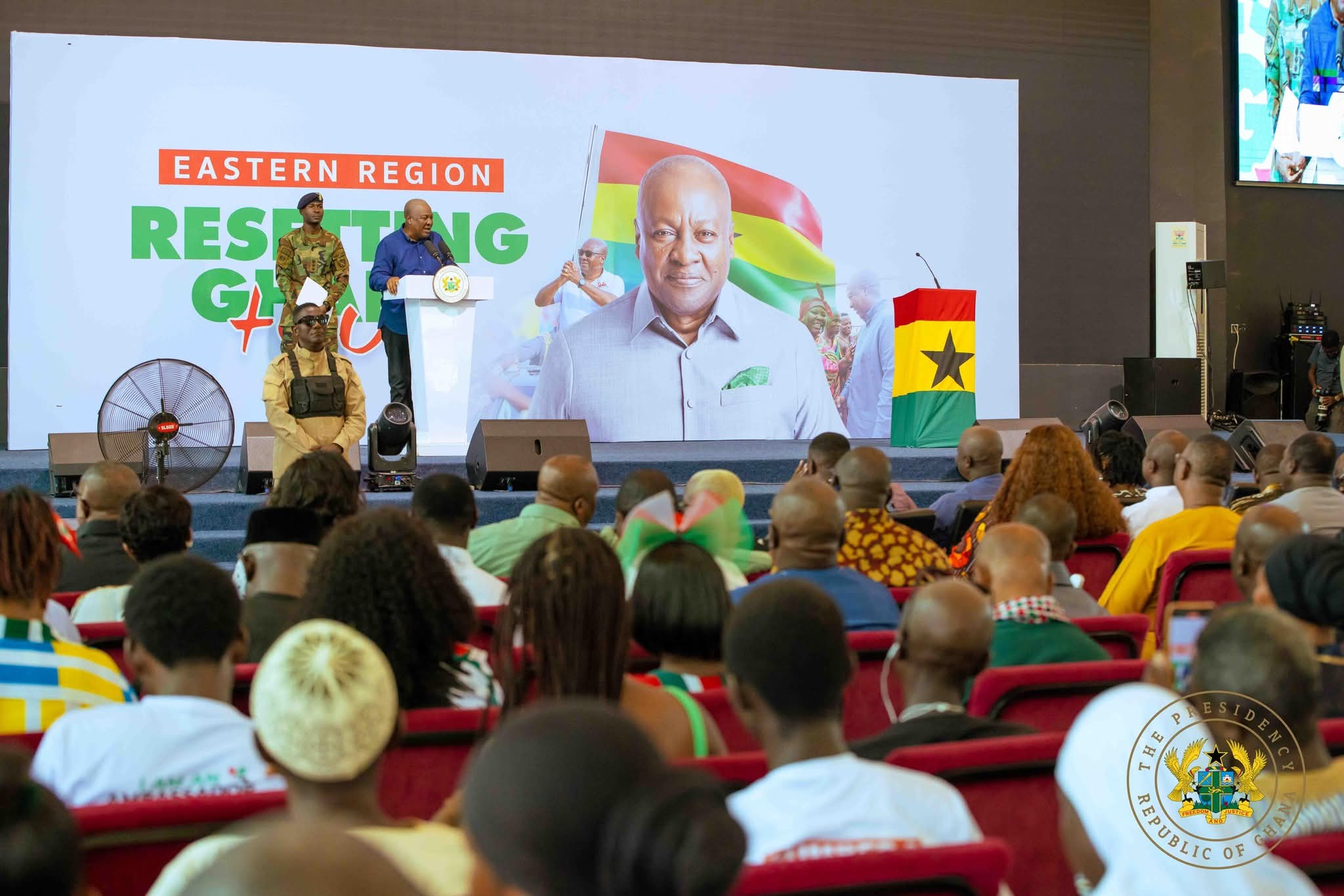
President John Dramani Mahama has intensified his nationwide “Resetting Ghana Tour” with a high-profile engagement in Koforidua, where he addressed a gathering largely made up of supporters of the National Democratic Congress (NDC), outlining his administration’s policy direction and development priorities.
The engagement forms part of a broader post-election outreach strategy by the President aimed at reconnecting with grassroots supporters while updating citizens on government interventions across key sectors of the economy.
Such tours have historically been used by administrations in Ghana to consolidate party support, manage public expectations, and communicate policy achievements directly to the electorate.
During the meeting, President Mahama emphasised the government’s renewed focus on decentralisation, revealing that 80 percent of the District Assemblies Common Fund is now being transferred directly to Metropolitan, Municipal and District Assemblies.
According to him, this policy is intended to reduce bureaucratic bottlenecks and accelerate local development projects, a long-standing concern among local authorities who have often cited delays in fund disbursement as a major obstacle to infrastructure delivery.
On the economy, the President highlighted what he described as significant gains in fiscal stability, pointing to a reduction in Ghana’s debt-to-GDP ratio from 67 percent to 45 percent.
He indicated that the government is now transitioning from a period of economic stabilisation to a growth-focused phase, driven by investment and job creation under a new policy framework designed to stimulate productivity and private sector expansion.
Touching on infrastructure, President Mahama cited ongoing road construction projects across the country, including the domestically financed Ekyi Amanfrom–Adawso road in the Eastern Region.
He noted that prioritising local funding for strategic projects is part of efforts to reduce reliance on external borrowing while ensuring continuity in infrastructure development.
In the energy sector, the President commended engineers and technical teams for stabilising power supply following recent disruptions. He further announced plans to boost electricity generation capacity to nearly 6,000 megawatts through expanded gas infrastructure and partnerships with international investors, a move aimed at securing long-term energy reliability for industries and households.
On healthcare, President Mahama outlined flagship interventions such as the MahamaCares initiative and the Free Primary Healthcare programme, both designed to expand access to essential health services and address the growing burden of non-communicable diseases.
He also called on traditional leaders to support nationwide screening campaigns to improve early detection and treatment.
The President additionally highlighted agriculture as a key pillar of his administration’s agenda, urging collaboration on programmes such as Nkoko Nkitinkiti and Feed Ghana.
These initiatives, he said, are intended to boost local food production, create employment opportunities, and improve livelihoods, particularly in rural communities.