By Daniel Bampoe
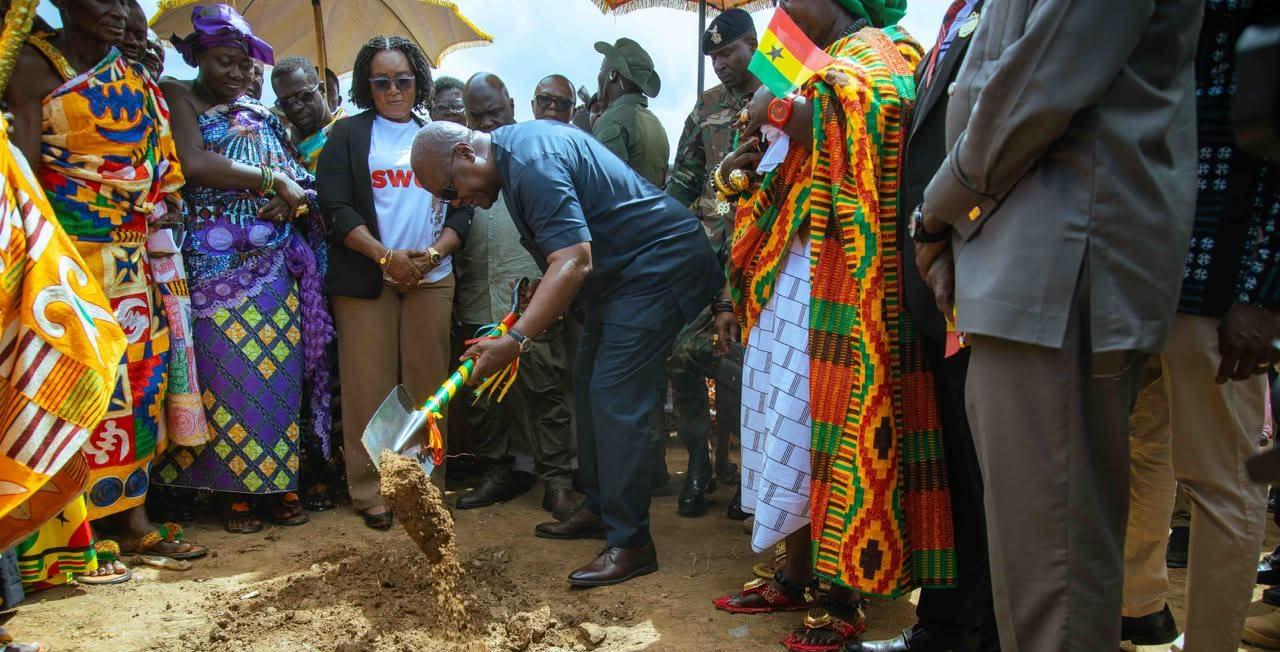
The sod-cutting ceremony for the proposed 24-hour model market in Asesewa in the Upper Manya Krobo District in the Eastern Region, led by President John Dramani Mahama on May 1, 2026, has generated excitement among residents while simultaneously raising critical questions about feasibility, funding, and delivery timelines.
The project forms part of the government’s broader 24-hour economy agenda, which seeks to stimulate local economic activity, create jobs, and enhance productivity across districts.
The ceremony, marked by strong political goodwill and community anticipation, was seen by many as a significant step toward transforming the economic landscape of the area.
They also commended the President’s articulation of the policy framework, particularly the structured approach to the use of the District Assemblies Common Fund (DACF), which is expected to improve transparency and allow citizens to monitor development spending at the local level.
However, beneath the optimism, concerns persist regarding the practicality of the project’s timeline and financing. Local authorities have indicated that the Asesewa market will be completed by the end of 2027—an ambitious target that has drawn scrutiny when compared with Ghana’s track record on large-scale public infrastructure delivery.
They point to previous initiatives under successive governments as a basis for caution. During President Mahama’s earlier administration between 2013 and 2016, the Community Day Senior High School (E-Blocks) project aimed to construct 200 schools nationwide.
However, reports suggest that only a fraction of these were completed within the stipulated period, leaving several projects unfinished, including facilities in parts of the Krobo area such as Sekesua in Upper Manya Krobo.
Similarly, under former President Nana Addo Dankwa Akufo-Addo, the Agenda 111 hospital initiative—designed to expand healthcare infrastructure—faced delays, with fewer than ten facilities reportedly completed before the end of his tenure, despite initial timelines projecting broader completion.
Beyond timelines, questions have also been raised about the cost of the Asesewa 24-hour market project, which was not disclosed during the sod-cutting ceremony.
This omission has sparked debate over whether available funding will be sufficient to deliver a modern facility comparable to similar projects.
Under the DACF allocation model, approximately 25 percent of funds are expected to support 24-hour economy market initiatives. For Upper Manya Krobo, which includes Asesewa, an estimated GHS15 million allocation for the 2025 fiscal year translates to about GHS3.75 million annually. Over a four-year period, this amounts to roughly GHS15 million—figures that analysts say may fall short when compared to the cost of previous market developments.
For context, the Kotokuraba Market, completed in 2016, reportedly cost about $31.75 million and includes extensive facilities such as hundreds of shops and stalls, banking halls, offices, a police post, fire station, and other modern amenities.
Additionally, under the Secondary Cities Support Programme, market infrastructure projects in Agormanya were reported to have cost significantly higher, raising further questions about the adequacy of DACF funding alone for a project of similar scale.
These comparisons have led to a number of unresolved questions: whether the DACF will be the sole source of financing, what additional funding mechanisms may be introduced, and how the Assembly intends to sustain allocations if the project extends beyond the projected timeline.
While the prevailing mood in Asesewa remains largely positive, political analysts caution that unmet infrastructure promises have historically carried consequences, particularly in constituencies where expectations are high.
Early signs of internal concerns among local party executives have already begun to surface, suggesting that the project’s outcome could have broader political implications.