By Issah Olegor
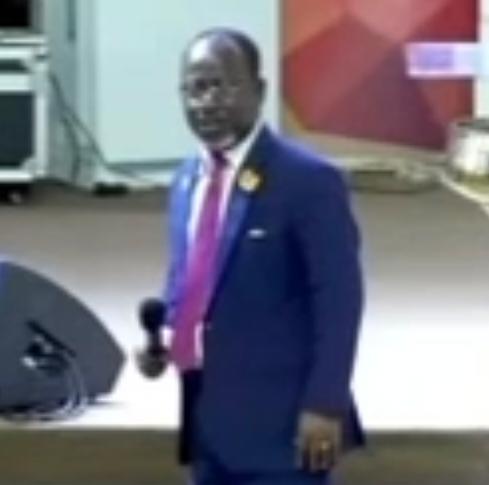
A senior minister of the Assemblies of God Church Ghana, Rev. Alex Nkrumah of the Revival Restoration Centre at Roman Ridge, in Accra has criticised the governing National Democratic Congress (NDC), accusing the administration of presenting economic figures that do not reflect the realities faced by ordinary Ghanaians.
Delivering a sermon to his congregation, the outspoken clergyman questioned recent government claims of improved economic indicators, particularly reductions in policy and interest rates.
According to him, while authorities tout declining rates as a sign of economic recovery, the benefits are not being felt by citizens, especially in terms of cost of living and purchasing power.
Rev. Nkrumah cited what he described as declining returns on financial instruments such as treasury bills and fixed deposits, arguing that the current rates offer little incentive to savers.
He expressed concern that individuals investing modest amounts receive minimal returns, raising doubts about the practical impact of such policies on household incomes.
He further pointed to rising prices of everyday goods as evidence that economic improvements touted by policymakers are not translating into relief for the public.
Using the example of sachet water, he noted that prices have increased significantly in recent times, questioning the relevance of claims about currency stability and declining interest rates when basic commodities continue to become more expensive.
The pastor’s remarks reflect a broader public sentiment in Ghana, where citizens often weigh macroeconomic data against their day-to-day experiences.
While governments typically rely on indicators such as inflation, interest rates, and exchange rate stability to measure performance, critics argue that these metrics must ultimately translate into improved living standards.
Rev. Nkrumah also framed his concerns within a moral and spiritual context, urging citizens to remain courageous and speak out against what they perceive as inconsistencies between official narratives and lived realities.
He emphasised the need for honesty and accountability in governance, stating that economic progress should be measured not only by statistics but by tangible improvements in people’s lives.