
By Daniel Bampoe
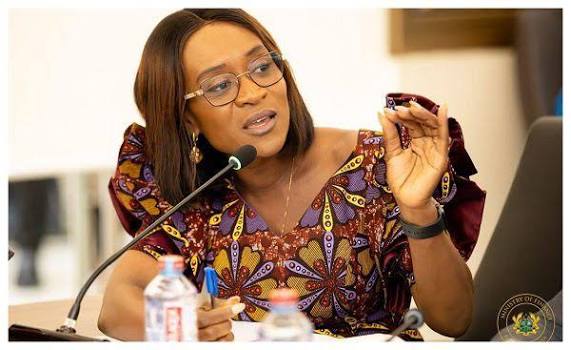
The Chairperson of Parliament’s Public Accounts Committee, also Member of Parliament for Atiwa East, Abena Osei-Asare, has raised strong concerns over the deteriorating financial position of the Bank of Ghana, describing the institution’s 2025 financial performance as a major test of transparency and accountability.
In a detailed assessment of the Bank’s 2025 financial statements, she pointed to a significant increase in losses, with the central bank recording GH¢15.63 billion in 2025 compared to GH¢9.49 billion in 2024.
She further highlighted a worsening negative equity position for the Bank of Ghana Group, which declined from GH¢58.62 billion in 2024 to GH¢93.82 billion in 2025, raising concerns about the long-term fiscal implications for the country.
According to her analysis, the reported losses do not fully capture the extent of the Bank’s financial challenges.
She argued that the outcome reflects a “managed position,” supported in part by the liquidation of gold reserves accumulated between 2023 and 2024. Without these gold sales, she suggested, the financial losses could have been significantly higher, pointing to what she described as a strategy of using asset disposals to cushion deeper structural weaknesses.
The lawmaker questioned what she sees as a contradiction in policy direction, noting that while gold reserves were reportedly sold to stabilise finances, the government has simultaneously proposed an ambitious gold accumulation programme under the Ghana National Gold Purchase Programme (GANRAP). She cited estimates within the policy framework suggesting a potential cost running into hundreds of billions of cedis, depending on global gold prices and targeted reserves.
Beyond the figures, the MP also raised concerns about departures from International Financial Reporting Standards (IFRS) in aspects of the Bank’s financial reporting, calling for full disclosure of the implications of such decisions to Parliament and the public.
Drawing comparisons with past political positions, she noted that similar losses reported in earlier years had sparked strong reactions from opposition figures, including calls for accountability and leadership changes.
She argued that the current situation should be treated with the same level of scrutiny, emphasising that the issue goes beyond accounting terminology to questions of credibility and governance.
She further warned that the Bank’s negative equity position represents a potential fiscal burden, as government commitments to recapitalise the institution between 2026 and 2032 could ultimately translate into costs for taxpayers.
In her view, the matter should be treated as a national financial concern requiring urgent parliamentary oversight.
To address the situation, the Public Accounts Committee Chairperson called for a series of actions, including briefings by key stakeholders such as the Governor of the Bank of Ghana, the Finance Minister, and external auditors.
She also advocated for the publication of any recapitalisation agreements and a comprehensive review of gold-related transactions and financial reporting practices.
Ms Osei-Asare concluded that while central bank independence remains essential, it must be accompanied by transparency and accountability. She stressed that Parliament has a duty to interrogate the Bank’s financial position and ensure that any decisions with long-term fiscal consequences are subjected to proper scrutiny.


