By Daniel Bampoe
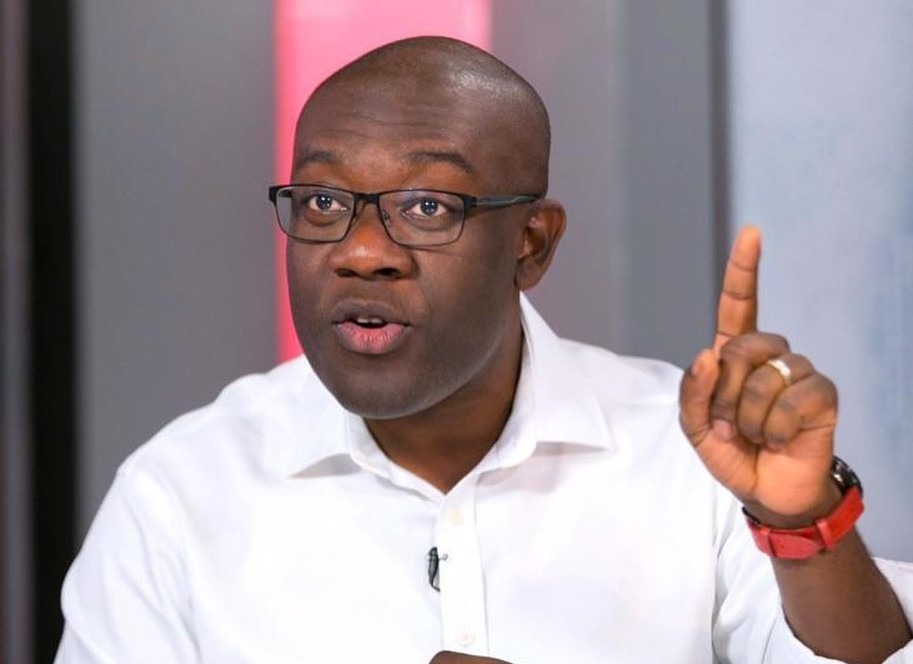
Former Information Minister and Member of Parliament for Ofoase-Ayirebi, Kojo Oppong Nkrumah, has defended the New Patriotic Party (NPP) newly constituted policy and sector committees, insisting that early policy preparation and broad stakeholder consultation will be crucial to the party’s chances of returning to power in the 2028 general elections.
Speaking in an interview on Joy News after he was appointed Chairman of the NPP’s Policy Coordinating Committee, Oppong Nkrumah explained that the party’s latest restructuring exercise was not merely an administrative arrangement but a long-term strategic policy architecture designed to prepare the NPP for governance while still in opposition.
According to him, the party deliberately wants to avoid a situation where it waits until election season before developing policy alternatives and campaign promises.
“The whole idea is that for the period in which we are in opposition, a party that is serious about governing effectively when it does win power must use that period to think deeply and think clearly about the policy propositions to either resolve issues that we are faced with as a people today or to take advantage of the opportunities around us,” he said.
Kojo Oppong Nkrumah’s comments come amid ongoing discussions within the NPP following the formation of seven standing committees and 23 sector committees approved by the party’s National Executive Committee (NEC) and National Council as part of a broader post-2024 election reorganization exercise being spearheaded by the party’s 2028 Presidential Candidate, Mahamudu Bawumia.
The newly established committees include major policy areas covering governance, the economy, infrastructure, education, security, health, youth development, employment, agriculture, communication technology, local government, housing, roads, and foreign affairs.
Oppong Nkrumah clarified that the committees consist of two broad categories.
According to him, the first category involves the standing committees provided for under the NPP constitution, including the Finance Committee, Communications Committee, and Organizational Committee, which are responsible for the daily administration and internal management of the party.
The second category, he explained, consists of the Policy Coordinating Committee and the various sector committees that operate under it to formulate policy alternatives and governance proposals.
“That’s the one I chair,” he said in reference to the Policy Coordinating Committee.
He explained that the committee structure itself is not new within the NPP tradition, noting that similar policy structures existed and were highly active before the party’s historic victory in the 2000 elections.
“If you go back to just before the 2000 elections, you will find that these committees were very, very active,” he stated.
According to him, the committees are intended to help the party think through policy proposals long before returning to government.
He outlined four major advantages of early policy preparation while in opposition.
First, he said, it gives the party internal clarity on the details of proposed policies, including implementation timelines, costs, feasibility, and opportunity costs.
“You don’t wait to come to power before you start forming committees to try to deal with them,” he stressed.
Secondly, he said the process allows the party to consult extensively with stakeholders including civil society organizations, faith-based groups, academia, research institutions, professionals, and grassroots supporters before finalizing policy proposals.
He noted that many governments often face criticism for introducing policies without adequate consultation, a challenge the NPP hopes to avoid by engaging stakeholders early.
“You want to spend a lot of time doing all of that even before you assume office so that the policies and programs you put on the table are well consulted on,” he explained.
Thirdly, he said early policy work gives the party enough time to market and explain its ideas to Ghanaians across the country rather than waiting until manifesto season close to elections.
“If you literally wait 100 days to an election or six months to an election to put your policies and programs in a big manifesto, hardly do people even read it,” he said.
The fourth advantage, according to him, is that the party would be able to “hit the ground running” immediately upon assuming office because the policy groundwork would already have been completed.
Oppong Nkrumah also gave details about the structure of the policy system created by the NPP.
According to him, the party established about 21 committees grouped into four thematic areas, including administration and governance, economic sectors, infrastructure, and social sectors.
The governance and administration category includes committees on constitutional and legal affairs, foreign affairs, security and intelligence, and decentralization.
The economic sector committees are expected to focus on generating ideas aimed at economic growth, job creation, and improving living conditions, while infrastructure and social sector committees will focus on roads, housing, water, sanitation, health, education, youth, sports, and employment.
He explained that the overall structure places Dr. Mahamudu Bawumia at the top of the policy framework, with the Policy Coordinating Committee working to synthesize ideas generated by the sector committees.
According to him, the committees will not operate in isolation but will continuously engage stakeholders and grassroots party structures across the country.
“These committees don’t just work hanging in the air,” he stated.
He explained that the committees are expected to engage civil society organizations, faith-based organizations, research institutions, academics, regional party structures, constituency executives, diaspora professionals, youth representatives, and communication teams to ensure broad participation and feedback.
Oppong Nkrumah further disclosed that membership of the committees was deliberately designed to draw expertise from different sectors of society, including Members of Parliament, former ministers, former government appointees, professionals, academics, diaspora experts, communicators, and social media teams affiliated with the NPP.
“We are bringing our brightest and our best from all over the world together to prepare policies and programs in these areas,” he said.
He also defended the decision to appoint former presidential aspirants and influential party figures to key committee leadership positions.
According to him, many of the appointed individuals possess significant experience and expertise in their assigned sectors and can contribute meaningfully to policy formulation.
“It also helps the agenda of bringing everybody together. The contest is over. We are all now reorganizing for the future,” he said.
The appointments of figures such as Kennedy Ohene Agyapong, Bryan Acheampong, Yaw Osei Adutwum, and Kwabena Agyei Agyepong into strategic committee roles have generated discussions within sections of the party, with some supporters questioning aspects of the process.
However, Kojo Oppong Nkrumah dismissed claims that appointees or rival camps were not consulted, stating that some false narratives and even fake letters had been circulated to create the impression of internal discord.
“You must understand that there’s a whole architecture that is aimed at always sprucing some discord within our exercise to unite and go forward,” he stated.
He maintained that the necessary consultations had taken place and expressed confidence that all factions within the party would work together toward rebuilding the NPP.
On concerns that the committees lacked enough young people, Kojo Oppong Nkrumah explained that the public had only seen the leadership of the committees and not the full membership.
According to him, the committees include significant youth representation and reserved positions for younger party members.
“The membership has not been put out. They will be inaugurated on the 25th, and I’m very sure that you’ll see a lot of young faces within the membership,” he said.
He stressed that the ultimate goal of the committees is to develop practical and impactful policy alternatives capable of addressing the daily challenges facing Ghanaians.
“A lot of Ghanaians today say that yes, we’re seeing very interesting figures at the very top, but our lived experience does not seem commensurate with that,” he observed.
According to him, the committees are expected to produce policy proposals that directly respond to unemployment, economic hardship, infrastructure deficits, and other pressing national concerns.
He noted that the policy development process would continue consistently from now until 2028 and beyond, adding that the committees are constitutionally established structures that will remain relevant whether the NPP is in opposition or government.
“They’re going to be working permanently from now till 2028 and even post-2028,” he stated.
The committees are expected to be officially inaugurated on May 25, 2026, after which they will begin full operations as part of the NPP’s broader effort to reorganize and position itself for a political comeback in the next general elections.