
BY Daniel Bampoe
President John Dramani Mahama is facing growing public scrutiny over his administration’s policy priorities as concerns intensify about the continued abandonment of several Agenda 111 hospital projects across the country while government aggressively promotes its proposed 24-hour economy and model market agenda.
The debate has gained momentum in recent weeks following renewed reports of deteriorating hospital structures in several districts, with critics questioning why healthcare infrastructure appears to be receiving less urgency despite worsening access to medical services in many rural communities.
For many residents in underserved districts, the issue has become symbolic of the difficult choices confronting government amid economic constraints and competing national development priorities.
Several citizens, health professionals and political observers argue that completing stalled hospital projects should take precedence over the construction of model markets and other commercial infrastructure associated with the government’s economic transformation plans.
The controversy deepened after President Mahama openly criticised the implementation strategy of the previous administration’s Agenda 111 programme during an engagement with the Northern Regional House of Chiefs.
The President described the decision by the previous government to simultaneously launch 111 hospital projects nationwide as imprudent and financially unsustainable.
According to him, the previous administration failed to properly sequence the projects, resulting in limited resources being spread across too many construction sites at the same time.
He argued that if the funds already invested in the programme had been used more strategically, at least 22 hospitals could have been fully completed and operational by now.
The President further disclosed that many of the hospital projects remain stalled at various stages of completion, with some abandoned at foundation level despite contractors receiving mobilisation funds.
He revealed that government would now require approximately $1.7 billion to complete the remaining projects under the Agenda 111 initiative.
The Agenda 111 programme was launched under former President Nana Akufo-Addo as the largest healthcare infrastructure expansion initiative, aimed at constructing hospitals in districts without major healthcare facilities.
The policy emerged partly from lessons learnt during the COVID-19 pandemic, when concerns about inadequate healthcare infrastructure became a major national issue.
Under the programme, government announced plans to build district hospitals, regional psychiatric hospitals and specialised treatment centres to improve healthcare accessibility nationwide.
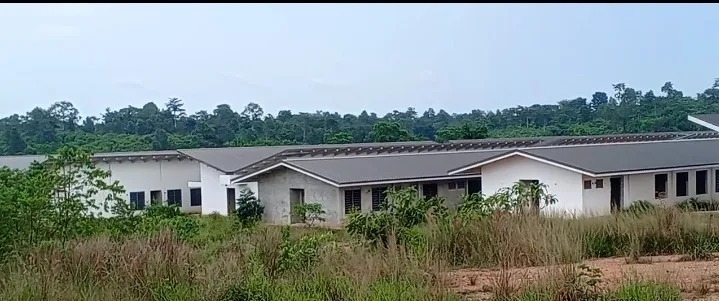
However, years after the launch, many of the projects remain incomplete, with several sites now showing visible signs of deterioration.
Recent reports from communities such as Assin Darmang in the Central Region have highlighted abandoned hospital buildings overtaken by weeds, erosion and reptiles while residents continue travelling long distances to access emergency healthcare.
The images and reports have fuelled public frustration, especially in communities where residents say the absence of hospitals continues to cost lives.
Critics of the current administration argue that while government continues to defend its phased approach to completing the projects, more political attention appears to be directed toward the proposed 24-hour economy initiative and the construction of model markets.
The 24-hour economy policy remains one of the flagship economic programmes of the Mahama administration and is intended to stimulate round-the-clock business activity, industrial productivity and job creation across the country.
Government officials insist the policy is designed to revitalise local economies, attract investment and create sustainable employment opportunities, particularly for the youth.
Supporters of the programme argue that model markets and decentralised commercial hubs can be funded more easily through District Assemblies and local partnerships while larger healthcare infrastructure projects continue to receive phased funding support.
According to government, the two programmes are not mutually exclusive and healthcare projects are still receiving attention under a revised completion strategy.
President Mahama has indicated that government intends to prioritise the completion of 35 Agenda 111 hospitals that are closest to completion before gradually addressing the remaining backlog.
He argued that focusing on near-completed facilities would prevent further waste of public resources and allow some hospitals to become operational within a shorter period.
Government has also announced plans to engage faith-based health institutions to assist in completing and potentially managing some of the abandoned projects.
In addition, the President disclosed that the Economic and Organised Crime Office (EOCO) has been tasked to pursue contractors who allegedly received mobilisation funds but abandoned project sites without completing their contractual obligations.
Despite these assurances, many Ghanaians continue to question whether the pace of intervention matches the urgency of the healthcare crisis confronting several districts.
Healthcare advocates warn that delays in completing the hospitals are worsening pressure on already congested referral facilities while exposing rural populations to avoidable medical risks.
The discussion has also evolved into a broader political debate over infrastructure planning, public expenditure management and accountability between the current administration and the previous New Patriotic Party government.
While supporters of the Akufo-Addo administration argue that the Agenda 111 vision was ambitious and transformative, critics maintain that the simultaneous commencement of all 111 projects lacked adequate financial planning and implementation strategy.


