BY Grace Zigah
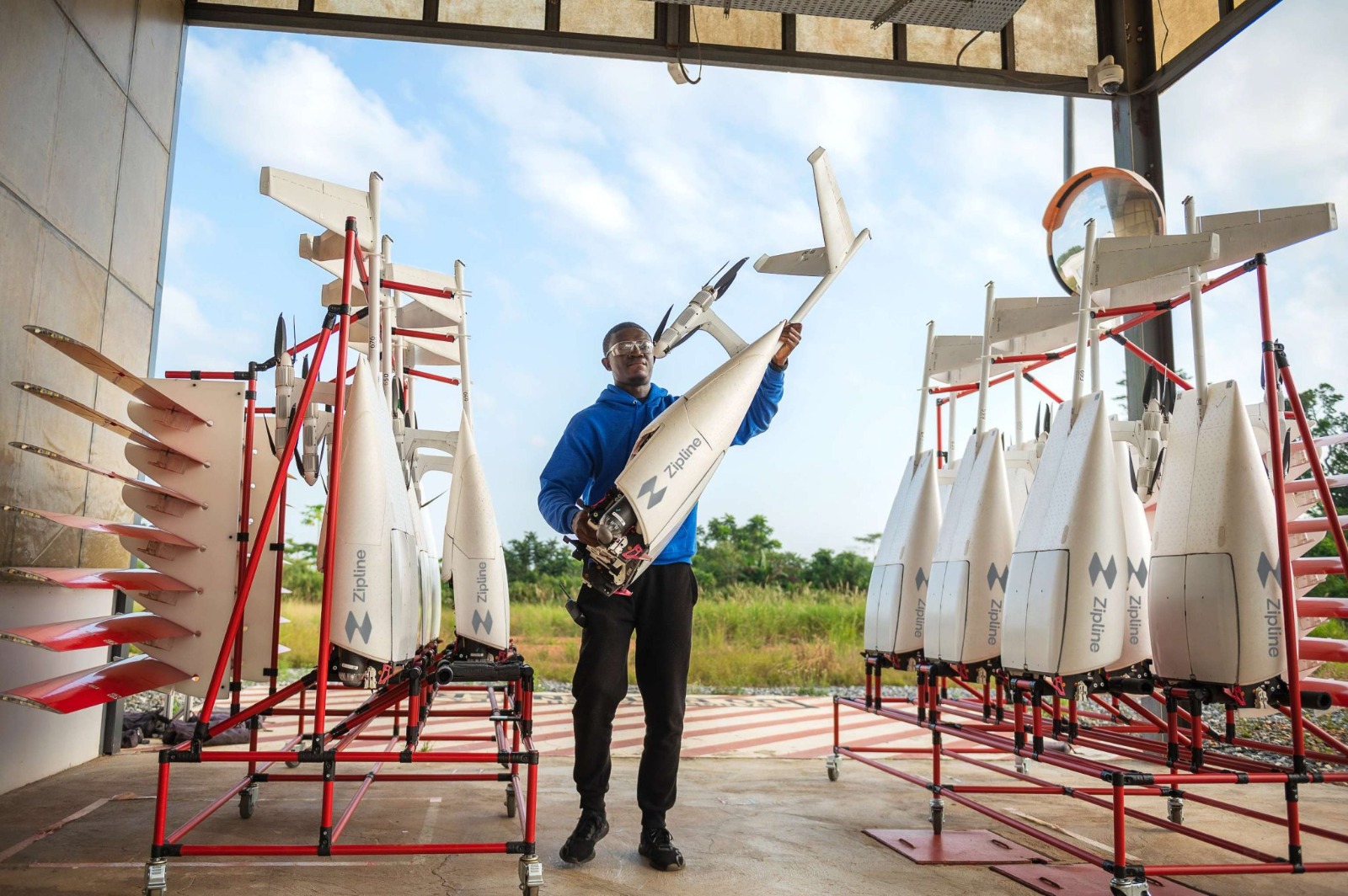
Nigeria’s healthcare delivery system is set for a major transformation as global drone logistics company Zipline prepares to embark on an ambitious expansion programme aimed at reaching nearly 100 million people across the country within the next two years.
The California-based autonomous drone company has announced plans to establish 12 additional distribution hubs across Nigeria, increasing its operational network from three centres to a total of 15 nationwide.
The move is expected to significantly strengthen access to medicines, vaccines, blood supplies, and other essential medical commodities, particularly in rural and hard-to-reach communities where healthcare delivery remains a challenge.
The expansion was disclosed by Zipline’s newly appointed Nigeria Country Director, Anthonio Pinheiro, during a virtual interview in which he outlined the company’s long-term vision of building what he described as a nationwide healthcare logistics infrastructure rather than simply operating a drone delivery service.
According to Pinheiro, Zipline currently operates in Kaduna, Cross River and Bayelsa States, serving more than 1,300 health facilities and approximately six million people.
However, the company’s next phase of growth seeks to connect up to 20,000 health facilities and extend healthcare access to nearly half of Nigeria’s population by 2028.
The announcement represents a significant shift in strategy for Zipline, which first entered the Nigerian market in 2022 through pilot healthcare delivery programmes.
At the time, its operations largely focused on transporting vaccines and medical supplies to selected health facilities using autonomous drones. Four years later, the company is positioning itself as a key player in Nigeria’s broader healthcare infrastructure landscape.
Pinheiro explained that the company is moving away from isolated state-by-state operations toward a federal-scale model that would enable multiple states to integrate into a unified national delivery network.
This strategy is being supported through collaborations involving Nigeria’s Federal Ministry of Health and development partners, including the United States government, which backed Zipline’s African expansion initiative across several countries.
At the heart of Zipline’s operations is the challenge of addressing persistent disruptions in Nigeria’s healthcare supply chain. Across many rural communities, hospitals and clinics frequently experience shortages of vaccines, blood products, anti-venom medication, malaria treatments, contraceptives, and maternal healthcare supplies.
Healthcare studies cited by the company indicate that stock-outs remain a major problem, particularly in rural areas where more than half of health facilities reportedly experience shortages of family planning commodities within a three-month period.
Such shortages often force patients to travel long distances only to discover that critical medicines are unavailable.
Zipline’s model seeks to eliminate these bottlenecks through centralized storage facilities, artificial intelligence-powered inventory management systems, cold-chain infrastructure, and rapid drone deliveries.
Under the system, health facilities can request supplies as needed instead of maintaining large and expensive inventories.
The company says the approach has already yielded positive results in communities where it operates. According to Zipline, supported facilities have experienced significant reductions in vaccine shortages, while maternal mortality rates have declined due to faster delivery of emergency blood supplies.
The company also reports improvements in childhood anaemia treatment, HIV medication distribution, and emergency response capabilities.
One example highlighted by Pinheiro involved a snakebite victim in a remote community who received life-saving anti-venom within 47 minutes of an emergency request being made. Such interventions, he said, demonstrate the broader impact of the company’s technology beyond simple package delivery.
Beyond healthcare, Zipline is increasingly positioning itself as an artificial intelligence and robotics infrastructure company.
The firm believes its delivery network could eventually support sectors such as agriculture, animal health, e-commerce, and general logistics once the necessary infrastructure is fully established.
Another notable aspect of the company’s operations is its reliance on renewable energy. According to Zipline, its facilities in Kaduna and Cross River are already powered primarily by solar energy, reducing dependence on Nigeria’s often unreliable electricity grid and cutting diesel consumption significantly.
The company says some of its facilities have evolved into mini energy hubs supporting surrounding communities and health facilities.
Despite the ambitious expansion plans, regulatory challenges remain a key consideration. Drone operations across Africa continue to face scrutiny due to national security concerns surrounding unmanned aerial vehicles.
However, Pinheiro praised Nigerian authorities for adopting a collaborative approach to regulation, noting that the company works closely with aviation regulators and government agencies to ensure compliance with national airspace rules.
The expansion comes at a time when many African countries are increasingly exploring technology-driven solutions to improve healthcare access and bridge service delivery gaps in remote communities.
If successfully implemented, the initiative is expected to create one of Africa’s largest autonomous healthcare delivery networks, potentially transforming access to medical services for millions of Nigerians while providing a model that could be replicated across the continent.