BY Grace Zigah
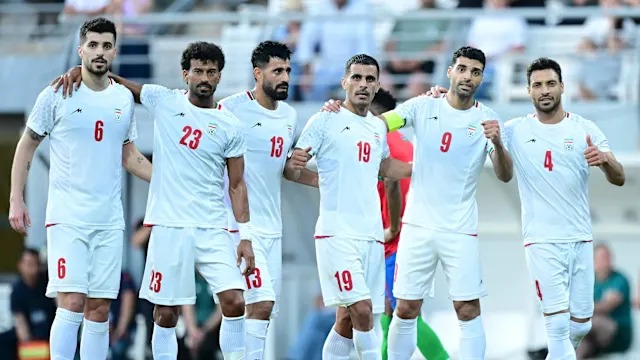
The 2026 FIFA World Cup has become entangled in international politics after Iran accused the United States of denying visas to several key members of its national football team’s delegation, despite granting travel clearance to the players just days before the tournament begins.
The dispute has added a new dimension to an already sensitive relationship between the two countries, which remain embroiled in a military conflict ahead of football’s biggest global event.
Iranian officials confirmed that members of the national team squad have now received visas to enter the United States for the tournament, ending weeks of uncertainty over their participation.
However, Tehran has strongly criticised Washington for allegedly refusing entry to a number of administrative and technical officials considered essential to the team’s World Cup operations.
The controversy emerged less than two weeks before Iran’s opening Group G match against New Zealand in Los Angeles on June 15.
According to Iranian authorities, a significant number of officials attached to the national team, including senior football federation executives and technical advisers, have been denied entry visas by US authorities.
The Iranian Embassy described the move as “politically biased interference in sport” and accused Washington of discriminating against the country’s football delegation.
State-linked Iranian media reports indicated that as many as 15 members of the delegation, including football federation president Mehdi Taj, his deputy and several administrative personnel, were among those denied entry.
The United States, however, insists that all players and necessary support staff have been granted visas and that security concerns remain a priority.
American officials have maintained that the visa process will not be used to facilitate the entry of individuals with links to organisations deemed security threats by Washington.
US Secretary of State Marco Rubio recently told lawmakers that individuals connected to Iran’s Islamic Revolutionary Guards Corps (IRGC) would not be permitted to enter the country as part of the World Cup delegation.
That position has attracted particular attention because Mehdi Taj, the president of Iran’s Football Federation, is a former commander of the Revolutionary Guards and was previously denied entry to the United States for the World Cup draw held in Washington in December.
The diplomatic standoff has already forced Iran to alter its World Cup plans. Initially, the team intended to establish its training base in Tucson, Arizona.
However, concerns over visa complications and growing political tensions prompted Iranian authorities to relocate the team’s training camp to Tijuana, Mexico.
Iran’s ambassador to Mexico, Abolfazl Pasandideh, revealed that the team is expected to operate largely from Mexican territory throughout the tournament and travel into the United States only for matchdays.
Under the conditions attached to the team’s visas, Iranian players are expected to enter and leave the United States on the same day as their matches.
The development means Iran’s squad will face lengthy travel arrangements throughout the group stage.
Iran will play New Zealand and Belgium in Los Angeles before travelling to Seattle to face Egypt in their final Group G fixture.
The 2026 FIFA World Cup is jointly hosted by the United States, Canada and Mexico and marks the first time in the tournament’s history that a host nation will welcome a team from a country with which it is actively engaged in military conflict.
The situation has placed FIFA under increased pressure to uphold its long-standing position that football should remain separate from politics.
Iranian officials have called on the world football governing body to intervene, arguing that restrictions placed on members of their delegation undermine the spirit of international sport.
Despite the diplomatic tensions, Iran remains determined to compete at the tournament after securing qualification by topping its World Cup qualifying group in March 2025.
Iranian officials have also suggested that their participation in the competition demonstrates the country’s willingness to pursue peaceful engagement despite the ongoing conflict.