
By Issah Olegor
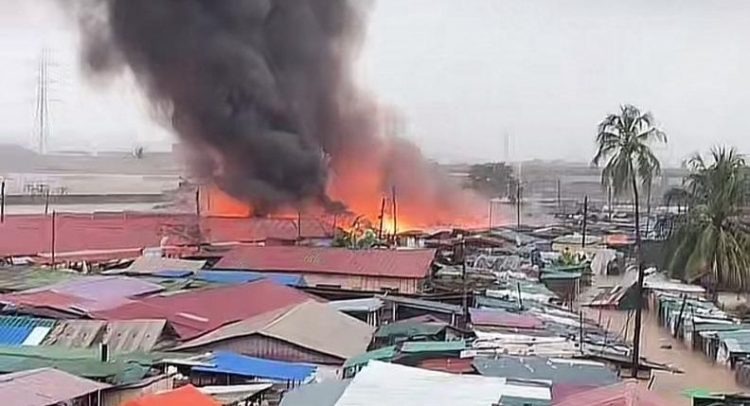
Tragedy struck traders at the Odawna Rubber and Plastic Market near the Kwame Nkrumah Interchange in Accra after a devastating fire outbreak ripped through the market amid severe flooding that had already crippled the capital, destroying shops, goods and livelihoods.
The blaze occurred on Monday, June 29, 2026, at the height of torrential rains that inundated several parts of the Greater Accra Region, creating what many described as a double tragedy for traders and residents.
The fire broke out while emergency services were already battling widespread flooding that had submerged major roads, homes and businesses across Accra, making access to the market extremely difficult for firefighters.
The Ghana National Fire Service (GNFS) later confirmed that floodwaters significantly delayed its response to the inferno as several roads leading to the scene had become impassable due to the flooding.
According to the Service, fire appliances had to navigate through flooded streets before reaching the market, where flames had already engulfed several structures.
Despite the difficult conditions, firefighters eventually succeeded in bringing the blaze under control and prevented it from spreading to adjoining buildings and businesses.
A fire tender was subsequently stationed at the scene to monitor the area and quickly respond to any possible re-ignition.
Fortunately, no casualties were recorded in the fire outbreak.
However, the destruction left many traders counting heavy financial losses after their shops, merchandise and business equipment were consumed by the flames.
The latest disaster comes over a decade after the tragic June 3, 2015 twin flood and fire disaster at Kwame Nkrumah Circle, one of Ghana’s worst national tragedies, which claimed more than 150 lives after flood victims sought shelter at a fuel station that later exploded. It under the Mahama NDC’s administration.
The recurrence of another flood and fire incident in the same vicinity has renewed public concern over the vulnerability of the area during heavy rainfall and the need for stronger disaster prevention measures.
As firefighters battled the blaze, emergency personnel were simultaneously carrying out rescue operations across flood-ravaged communities in Accra.
The fire has left many traders uncertain about how they will rebuild their businesses.
Market leaders have begun compiling data on the number of affected shops and the value of goods destroyed to support appeals for government intervention.
The Head of the Plastic Sellers Association of Ghana, Reverend George Ohene Adjei, described the incident as devastating for traders who have lost years of investment within a matter of hours.
The Ghana National Fire Service, working together with the National Disaster Management Organisation (NADMO), the Ghana Police Service, the Ghana Armed Forces and other emergency agencies, rescued hundreds of residents trapped by rising floodwaters.
The Service disclosed that more than 479 people were rescued or safely evacuated during three days of emergency operations involving floods, fires and structural emergencies.
Meanwhile, flood-related deaths in the Greater Accra Region have risen to nine, according to the Ghana National Fire Service, with rescue and recovery operations continuing in some affected communities.
Affected traders are expected to register with the National Disaster Management Organisation to facilitate access to possible relief packages and government support.
Authorities have also encouraged victims to document their losses through photographs, videos and inventory records to assist in future assessments and any compensation processes.
The dual disaster has once again highlighted the enormous economic impact of flooding on businesses in Accra, where severe weather not only disrupts transportation and commerce but also increases the risk of secondary disasters such as fires.


