BY Daniel Bampoe
The Member of Parliament for Akuapem North, Samuel Awuku, has launched a fresh attack on the Mahama administration over the latest increase in fuel prices, accusing the government of failing to deliver on its campaign promise to shield Ghanaians from the impact of rising petroleum costs.
In a strongly worded statement, the former National Lottery Authority (NLA) Director-General questioned why motorists and businesses continue to bear the burden of escalating fuel prices despite assurances by the National Democratic Congress (NDC) during the 2024 election campaign that it would implement measures to cushion consumers against fuel price shocks.
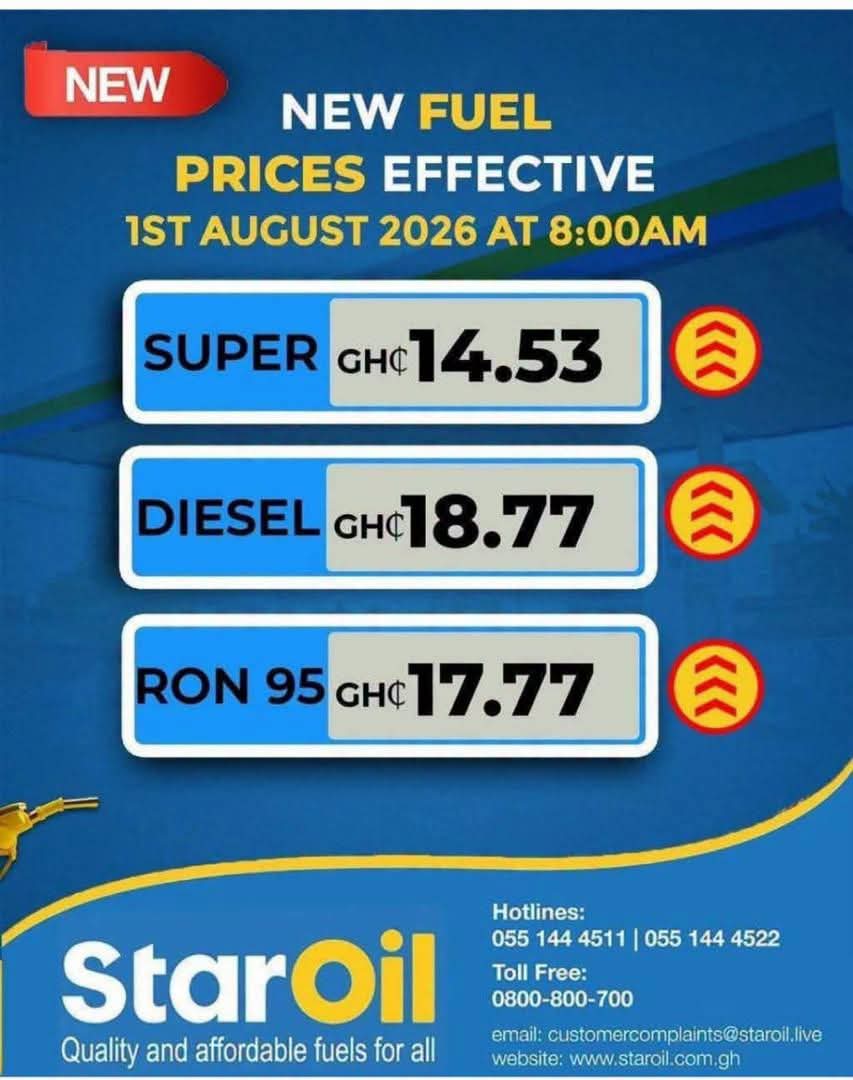
His comments come after the National Petroleum Authority (NPA) announced new indicative price floors for August 2026, setting petrol at GH¢14.53 per litre, representing a 9.4 per cent increase, while diesel rose to GH¢16.97 per litre, an increase of 18.3 per cent.
However, several Oil Marketing Companies (OMCs) had already adjusted their prices before the official announcement, with diesel selling above GH¢18.00 per litre at some filling stations.
According to Sammi Awuku, Ghanaians have become accustomed to explanations linking fuel price hikes to movements in international crude oil prices, but he argued that recent pricing trends raise important questions about the effectiveness of government policy.
“We will once again be told that this is due to global crude oil prices,” he said. “But when Brent crude declined from US$78 to US$71.90 during the previous pricing window, pump prices still increased because the National Petroleum Authority’s price floor mechanism prevented prices from falling.”
He noted that even the Chamber of Petroleum Consumers (COPEC) has publicly questioned whether the price floor mechanism genuinely protects consumers or rather prevents them from benefiting when international fuel prices decline.
Sammi Awuku argued that the bigger issue extends beyond global market fluctuations and centres on promises made by the governing NDC before assuming office.
He recalled that the party’s Resetting Ghana Manifesto pledged to utilise the Price Stabilisation and Recovery Levy as a tool to cushion consumers against fuel price shocks, stabilise the cedi, and reduce the overall cost of living.
However, the Akuapem North MP pointed out that instead of reducing the burden on consumers, government increased the levy by GH¢1 per litre in July 2025, with motorists continuing to pay the additional charge more than a year later.
According to him, if government maintains that significant progress has been made in addressing Ghana’s energy sector debt, then it owes the public a clear explanation as to why the levy remains in place.
“If government says it has made significant progress in clearing the energy sector debt, then Ghanaians deserve to know when this levy will be reduced and when consumers will begin to enjoy the relief that was promised,” he stated.
Sammi Awuku stressed that while no government can dictate international crude oil prices, every government must be held accountable for the commitments it makes to citizens during election campaigns.
He argued that if circumstances have changed and campaign promises can no longer be fulfilled, the Mahama administration has a responsibility to communicate honestly with the Ghanaian people rather than remain silent.
“No one expects government to control global crude oil prices. But Ghanaians do expect government to honour its commitments or explain openly and honestly why those commitments can no longer be fulfilled,” he said.
The latest fuel price adjustments come at a time when many households and businesses are already grappling with rising living costs, with transport operators expected to review fares while manufacturers and commercial enterprises face increasing operational expenses.
For the opposition lawmaker, the issue is no longer simply about international petroleum prices but about government accountability.
He maintains that after campaigning on promises to reduce the cost of living and protect consumers from fuel price volatility, the Mahama administration must now account for why those assurances have yet to translate into relief at the pumps.