
BY DANIEL BAMPOE
The Centre for Democratic Movement (CDM) has intensified calls for accountability over a series of major narcotics seizures linked to Ghana, arguing that the country’s security and port-control systems require urgent parliamentary scrutiny following the seizure of nearly 3.9 tonnes of cocaine valued at $261 million in France.
The CDM, in a statement issued on September 20, 2026, said Ghana’s international reputation had come under serious pressure following a succession of drug seizures connected to consignments originating from or passing through Ghana.
The organisation is calling on Parliament to convene an emergency sitting to allow officials responsible for national security, narcotics control, customs, ports and aviation to account publicly for the measures in place to prevent Ghanaian territory and commercial channels from being exploited by international trafficking networks.
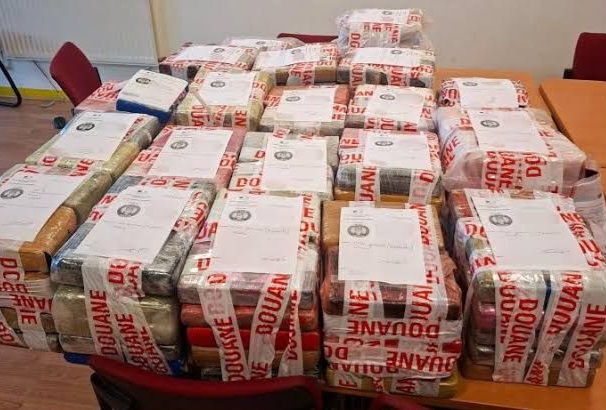
The latest incident occurred at the French port of Dunkirk, where French customs seized nearly 3.9 tonnes of cocaine concealed in a container carrying plastic waste that had arrived from Ghana. French authorities estimated the shipment’s street value at about €225 million, equivalent to approximately US$261 million, and opened an investigation into the alleged trafficking network.
The Dunkirk seizure has intensified scrutiny because it came after several other significant international and domestic narcotics cases. In March 2025, the National Intelligence Bureau intercepted more than 3.3 tonnes of cocaine at Pedu Junction in Cape Coast.
The substance was concealed beneath sand in a tipper truck travelling towards Accra. Subsequent investigations brought the total confirmed weight to about 3,319.68 kilogrammes, with laboratory testing by NACOC and the Ghana Standards Authority confirming the substance as cocaine.
The CDM’s statement also draws attention to a number of other cases which it says demonstrate the need for a comprehensive review of Ghana’s anti-narcotics architecture.
Among them is the seizure of approximately 89.74 kilogrammes of suspected cocaine at the Swissport Cargo Terminal at Kotoka International Airport in April 2025, as well as later cases involving alleged cocaine consignments concealed in food products and other commercial cargo.
International authorities have also reported seizures involving shipments linked to Ghana. In June 2026, the Australian Federal Police and Australian Border Force disclosed that approximately 320 kilogrammes of methamphetamine had been detected in two shipping containers from Ghana at Port Botany in Sydney.
The containers had been declared as carrying charcoal, and three people were subsequently charged in Australia in connection with the alleged importation. NACOC separately confirmed that it had commenced investigations into the case and was cooperating with international partners.
Against this background, the CDM has questioned whether enough was done to identify weaknesses in the port-security system before the Dunkirk seizure.
The organisation’s statement focuses particularly on the role of the Narcotics Control Commission and a 2018 Cabinet decision which, according to the explanation presented after the recent crisis, removed NACOC from joint container-inspection arrangements at the ports.
The issue became more prominent following President John Dramani Mahama’s September 17, 2026 meeting with security, narcotics-control, customs and other relevant agencies.
Following the meeting, the President directed agencies operating at the ports to develop a coordinated framework and ordered the restoration of NACOC to joint container inspections. An inter-agency task force was also given two weeks to review existing systems and propose measures to strengthen the detection and prevention of narcotics trafficking.
The CDM, however, has questioned why the alleged weaknesses associated with the 2018 arrangement were not identified and brought to the President’s attention earlier.
The organisation points to the March 2025 Pedu Junction seizure and subsequent international drug cases as potential warning signs that, in its view, should have prompted an earlier review of the security and cargo-screening arrangements.
The group stops short of accepting the 2018 decision itself as the cause of the subsequent seizures, stating that its concern is instead about whether the security system adequately identified and responded to emerging vulnerabilities.
It argues that if the arrangement created a significant security gap, the responsible institutions should explain when they became aware of the problem, what action they took and why stronger intervention allegedly came only after the French seizure.
The CDM has consequently called for officials heading institutions involved in the security and border-control architecture to account.
Those named in the statement include the National Security Coordinator, the Director-General of the Bureau of National Intelligence, the Director-General of NACOC, the Inspector-General of Police, the Director-General of the Criminal Investigations Department, the Acting Commissioner of Customs, the head of the Ghana Ports and Harbours Authority, the Director-General of the Ghana Maritime Authority, the Chief Executive of the Ghana Shippers’ Authority and the Managing Director of Ghana Airports Company Limited.
The organisation is also supporting calls for changes in leadership within some of the security institutions, although such calls represent CDM’s position rather than an established finding of official investigations.
CDM argues that the officials concerned must account for the systems under their supervision and explain how the country’s ports, airports and other commercial channels have been used in cases involving large quantities of narcotics.
CDM is therefore asking Speaker of Parliament Alban Sumana Kingsford Bagbin to convene the House and provide a platform for officials connected to the country’s narcotics-control and border-security architecture to answer questions on the record.
It is also calling on the government to publish the findings of the inter-agency task force established following the September 17 meeting.


