BY Issah Olegor
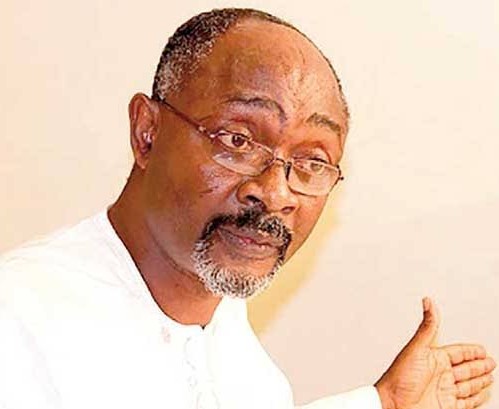
Businessman and prominent National Democratic Congress (NDC) member Alfred Agbesi Woyome is seeking a major political comeback after filing his nomination to contest the position of National Vice Chairperson of the governing party, years after his name became embroiled in one of Ghana’s most controversial judgement debt scandals.
Woyome’s decision to contest the influential position has brought renewed attention to his political history, business dealings and the protracted legal battle surrounding the GH¢51.2 million judgement debt payment that generated intense public debate and political controversy in Ghana.
The businessman, who was once a prominent figure in discussions surrounding the NDC’s political and financial activities, is now seeking to move into the party’s national leadership at a time when it is reorganising its structures ahead of the 2028 general elections.
On Saturday, November 7, 2026, Woyome’s nomination was filed by former Deputy National Women’s Organiser of the NDC, Dr Catherine Deynu.
Dr Deynu explained that Woyome was entering the race with an agenda to strengthen the party’s organisational structures, empower grassroots members and improve the capacity of constituency-level executives.
She argued that his longstanding contributions to the NDC had equipped him with the experience and understanding required to help strengthen the party and consolidate its electoral fortunes.
Speaking to Accra-based Citi FM, Dr Deynu maintained that Woyome had done a lot for the party and believed the time had come for him to occupy a position where he could directly influence its organisational direction.
She said his vision included building the capacity of grassroots members and constituency executives to create a stronger political organisation capable of sustaining electoral victories for years to come.
Dr Deynu further disclosed that his agenda would include promoting sustainable job creation as part of broader efforts to strengthen the party and improve opportunities for its members.
However, Woyome’s ambition is likely to attract considerable public attention because of the controversial history that has followed his name for more than a decade, particularly the GH¢51.2 million judgement debt scandal.
The controversy surrounding Woyome dates back to arrangements connected to the construction of stadia for the 2008 Africa Cup of Nations (CAN 2008), which Ghana hosted.
During the period, the businessman claimed he had provided financial engineering services to help the government secure funding for the construction of sporting infrastructure ahead of the tournament.
Following the termination of the arrangements and subsequent legal proceedings, Woyome pursued a claim against the state over what he described as a breach of contract.
The National Democratic Congress government eventually paid him GH¢51,283,480.59 in three instalments of approximately GH¢17 million each in 2010.
The payment generated a major political controversy after questions emerged about the legality of the transaction, the contractual arrangements behind it and the circumstances under which such a substantial amount of public money was released.
The controversy intensified after former Attorney-General Martin Amidu challenged the payment before the Supreme Court, arguing that the arrangements underpinning the transaction were unconstitutional.
On July 29, 2014, the Supreme Court unanimously ordered Woyome to refund the GH¢51.2 million to the state.
The court held that the contracts upon which the payment was based involved unconstitutional and invalid arrangements with Waterville Holdings Limited for the construction of stadia for CAN 2008.
It further ruled that the agreements violated Article 181(5) of the 1992 Constitution, which requires certain international business or economic transactions involving the government to receive parliamentary approval.
The ruling became a major setback for Woyome and opened another chapter in Ghana’s efforts to recover money paid out as judgement debts.
Interestingly, the judgement debt controversy also produced separate criminal proceedings against the businessman.
Woyome was arrested in February 2012 following investigations into the controversial payment and was subsequently prosecuted on charges including defrauding by false pretence and causing financial loss to the state.