By Daniel Bampoe
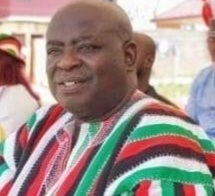
The Minority in Parliament has demanded the immediate resignation or dismissal of Ghana Gold Board (GoldBod) Chief Executive Officer Sammy Gyamfi over comments it claims could encourage illegal mining, escalating the political confrontation over the government’s handling of galamsey.
The opposition caucus has called on President John Dramani Mahama’s government to sanction Sammy Gyamfi, insisting that statements attributed to him about small-scale mining operations raise serious questions about the administration’s commitment to enforcing Ghana’s mining laws and protecting the country’s environment.
However, GoldBod has strongly rejected the allegations, accusing critics of using a selectively edited video to create the false impression that its chief executive had endorsed illegal mining.
The board insists that Gyamfi was explaining the government’s policy of bringing eligible informal miners into a lawful, regulated system rather than giving them permission to operate without the necessary authorisation.
The competing positions have triggered a fresh dispute over the distinction between formalising informal mining operations and permitting illegal activities, as concerns persist about the environmental and economic consequences of galamsey.
Minority Demands Gyamfi’s Resignation
In a press release dated October 23, 2026, the Minority accused Gyamfi of making what it described as reckless comments during an engagement with small-scale miners.
The statement, signed by Kwaku Ampratwum-Sarpong, Member of Parliament for Mampong and Ranking Member of Parliament’s Lands and Natural Resources Committee, referred to a video circulating on social media in which the GoldBod chief executive was allegedly discussing the government’s position on mining outside forest reserves, water bodies and roadside areas.
The Minority questioned whether the comments meant that galamsey operators could undertake mining activities elsewhere without obtaining the licences and permits required by law.
It argued that the absence of a forest reserve, water body or roadside within a proposed mining location did not automatically make mining there lawful, particularly where operators lacked the required licences.
The caucus raised concerns about the implications of such an interpretation, asking whether mining without the necessary authorisation could consequently be permitted in places such as schools, churches, mosques, marketplaces, hospitals, Parliament House, the Law Courts and even Jubilee House.
Describing the remarks attributed to Mr Gyamfi as unacceptable, the Minority accused the government of failing to demonstrate a credible strategy for ending illegal mining.
It further argued that the NDC had made strong commitments to tackling galamsey before the 2024 general elections but that the controversy surrounding the GoldBod chief executive raised questions about whether those promises were being fulfilled.
The Minority’s central demand is that Mr Gyamfi should offer an unqualified apology to Ghanaians and resign immediately as GoldBod chief executive. It warned that, should he refuse to step down, the government should dismiss him.
The caucus also wants the government to publicly condemn and sanction his conduct, arguing that the credibility of a state institution responsible for the gold trade must not be undermined by statements that could be interpreted as disregarding the law.
Minority Cites Mining Laws
To support its position, the Minority cited Sections 9(1) and 82(1) of the Minerals and Mining Act, 2006 (Act 703).
Section 9(1) provides that a person cannot undertake activities involving the search, reconnaissance, prospecting, exploration or mining of minerals on land in Ghana without a mineral right granted in accordance with the law.
Section 82(1) states that a person cannot undertake a small-scale mining operation unless a licence has been granted by the Minister responsible for mines or an authorised officer.
The Minority acknowledged that the law allows areas to be designated for small-scale mining in the public interest, but maintained that such decisions must comply with the applicable legal provisions.
It argued that any public communication about where miners may operate must make clear that the relevant licensing and permitting requirements remain in force.
The caucus also called for a comprehensive audit of GoldBod’s documentation to verify the traceability of gold purchases from mine to market and establish whether responsible sourcing practices are being followed.
Beyond the controversy surrounding Gyamfi, the Minority urged President Mahama and his government to present a clear roadmap for ending galamsey, declare a state of emergency in identified high-risk illegal mining hotspots and formalise the establishment and operations of the National Anti-Illegal Mining Operations Secretariat (NAIMOS) through a Legislative Instrument.
These demands, it said, are necessary to demonstrate that the fight against illegal mining will be backed by enforceable policies and institutional accountability.
GoldBod Fires Back, Says Video Misrepresents Gyamfi
GoldBod has rejected the Minority’s allegations, insisting that the video at the centre of the controversy has been edited in a manner that distorts the chief executive’s original message.
In a statement issued by its Media Relations Unit on October 24, 2026, the board said the footage was an excerpt from an engagement with artisanal and small-scale miners in March 2026.
According to GoldBod, the circulating version omitted important context in which Mr Gyamfi was explaining the government’s objective of identifying and documenting mining operators and transitioning eligible informal miners into a lawful, regulated and environmentally responsible system.
The board said the government’s policy was not intended to legitimise illegal mining but to eliminate illegality by bringing qualifying operators into a formal framework where they could be licensed, monitored and held accountable for their environmental and operational conduct.
GoldBod maintained that there was a fundamental difference between authorising illegal mining and establishing a pathway through which eligible informal or unlicensed miners could regularise their operations and comply with the law.