
By Daniel Bampoe
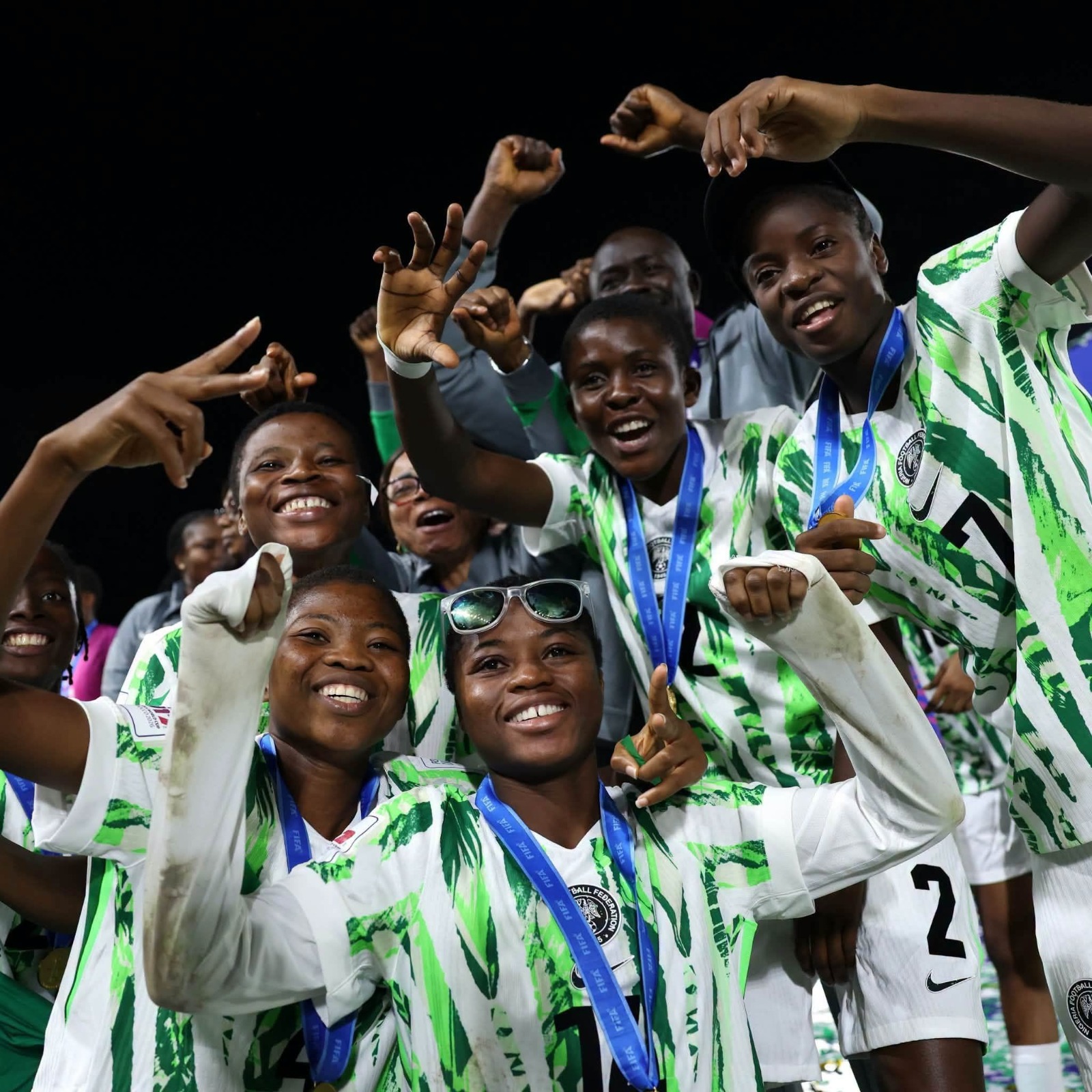
Nigeria’s U-17 women’s national team, the Flamingos, have written a new chapter in African football history after defeating Japan 2-1 in the final of the 2026 FIFA U-17 Women’s World Cup to claim their maiden world title.
The Nigerian youngsters secured the historic triumph on Saturday, November 7, at the Mohammed VI Football Complex in Rabat, Morocco, becoming the first African nation to win the FIFA U-17 Women’s World Cup since the competition was introduced.
The victory represents a major milestone for Nigerian women’s football and ends the country’s long wait for a global title at the youth level, following previous campaigns in which the Flamingos had come close but failed to lift the trophy.
Nigeria entered the final determined to make history against a technically gifted Japanese side that had also enjoyed an impressive tournament. However, the West African representatives delivered a disciplined performance, scoring twice before holding on against a late Japanese fightback.
The breakthrough came in the 39th minute when Awawu Bashiru found the back of the net to give Nigeria a 1-0 lead heading into the interval. The goal provided the Flamingos with an important advantage in a final that had been closely contested.
Nigeria returned from the break with renewed determination and doubled their lead just two minutes into the second half. Oluebube Umejiaku scored in the 47th minute to put the African side 2-0 ahead and give them greater control of the contest.
Japan, however, refused to surrender and continued searching for a way back into the game. Their persistence eventually paid off in the 80th minute when Fuki Ito scored to reduce the deficit to 2-1, setting up a tense closing period.
Despite the late pressure from the Japanese team, Nigeria held firm to protect their advantage and secure the final victory. The final whistle triggered celebrations among the players and supporters as the Flamingos confirmed their place in history.
Umejiaku wins Golden Ball
Nigeria’s triumph was further highlighted by individual recognition for Oluebube Umejiaku, who was named the tournament’s Golden Ball winner for her outstanding performances throughout the competition.
Her contribution in the final, where she scored Nigeria’s second goal, capped an impressive campaign and underlined her importance to the team’s success.
Japan’s Fuki Ito, who scored the late goal in the final, received the Bronze Ball award in recognition of her performances during the tournament.
The individual awards added another dimension to the final, with Nigeria celebrating both the collective achievement of winning the championship and the recognition of one of its standout players.
Remarkable comeback after opening defeat
The Flamingos’ journey to the title was not without difficulties. Nigeria began the tournament with a 2-1 defeat to Poland, raising questions about their ability to recover and compete for the championship.
However, the team responded positively to the setback and gradually built momentum as the competition progressed.
They secured a 2-0 victory over Puerto Rico before recording a 3-1 win against North Korea. Nigeria then defeated Mexico 2-1 and continued their impressive run with a narrow 1-0 victory over Venezuela to advance further in the tournament.


