
By Issah Olegor
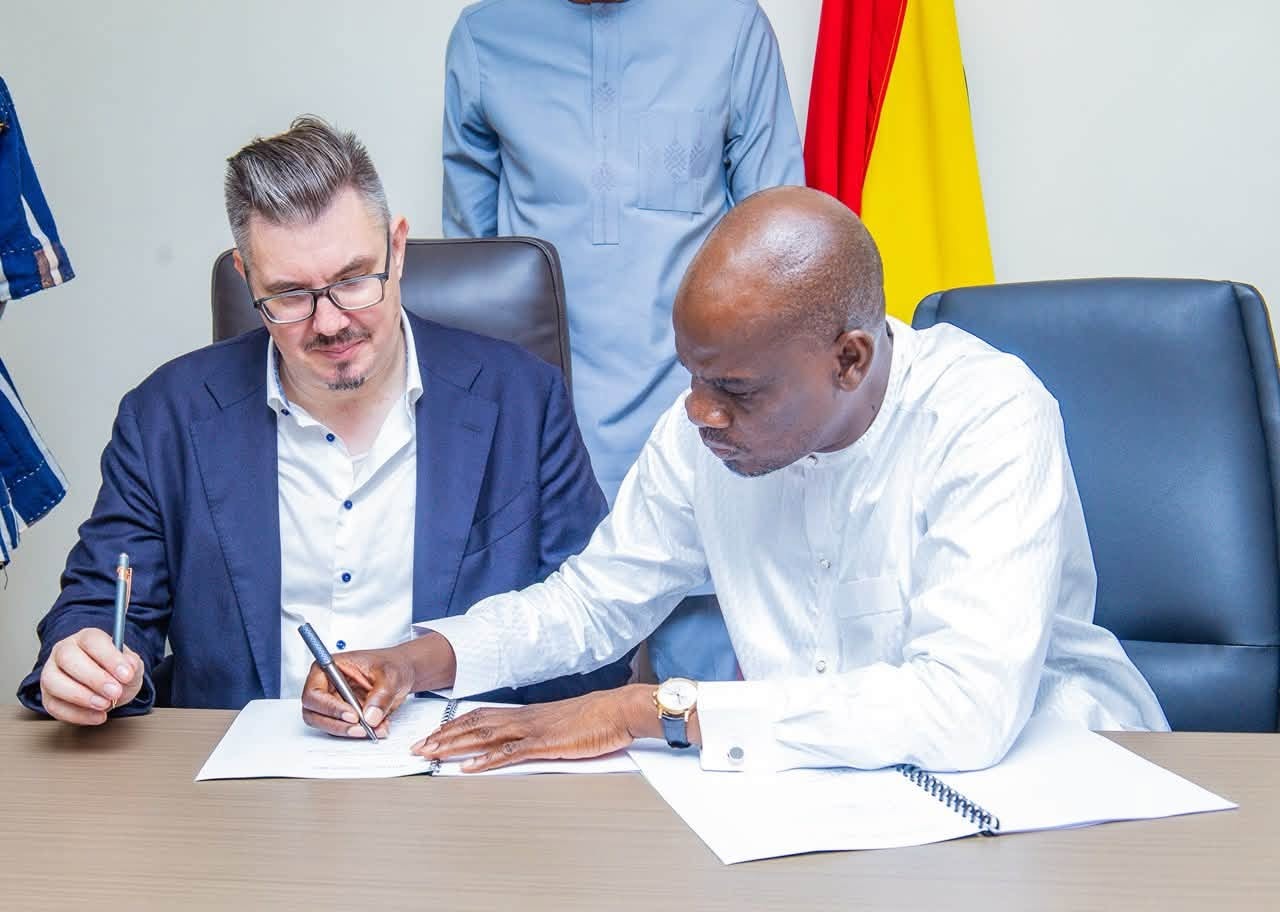
The Ministry of Education has entered into a new international partnership with Finnish education organization, Educraftor in an effort to strengthen Science, Technology, Engineering and Mathematics (STEM) education and introduce innovative teaching methods into Ghana’s educational system.
The agreement, formalised through a Memorandum of Understanding (MoU), is expected to support the government’s broader efforts to improve the quality of teaching and learning by drawing on international best practices, strengthening teacher professional development and integrating technology-driven approaches into classroom instruction.
The partnership is expected to focus on equipping Ghanaian teachers with modern instructional techniques, introducing interactive digital learning resources and developing curricula that meet international standards while addressing the country’s specific educational needs.
Under the arrangement, both institutions will work towards improving how STEM subjects are taught, moving beyond traditional classroom methods to promote practical, interactive and student-centred learning.
The collaboration will also introduce project-based learning approaches designed to give students opportunities to apply classroom knowledge to real-life situations while developing critical thinking, creativity, problem-solving and technical skills.
Finland’s Education Expertise Comes Into Focus
The involvement of Educraftor brings Finnish educational expertise into Ghana’s ongoing efforts to improve science and technology education.
Finland has built an international reputation for its approach to education, which places emphasis on teacher development, learner participation, practical understanding and the application of knowledge.
Through the partnership, Ghana is seeking to explore how some of these approaches can be adapted to local conditions rather than simply importing foreign educational models.
The focus on teacher development is particularly important because the success of any educational reform depends significantly on the ability of teachers to implement new methods effectively.
By exposing teachers to modern teaching strategies and innovative learning tools, the collaboration is expected to support a more engaging classroom environment where students participate actively in the learning process.
Digital Learning and Curriculum Development
Another major component of the agreement is the proposed integration of interactive digital learning tools into classroom instruction.
The initiative is expected to encourage the use of technology to make complex scientific and mathematical concepts easier for students to understand.
The institutions will also collaborate on curriculum development to ensure that teaching materials reflect international standards while remaining relevant to Ghana’s educational priorities.
This approach is intended to strengthen the connection between classroom education and the practical skills required in a rapidly changing global economy.
The emphasis on technology-driven instruction also comes at a time when countries are increasingly incorporating digital skills, scientific innovation and technical knowledge into their education systems.
Moving Beyond Traditional Classroom Teaching
The agreement also places considerable emphasis on student-centred and project-based learning.Under these approaches, students are encouraged to participate actively in lessons, work collaboratively, investigate problems and develop practical solutions rather than relying exclusively on memorisation and teacher-led instruction.
Project-based learning, in particular, allows students to apply theoretical knowledge to practical assignments, helping them understand how science, mathematics and technology influence everyday life.


