BY NADIA NTIAMOAH
Residents of Abomosu and surrounding communities in the Atiwa West District of the Eastern Region are approaching a major milestone in their quest for improved healthcare delivery, following reports that the long-awaited Agenda 111 hospital project in the area has reached an advanced stage of completion, with preparations underway to make the facility operational.
The development is expected to bring relief to residents who have long anticipated the establishment of a modern healthcare facility capable of reducing the difficulties associated with accessing essential medical services, particularly emergency treatment and specialist care.
Information emerging from the project indicates that construction of the Abomosu Agenda 111 Hospital is practically complete, while attention is now shifting towards the administrative and human resource arrangements required to commence healthcare operations.
One of the significant developments is the reported selection of a Medical Superintendent to lead the hospital’s medical and administrative activities.
The recruitment and selection of other essential healthcare professionals, nurses, technical personnel and supporting staff are also expected to be completed in the coming period.
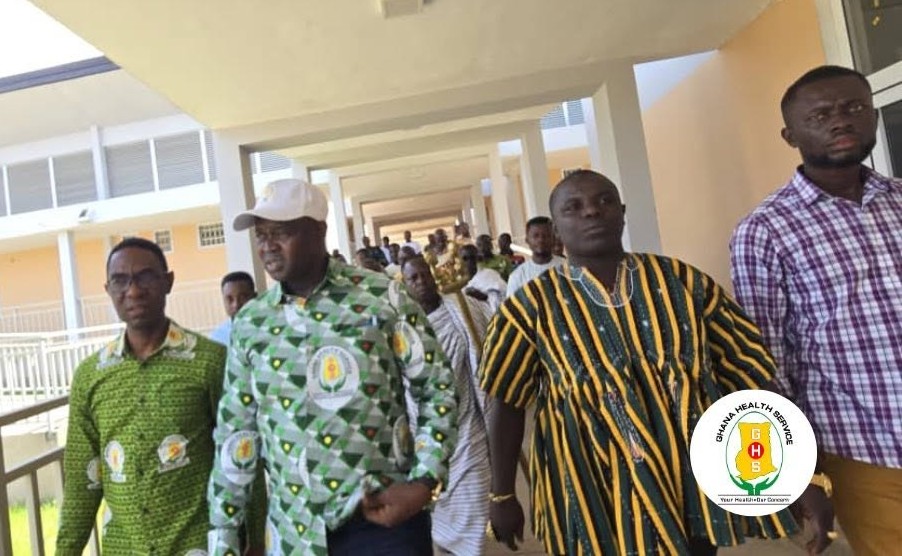
Not too long ago team headed by the Director General of the Ghana Health Service, Dr Samuel Kaba Akoriyea was dispatched to the town to assess the progress report. The outcome is the fast-tracking of the hospital through the support of Professor Kwaku Danso Baofo, Cabinet Secretary in the current administration.
Although an official date for the commencement of services has not yet been announced, the reported progress has generated renewed optimism among residents, who have been looking forward to the facility becoming fully functional.
The Abomosu hospital forms part of the national Agenda 111 initiative, an ambitious healthcare infrastructure programme introduced under the previous New Patriotic Party (NPP) administration to expand access to healthcare across the country.
The programme was designed to provide 101 district hospitals, seven regional hospitals and two psychiatric hospitals, with the broader objective of strengthening Ghana’s healthcare infrastructure and addressing gaps in access to quality medical services.
The initiative was particularly significant for communities that lacked adequately equipped hospitals and had to depend on distant health facilities for services that could otherwise be provided within their districts.
Abomosu and its neighbouring communities stand to benefit from the programme through the establishment of a facility expected to improve access to healthcare and strengthen the local health delivery system.
However, like several other projects under Agenda 111, the hospital’s journey from construction to full operational readiness has been closely watched by residents, particularly those eager to see the infrastructure translated into accessible medical services.
With construction reportedly nearing completion, the immediate priority is to ensure that the facility has the necessary personnel, equipment, administrative systems and logistical support to begin providing services.
The reported selection of a Medical Superintendent is an important step in that direction, as the position is expected to provide leadership for the hospital’s clinical and administrative operations.
The recruitment of nurses, doctors, pharmacists, laboratory professionals, administrators and other supporting workers will also be essential to ensuring that the hospital can operate effectively.
Beyond the physical structure, the availability of medical equipment, essential medicines, utilities and other operational resources will determine how quickly the facility can begin serving the public.
When fully operational, the Abomosu Agenda 111 Hospital is expected to improve access to quality healthcare for residents of Abomosu and surrounding communities.
The facility is also expected to reduce the need for patients to travel long distances to seek medical attention, particularly in emergencies where delays in accessing treatment can have serious consequences.
Its expected services could strengthen emergency response, referrals and the management of common medical conditions within the area.
The project is also expected to create employment opportunities for healthcare professionals and other workers, while supporting economic activities associated with the operation of a major public health facility.
The people of Abomosu, including residents of neighbouring communities and members of the diaspora, have been encouraged to welcome the reported progress and support efforts towards the successful commissioning and operation of the facility.
The community has been reminded that the establishment of the hospital is an important step towards improving the health and wellbeing of present and future generations.
However, the absence of an officially confirmed opening date means residents will have to await further communication from the relevant authorities regarding the commencement of services.