
By Grace Zigah
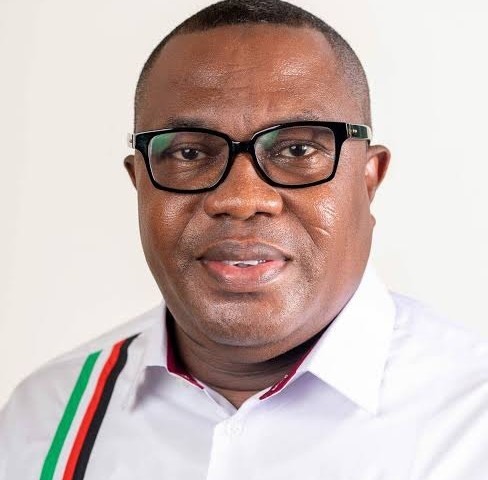
Former National Chairman of the National Democratic Congress (NDC), Samuel Ofosu-Ampofo, has withdrawn from the party’s 2026 National Chairmanship race, in a dramatic development that has reshaped the contest ahead of the December 19 National Delegates Congress.
His decision, announced on Monday, November 9, comes despite reports that supporters from all 16 regions had picked nomination forms and paid the necessary filing fees on his behalf, signalling an organised effort to return him to the position he lost in the party’s previous national executive election.
In explaining his withdrawal, Ofosu-Ampofo reportedly said that after careful consideration, he had decided not to contest in the overriding interest of the party.
His exit has immediately triggered fresh political calculations within the NDC, particularly among supporters of the remaining contenders, as attention shifts to the battle between former Odododiodioo MP Nii Lante Vanderpuye and veteran National Vice Chairman Chief Sofo Azorka Awudu.
Although Ofosu-Ampofo has stepped aside from the chairmanship contest, he is expected to continue serving as Political Advisor to Vice President Prof. Jane Naana Opoku-Agyemang and as Board Chairman of the Ghana Cocoa Board (COCOBOD).
The 2022 Defeat That Still Hangs Over Ofosu-Ampofo
Ofosu-Ampofo’s withdrawal has revived memories of the December 2022 NDC National Delegates Congress, when he faced a formidable challenge from Johnson Asiedu Nketiah, popularly known as General Mosquito.
At the time, Ofosu-Ampofo was the incumbent National Chairman, having assumed the position after succeeding Kofi Portuphy in 2018. He entered the 2022 contest seeking another mandate to continue leading the party.
However, Asiedu Nketiah, who had served as General Secretary for several years, defeated him in a contest that marked a major change in the party’s national leadership.
The victory brought an end to Ofosu-Ampofo’s chairmanship and elevated Asiedu Nketiah to the position of National Chairman.
His decision to return to the race in 2026 had therefore attracted considerable attention, particularly because it offered him an opportunity to reclaim the position after four years.
But the political environment had changed. With Asiedu Nketiah now serving as National Chairman and reportedly positioning himself for a possible presidential flagbearership bid, the chairmanship contest has become another significant battle over who should control the party’s national organisational machinery.
For Ofosu-Ampofo, another defeat after his 2022 loss could have further complicated his political standing within the party. His withdrawal has consequently been interpreted by some observers as a calculated decision to avoid another bruising contest.
The suggestion that he stepped aside specifically to avoid humiliation, however, remains political interpretation rather than his stated reason for withdrawing.
Azorka: The Quiet Operator Who Could Upset The Front-Runner
With Ofosu-Ampofo out of the race, Chief Sofo Azorka Awudu is increasingly being projected by some political observers as a possible surprise winner.
Azorka is a long-serving National Vice Chairman of the NDC and is regarded by supporters as an experienced party organiser with strong connections across northern Ghana and sections of the Zongo political network.
Unlike candidates who frequently dominate television discussions and public political commentary, Azorka’s supporters argue that his strength lies in his relationships with party structures and delegates at the grassroots.His supporters believe that years of organisational work could become an important advantage when delegates gather to elect the next National Chairman.
A political commentary on the contest has questioned the reliability of opinion polls that reportedly place Azorka behind his main competitors.
The figures cited in that commentary put Nii Lante Vanderpuye at 26.8 per cent, Ofosu-Ampofo at 19.3 per cent and Azorka at 6.4 per cent, while 35.3 per cent of respondents were said to be undecided.
However, the source, methodology, sample size and representativeness of the figures have not been independently established. More importantly, public opinion polling does not necessarily capture the voting preferences of the delegates who will ultimately determine the winner.
That distinction has become central to arguments by Azorka’s supporters, who insist that internal party elections are often determined by organisation, delegate relationships and mobilisation rather than public popularity.
Nii Lante Vanderpuye’s Front-Runner Status Faces A Test
Nii Lante Vanderpuye is widely being discussed as one of the leading contenders following his entry into the National Chairmanship race.
The former Odododiodioo Member of Parliament and former Minister of Youth and Sports officially declared his intention to contest on November 6, 2026.
His political profile, experience in government and long-standing involvement in NDC politics have positioned him as a serious contender.
He has also been associated with grassroots political mobilisation and has presented himself as a loyal party member whose involvement stretches back several decades.
His supporters believe his public profile, political experience and familiarity with the party’s internal structures make him a strong candidate to succeed Asiedu Nketiah.
However, the emergence of Azorka as a potential challenger has introduced another dimension to the contest.
The question confronting Vanderpuye is whether his public visibility and apparent advantage in the reported polling figures can translate into actual delegate support.
The chairmanship election will not be decided by television appearances, social media popularity or public commentary. It will be determined by the delegates accredited to vote at the congress.
That reality means that every candidate must demonstrate the strength of their regional networks, relationships with constituency executives and ability to mobilise support across the party’s organisational structures.
Those predicting a possible Azorka upset have drawn comparisons with the New Patriotic Party’s (NPP) internal leadership contest, where expectations and reported polling figures did not necessarily translate into the final outcome.
The commentary cited the NPP election held on October 3, 2026, at the Baba Yara Stadium, where John Boadu reportedly secured 2,888 votes to defeat Boakye Agyarko, who obtained 2,408 votes. Paul Afoko was also reported to have received 790 votes.
The result was presented as an example of how delegates can sometimes make choices that differ from public expectations and the predictions of opinion polls.
Boakye Agyarko had reportedly enjoyed strong support in some pre-election surveys, with figures cited by commentators suggesting that he was leading in 13 of the 16 regions.
Yet the eventual outcome demonstrated that perceived popularity does not automatically guarantee victory in a delegate-based election.
The comparison has become part of the argument that Azorka should not be dismissed simply because some reported polls place him behind Vanderpuye.
However, the NPP contest and the NDC chairmanship election are separate political exercises, with different candidates, delegates and organisational dynamics. The comparison therefore offers a political lesson rather than proof of how the NDC election will end.
The Asiedu Nketiah Legacy And The Search For A New Party General
Another major factor shaping the chairmanship contest is the leadership style of the outgoing National Chairman, Johnson Asiedu Nketiah.
Popularly known as General Mosquito, Asiedu Nketiah built a reputation within the NDC as a tough political organiser and experienced campaign strategist.
Before becoming National Chairman, he served as General Secretary for several years, making him one of the most influential figures in the party’s organisational history.
His supporters often credit him with strengthening the party’s grassroots structures, defending its electoral interests and maintaining its political machinery through difficult periods.
His victory over Ofosu-Ampofo in 2022 was widely interpreted as a demand by delegates for a different style of leadership, one they believed could confront the NPP more aggressively and strengthen the party’s electoral organisation.
Now that Asiedu Nketiah is reportedly considering a possible presidential flagbearership bid, the question of who succeeds him as National Chairman has become particularly significant.
The next chairman will inherit an organisation with national governing responsibilities, a large grassroots network and growing internal discussions about the political future after Mahama.


