By Issah Olegor
The New Patriotic Party (NPP) has moved into the final phase of preparations for its presidential primary scheduled for Saturday, January 31, 2026, with party leadership and state institutions expressing confidence in what is expected to be one of the most closely watched internal elections in the party’s history.
A total of 211,849 delegates are expected to cast their ballots at 333 polling centres spread across 276 constituencies nationwide.
Voting will open at 7:00 a.m. and close at 2:00 p.m., marking the climax of months of internal campaigning among five presidential aspirants vying to lead the party into the 2028 general elections.
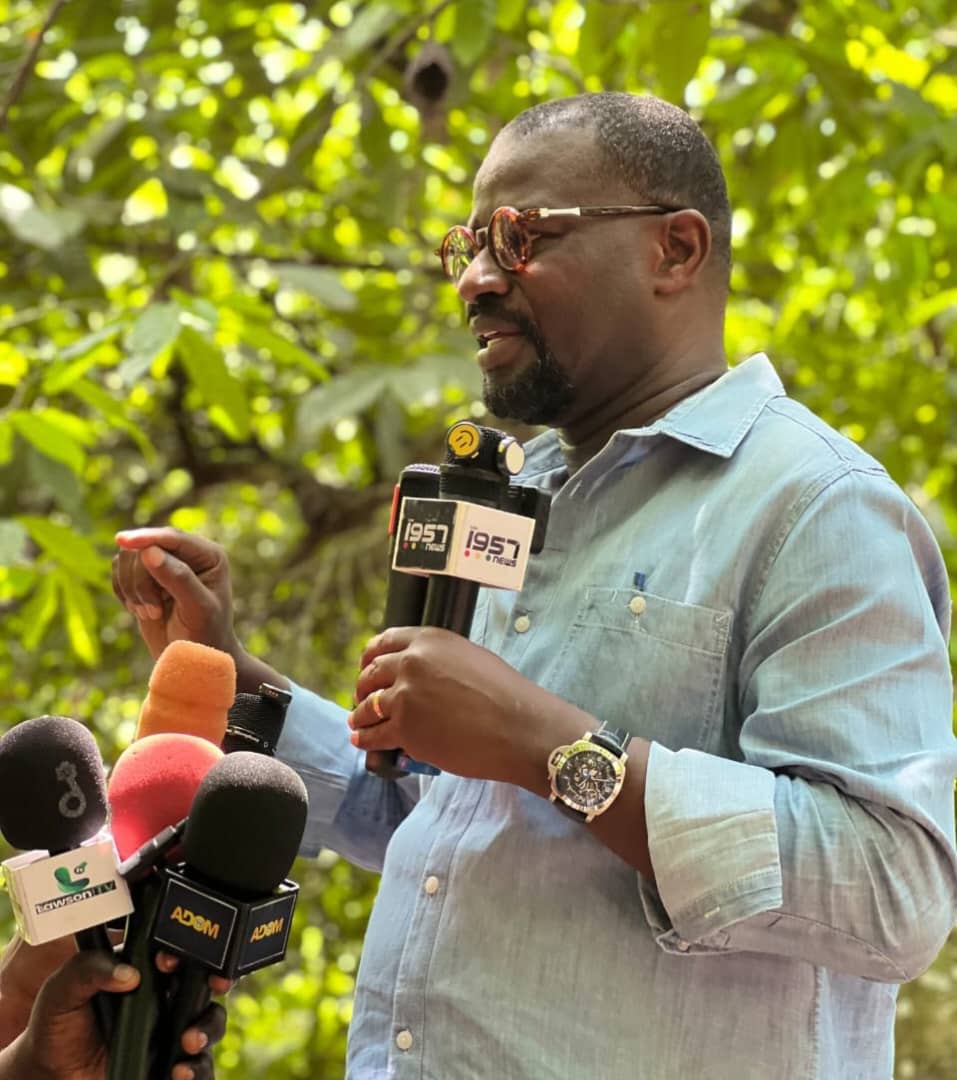
Speaking to journalists the Chairperson of the NPP Presidential Elections Committee, Joseph Osei-Owusu, said all critical preparations had been completed, including the finalisation of the voters’ register, identification of polling centres, security arrangements and agreement on election rules.
He noted that the Electoral Commission (EC) had been fully entrusted with the conduct of the polls to guarantee transparency, credibility and public confidence.
“Everything that has to be done is done. The Commission is ready, the police are ready, and everything they need to be able to do their work has been provided,” Osei-Owusu also known as Joe Wise stated.
The January 31 primary are being organised against the backdrop of heightened interest within the NPP following the end of President Nana Addo Dankwa Akufo-Addo’s tenure. With the party seeking to regroup and reposition itself ahead of the next general election, the choice of a flagbearer is widely seen as a defining moment for its future direction.
Osei-Owusu explained that the party worked closely with the Electoral Commission to determine appropriate voting centres across the country. Under the agreed arrangement, each constituency will generally have one polling centre.
However, in constituencies where the number of delegates exceeds 1,000, voting points have been split within the same locality to ensure smooth and efficient voting.
This process resulted in a total of 333 polling centres, including one located at the party’s national headquarters in Accra.
He disclosed that two initially proposed polling centres were relocated following joint assessments by the EC and constituency executives.
Importantly, he said, the changes were discussed with and unanimously approved by all five presidential aspirants, reinforcing the consultative nature of the process.
“At every stage, we involved the contestants themselves. We showed them the list, we listened to concerns, and we resolved them together,” he said.
On the voters’ register, Osei-Owusu indicated that the party undertook an extensive validation exercise to address concerns raised through petitions and corrections.
The process, he said, was carried out transparently with the full involvement of agents representing all aspirants.
Out of an initial register of 213,617 names, 2,827 deceased members and 653 individuals who had forfeited their party membership were removed, leaving a final figure of 211,849 eligible delegates.
“If you go to our IT centre now, you will find representatives of the contestants verifying everything and endorsing it before final printing,” he added.
In a significant move aimed at reinforcing credibility, the NPP has handed over the entire voting, counting, collation and declaration process to the Electoral Commission.
Results will be declared at the polling centre level, collated at regional centres, and finally transmitted to the party’s national headquarters in Accra, where the official results will be announced and the winner formally introduced to the public.
Security has also featured prominently in the party’s preparations. Osei-Owusu said the Ghana Police Service would deploy between 70 and 150 officers to each polling centre, with military support in selected areas, particularly parts of the Upper East Region.
He issued a strong warning against the use of private security personnel or so-called “macho men,” stressing that any such attempts would be dealt with decisively by the police.
“Anybody thinking of bringing private security or ‘macho’ men should think twice. The police will deal with it very, very severely,” he cautioned.
In another key reform, proxy voting has been abolished for the primary, a decision Osei-Owusu said was taken to protect the integrity and acceptability of the election outcome.
“We felt that this is not an election in which we should allow anybody the basis to claim that the process was tainted,” he explained.
The five contenders in the race are former Vice President Dr. Mahamudu Bawumia, former NPP General Secretary Kwabena Agyei Agyepong, former Assin Central Member of Parliament Kennedy Ohene Agyapong, former Minister of State at the National Security Ministry Dr. Bryan Acheampong, and former Education Minister Dr. Yaw Osei Adutwum.
Expressing confidence in the overall process, Osei-Owusu said the systems put in place would ensure that the outcome is accepted by all contestants.
“Everybody will be satisfied that he won because he was voted for, or he lost because he was voted against,” he said.