BY Daniel Bampoe
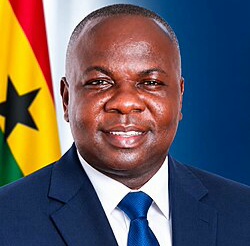
The Member of Parliament for Suhum, Frank Asiedu Bekoe, popularly known as Protozoa, has described the 2027 Budget Statement and Economic Policy as a “hoax” and a “broken-heart budget”, accusing the government of failing to address youth unemployment, workers’ welfare, economic inequalities and the broader security concerns confronting the country.
Speaking on the floor of Parliament on Friday during debate on the 2027 Budget presented on November 12, 2026, the MP argued that the government’s fiscal proposals did not adequately reflect the constitutional responsibility to manage the national economy in a manner that promotes development, public welfare, employment and support for vulnerable citizens.
Mr Asiedu Bekoe cited Chapter Six of the 1992 Constitution, which sets out the directive principles of state policy, particularly the obligation to manage the economy to maximise economic development, promote public welfare and provide livelihood opportunities, employment and assistance to those in need.
He maintained that the 2027 Budget fell short of these constitutional objectives, arguing that it continued the policy direction of the 2025 and 2026 budgets without adequately addressing structural weaknesses in the real sector or the human security needs of Ghanaians.
“I dare submit that this budget does not take care of these issues. And as such, I can confidently say that the 2027 Budget is a hoax,” he told Parliament.
He subsequently described the government’s budget as a “broken-heart budget”, insisting that its proposals failed to offer sufficient hope to the country’s struggling population, particularly young people searching for employment and opportunities.
Questions Parliament’s budgetary allocation
The Suhum legislator also raised concerns about Parliament’s financial allocation, claiming that the institution had been provided with a paltry sum of GH¢2.2 billion.
He argued that the allocation could undermine Parliament’s ability to discharge its oversight responsibilities effectively, alleging that the government was not providing the legislature with adequate financial resources to scrutinise its activities.
According to him, the government’s spending priorities did not demonstrate sufficient attention to the needs of ordinary Ghanaians, particularly at a time when several sectors were facing financial and operational challenges.
Nearly two million young people classified as NEET
A major part of Mr Asiedu Bekoe’s criticism focused on the country’s youth unemployment situation, which he described as increasingly alarming and a matter of national security.
He drew attention to figures indicating that approximately two million young people between the ages of 15 and 35 fall within the NEET category, meaning they are not in employment, education or training.
The MP said the figures should concern every Member of Parliament because they represent a significant proportion of the country’s young population who remain disconnected from productive economic activities.
He further cited Greater Accra as an example of the scale of the challenge, claiming that youth unemployment in the region averaged nearly 22 per cent.
He specifically mentioned the Odododiodio Constituency, which is located in Greater Accra, and urged lawmakers to recognise the seriousness of youth unemployment in their respective constituencies.
Mr Asiedu Bekoe argued that unemployment should not be treated merely as an economic indicator but also as a national security concern because prolonged economic exclusion could expose young people to social instability and other vulnerabilities.
He cautioned that the situation should not be dismissed or treated lightly, particularly given the contribution young people make to political campaigns and national development.
Questions absence of 1-3-3 employment formula
The MP also challenged the government over what he described as the absence of its campaign-promised 1-3-3 formula in the 2027 Budget.
He questioned why the employment proposal, which he said had featured prominently in the government’s campaign messaging, was not clearly reflected in the budget.
According to him, political parties must not abandon employment commitments made to young people after securing political power.
He accused the government of failing to give sufficient attention to the young people who campaigned vigorously for it, arguing that their expectations for employment opportunities must be reflected in concrete policy measures.
Criticises presidential jet expenditure amid labour concerns
Mr Asiedu Bekoe further criticised what he described as the government’s spending priorities, particularly plans relating to the acquisition of a luxury presidential aircraft.
His comments came against the background of labour disputes and industrial actions involving sections of the country’s workforce, including teachers, university lecturers and other organised labour groups.
He questioned the government’s decision to pursue expenditure on what he characterised as an exceptionally luxurious presidential jet at a time when workers were demanding improved conditions of service and better remuneration.
The MP used the description “champagne lifestyle on a Palm One budget” to criticise what he considered a mismatch between government spending priorities and the financial difficulties facing ordinary Ghanaians.
He also contrasted the government’s reported 9 per cent salary increase proposal for workers with the expenditure he alleged was being directed towards the presidential aircraft project.
In a further political comparison, he invoked the phrase “Animal Farm” to question what he considered unequal treatment in the distribution of public resources.