By Issah Olegor
The controversial battle over the 2025 Africa Cup of Nations (AFCON) title has taken another dramatic turn after the Court of Arbitration for Sport (CAS) restored Senegal as champions, prompting the Confederation of African Football (CAF) to confirm that it will implement the ruling, while Morocco has expressed disappointment and threatened to pursue further legal action.
The decision brings an end to months of uncertainty surrounding the final played between Senegal and Morocco in Rabat on January 18, 2026, but has opened another chapter in the disagreement between the two football federations, with the Royal Moroccan Football Federation (FRMF) questioning aspects of the arbitration process and the interpretation of the competition’s regulations.
In a statement issued following Tuesday’s verdict, CAF confirmed that it had taken note of the final award delivered by CAS in the dispute between the Senegalese Football Federation (FSF) and the Moroccan Football Federation.
The continental governing body said it respected the decision and would take all necessary measures to ensure its implementation.
CAS overturned the CAF Appeal Board’s decision of March 17, 2026, which had awarded Morocco a 3-0 victory by forfeit after ruling that Senegal had forfeited the final.
The arbitration panel instead upheld the earlier decision of CAF’s Disciplinary Board, issued on February 11, 2026, thereby restoring Senegal’s original 1-0 victory over Morocco in the final.
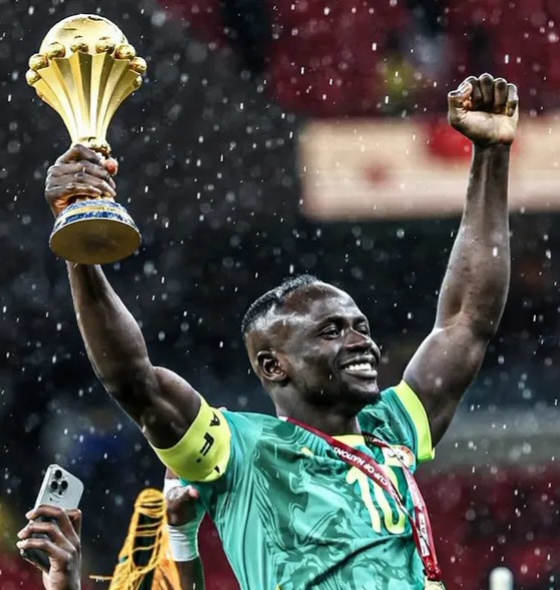
The ruling effectively reinstates Senegal as the legitimate winners of the 2025 AFCON, reversing the controversial administrative decision that had stripped them of the title and handed the trophy to Morocco.
Why CAS Restored Senegal’s Victory
In explaining its decision, CAS placed considerable emphasis on the actions of referee Jean-Jacques Ndala during the disputed final, particularly his decision to restart the match after both teams had returned to the pitch and indicated their willingness to continue playing.
The panel noted that the referee had blown his whistle to resume play following the interruption, making his decision a matter protected under the established ‘field of play’ doctrine.
The doctrine recognises the authority of match officials over decisions taken during the course of a football match and generally prevents sporting bodies from overturning such decisions unless exceptional circumstances justify intervention.
CAS consequently determined that the referee’s decision to restart the game fell within his authority and could not simply be disregarded through subsequent disciplinary proceedings.
The arbitration panel also unanimously concluded that Articles 82 and 84 of the AFCON Regulations, which deal with circumstances in which a team causes a match to be permanently abandoned, were not applicable.
According to the panel, the referee had already resumed the match after both teams returned to the field, meaning the circumstances did not satisfy the regulatory conditions required to declare that Senegal had forfeited the encounter.
Although CAS acknowledged that the referee had to make his decision under an atmosphere of extreme tension, it rejected arguments suggesting that his actions were arbitrary.
The court further stated that there was no indication that the referee’s judgment had been influenced by considerations external to the match.
The findings formed the basis of the unanimous decision to overturn CAF’s Appeal Board ruling and restore Senegal’s original victory.
Morocco Rejects Verdict And Questions Arbitration Process
However, Morocco has refused to accept the outcome without further challenge, with its football federation expressing disappointment over the ruling and indicating that it intends to explore every available legal avenue.
In a statement released on Tuesday, November 24, following the decision in Lausanne, Switzerland, the FRMF said it regretted that CAS had not addressed several of the requests and arguments it had presented during the appeal proceedings.
The Moroccan federation questioned the handling of what it described as practices that undermined the principles of integrity and credibility in the competition.
It also raised concerns about alleged contact between German arbitrator Ulrich Haas and the president of the Senegalese Football Federation less than 48 hours before the ruling was delivered.
The FRMF’s statement suggested that the circumstances surrounding the alleged contact required consideration, although the allegation does not by itself establish that the arbitrator acted improperly or that the decision was influenced.
Morocco further argued that CAS had failed to adequately consider positions previously adopted by the Court of Arbitration for Sport and FIFA concerning players leaving the field without the referee’s permission.
The federation maintained that the conduct of players who leave the pitch during a match, together with the disciplinary consequences arising from such actions, should have received greater consideration in determining the dispute.
The Moroccan FA also expressed concern that the ruling had not sufficiently addressed the broader questions surrounding compliance with football regulations and the integrity of the competition.
Despite CAS delivering its verdict, the FRMF indicated that it would continue examining the available legal options to challenge the outcome.